
|
Cover Story
Overwhelmed Greece Pleads for Help
|
||
|
People of World Influence
Chamber of Commerce Head
|
||
|
New Boss at U.N.
Women, Eastern Europeans Among
|
||
|
Never-Ending Misery
South Sudan Envoy Denies Atrocities,
|
||
|
The Next London
Post-Brexit, EU Cities Vie
|
||
|
Heartland Angst
Anger, Unease Grip American
|
||
|
Subsidizing Pollution
The Burning Debate Over
|
||
|
Modern-Day Odyssey
As Greece Reels Under Economic,
|
||
|
Medical
Early Prostate Cancer Diagnoses
|
||
|
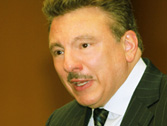 Despite reports that often portray an Arab landscape in chaos, David Hamod, president and CEO of the National U.S.-Arab Chamber of Commerce, says business between the U.S. and Arab world is brisk. In fact, the Iowa-born businessman who is of Lebanese, Irish and Norwegian descent described economic ties as stronger than ever.
 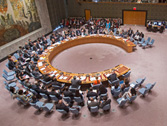 What do Portugal, Argentina, New Zealand and Costa Rica have in common with eight Eastern European countries — five of which used to form part of Yugoslavia? Not much, really, except that all are fielding candidates to replace United Nations Secretary-General Ban Ki-moon when his term expires on Dec. 31.
 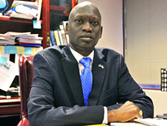 South Sudan will likely postpone its 2018 presidential elections because of recent violence, according to Ambassador Garang Diing Akuong, although he insists his government doesn’t want to go back to war and that his boss isn’t at fault for this latest bout of bloodshed.
 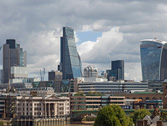 London is considered the unofficial financial capital of Europe and the startup capital of the EU. In the days before and immediately following the unexpected vote to leave the bloc, financial bigwigs were threatening to pull thousands of workers out of London and relocate them elsewhere in Europe.
  Polls have consistently shown that about two-thirds of Americans believe the country is headed in the wrong direction. The extent of the American public’s frustration, even fury, at its political leadership has been well chronicled and frequently discussed. But a weeklong research and reporting trip to Kansas confirmed in spades how deep the discontent is in the American heartland.
 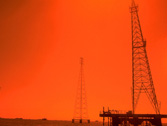 For the past seven years, the world’s economic powerhouses have repeatedly promised but failed to deliver a deadline to eliminate the staggering costs of fossil fuel subsidies that increase carbon emissions and the potentially devastating effects of climate change.
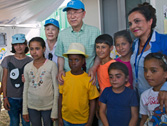
 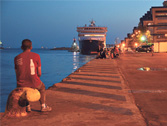 More than a million refugees streamed into Europe in 2015, the vast majority of them — 885,000 — via Greece’s Dodecanese islands near Turkey, or what the European Union’s external border agency, Frontex, calls the Eastern Mediterranean route.
  More than a million refugees streamed into Europe in 2015, the vast majority of them — 885,000 — via Greece’s Dodecanese islands near Turkey, or what the European Union’s external border agency, Frontex, calls the Eastern Mediterranean route.