The Philippines, an archipelago of 7,600 islands in Southeast Asia, is the world’s fourth-most vulnerable country when it comes to natural disasters. And a new report by UNICEF Philippines warns that 40-80% of the nation’s water supply could be depleted by 2040 due to typhoons, floods and landslides.
The report comes on the heels of Super Typhoon Kalmaegi, which ravaged the Philippines on Nov. 4 with 115‑mile‑per‑hour winds, causing widespread flooding and killing 253 people and displacing more than 260,000 before moving on to Vietnam, where it left further destruction.
Only five days later, on Nov. 9, Super Typhoon Fung-Wong struck the country’s largest island, Luzon, leaving two dead and displacing 1.4 million.
“We get an average 20-25 typhoons a year,” said Philippine Ambassador José Manuel del Gallego Romualdez. “Obviously, climate change is what we feel is the real cause of all of this, and so we’re doing everything we can to mitigate that by going to renewable energy.”
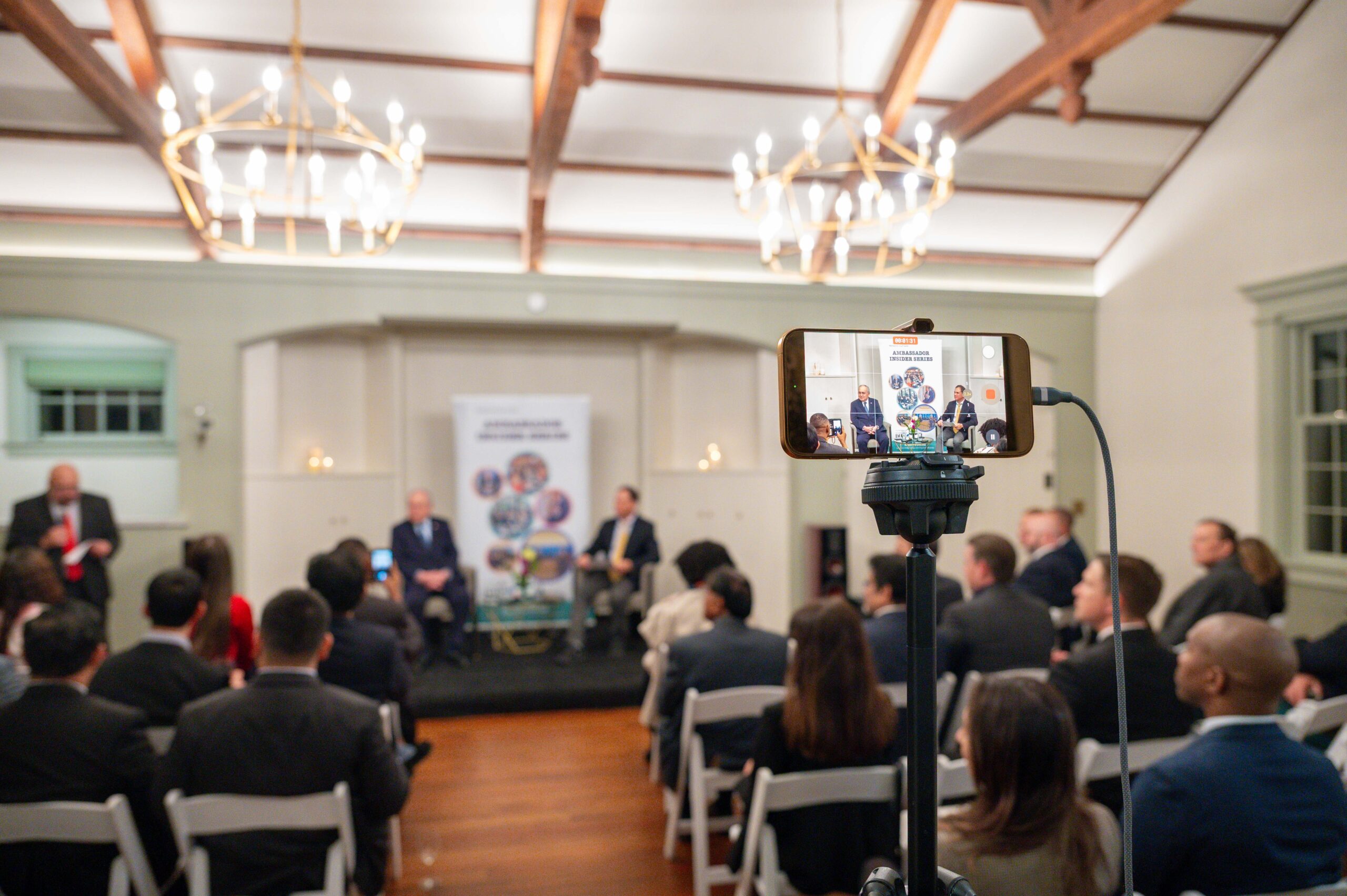
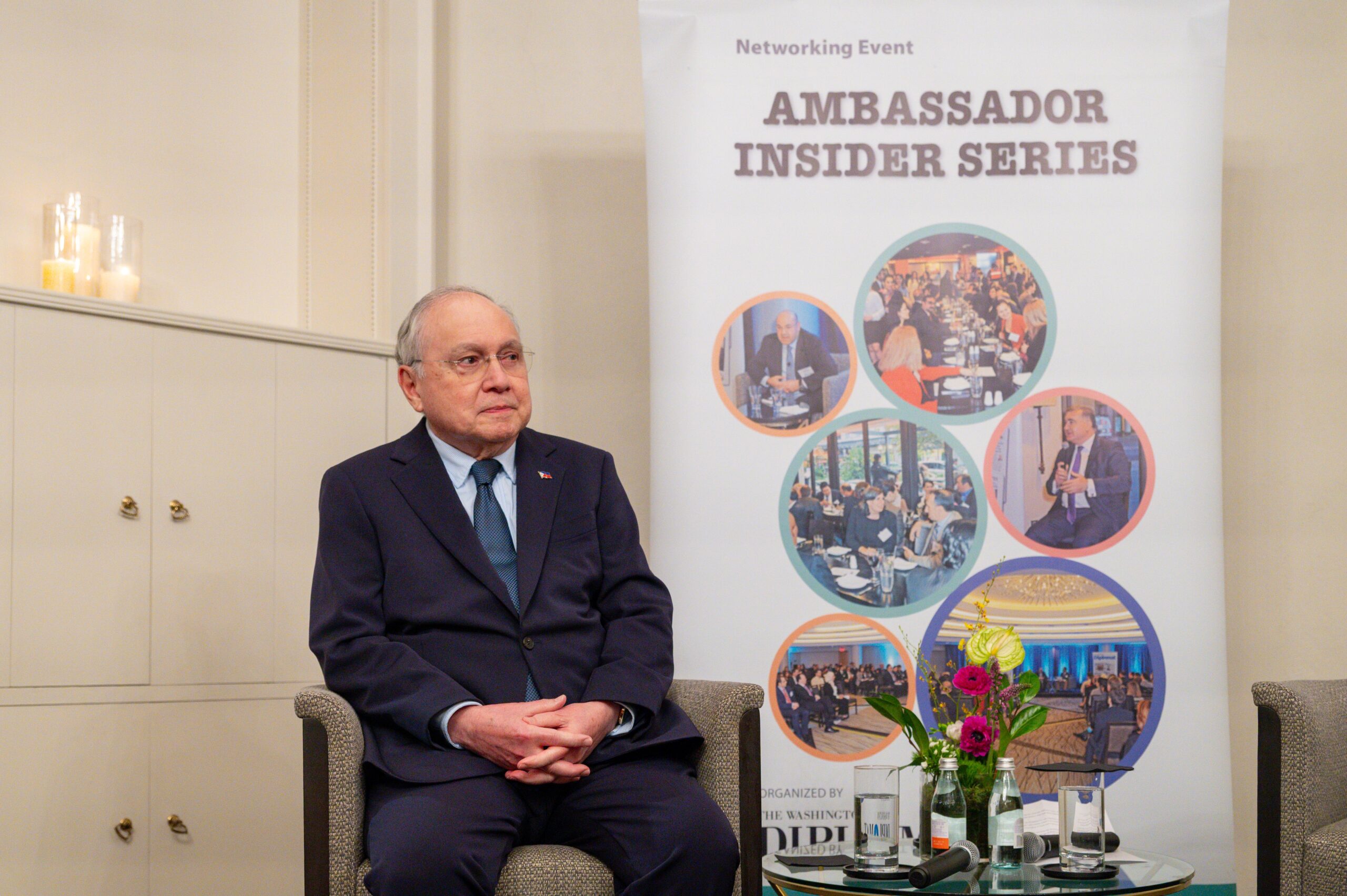
Romualdez, speaking Nov. 12 at The Washington Diplomat’s most recent Ambassador Insider Series event, estimated that his government spends $3-4 billion a year on reconstruction efforts.
“Over the past five or six years alone, these storms have caused between $35 billion and $40 billion in damage, and it continues to grow. We have now decided to put aside a substantial portion of our budget for rehabilitation,” he said, acknowledging that this policy puts his country at odds with the Trump administration, which views climate change as a hoax, and renewable energy such as electric vehicles and wind turbines as scams.
“I know there are many people who don’t believe in it, but the fact is, it’s here,” he said. “Unfortunately, the United States is withdrawing from the Paris Climate Change forum. There has to be some form of vision on how we can mitigate climate change.”
In the wake of the country’s constant natural disasters, there’s been lots of talk about replacing Manila as the nation’s capital, given that 13 million people now live in a metropolitan area designed for no more than five million. A similar situation exists in Indonesia, whose capital city, Jakarta, now ranks as the world’s largest metropolis, with a population of 42 million.
“The plans have always been there,” Romualdez said. “We’ll probably wait and see how Indonesia does it. I understand they’re planning to move the capital by 2028.”
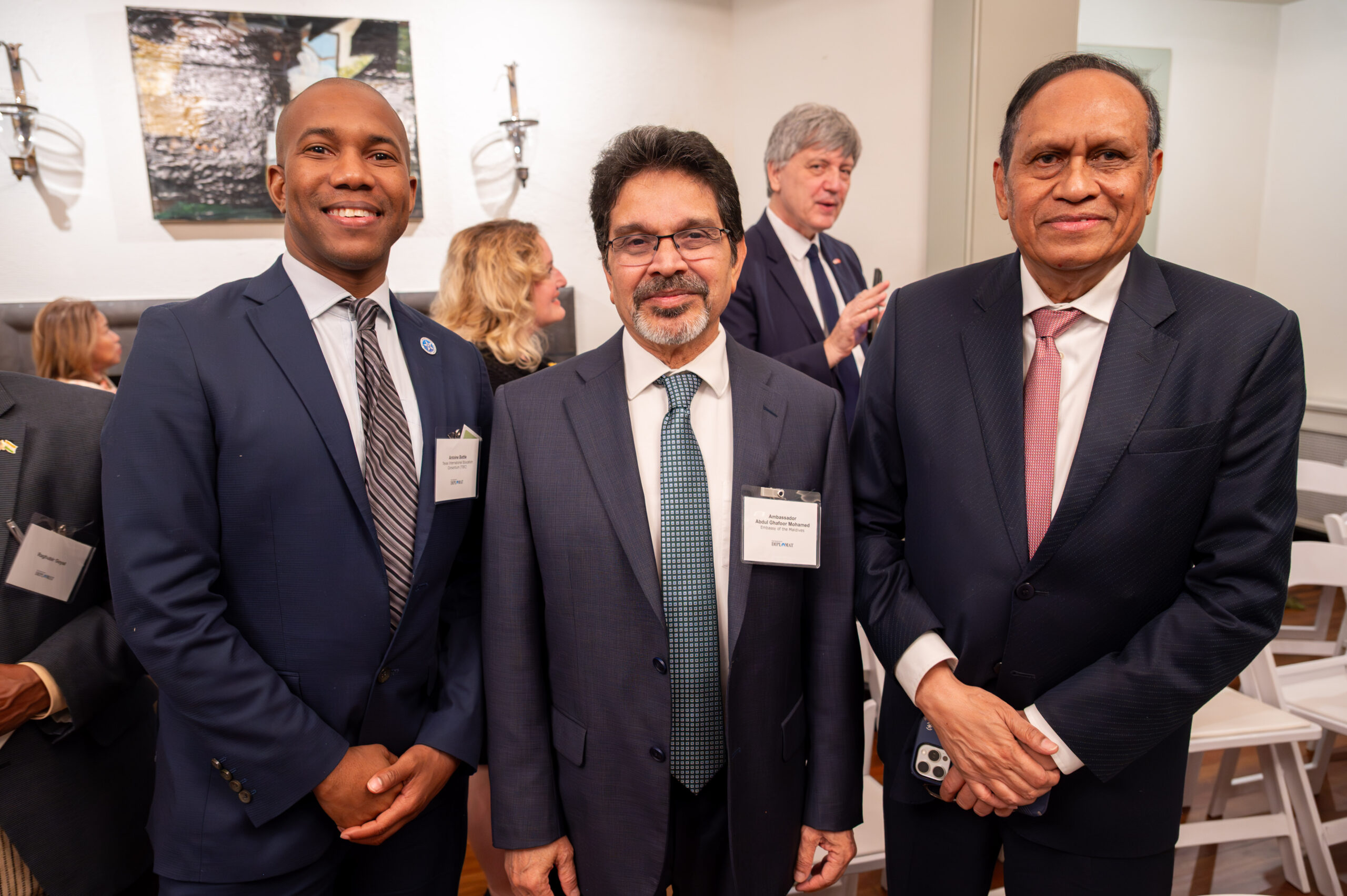
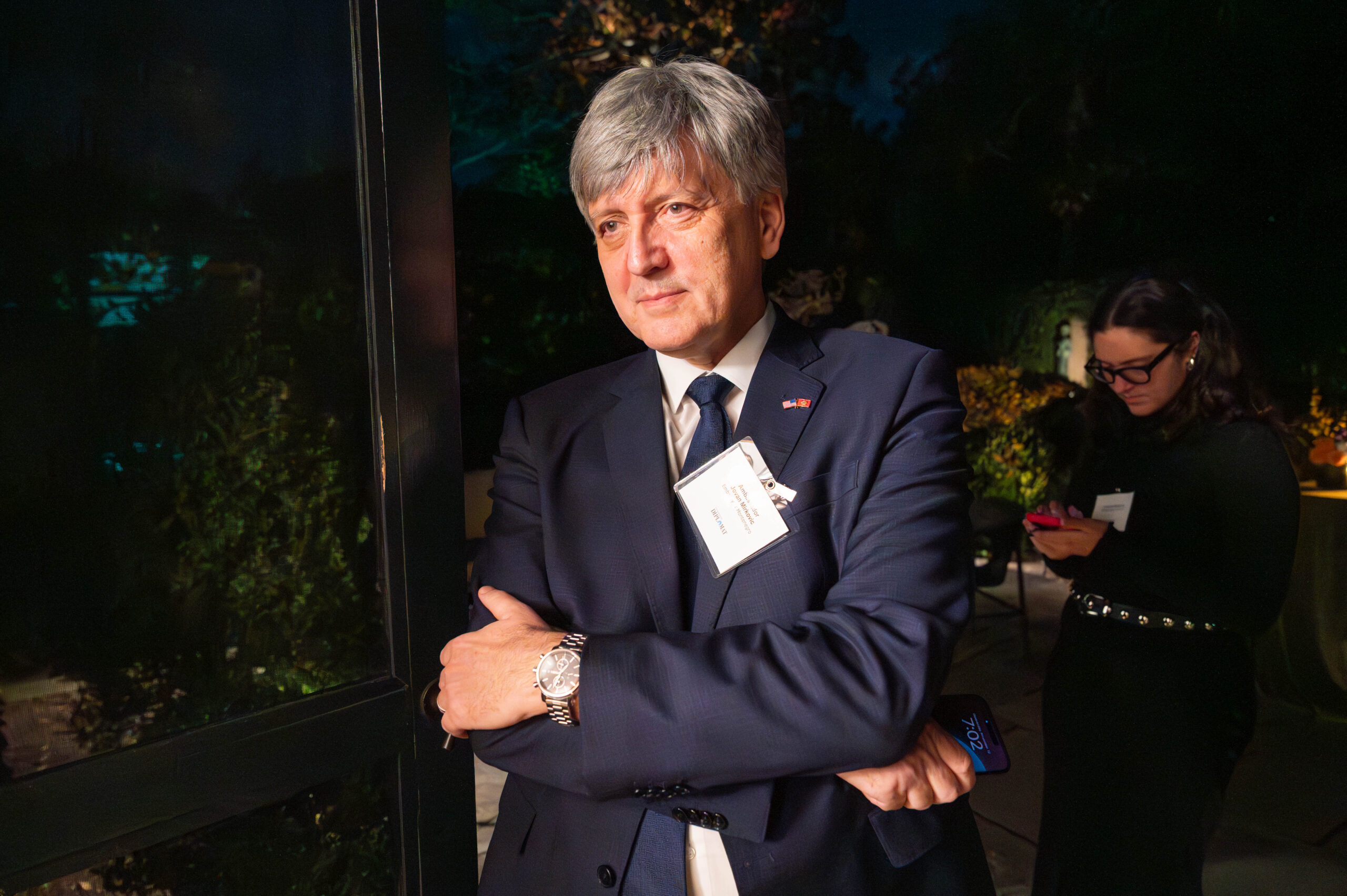
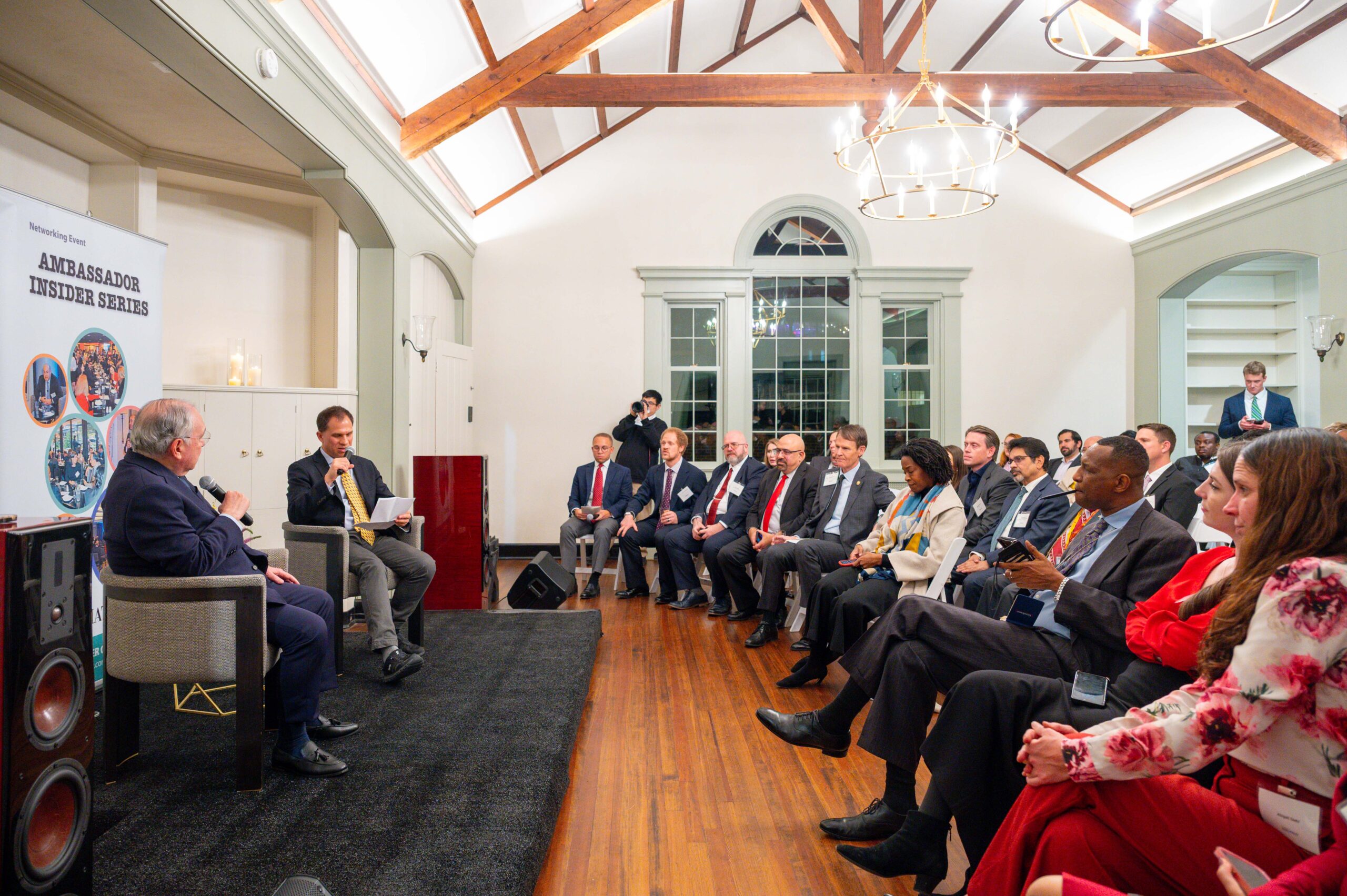
About 80 people attended the event at LXIV DC, a luxury villa in Georgetown, including Ambassadors Agniola Ahouanmenou of Benin, José Luís Guterres of Timor-Leste, Ambassador Abdul Ghafoor Mohamed of the Maldives and Jovan Mirkovic of Montenegro, as well as Rep. Jefferson Shreve (R-Indiana). It put the spotlight on the Philippines, whose 115 million inhabitants make it the world’s 14th largest country—and the 2nd-largest in population in the 11-member Association of Southeast Asian Nations (ASEAN) after Indonesia.

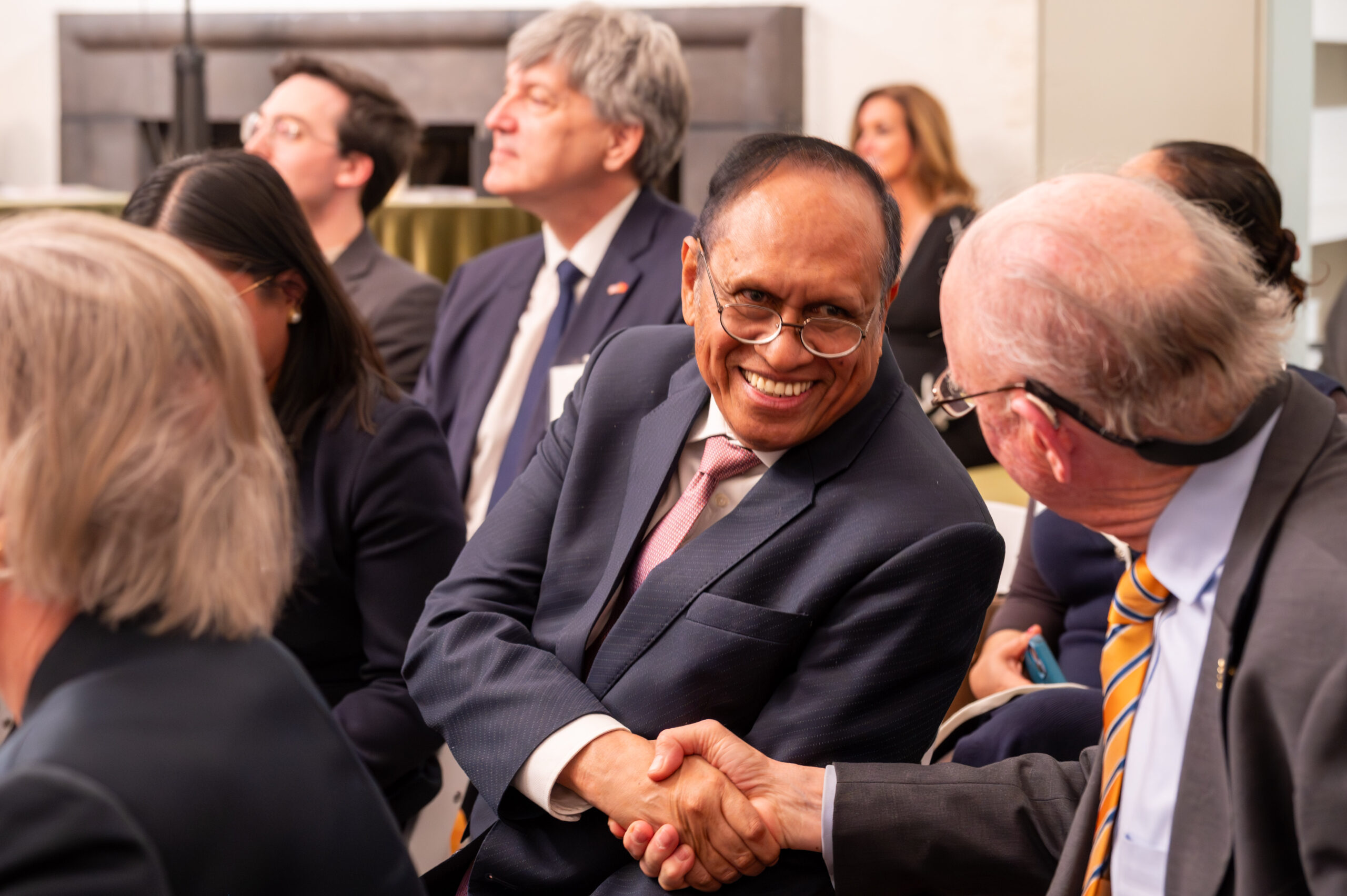
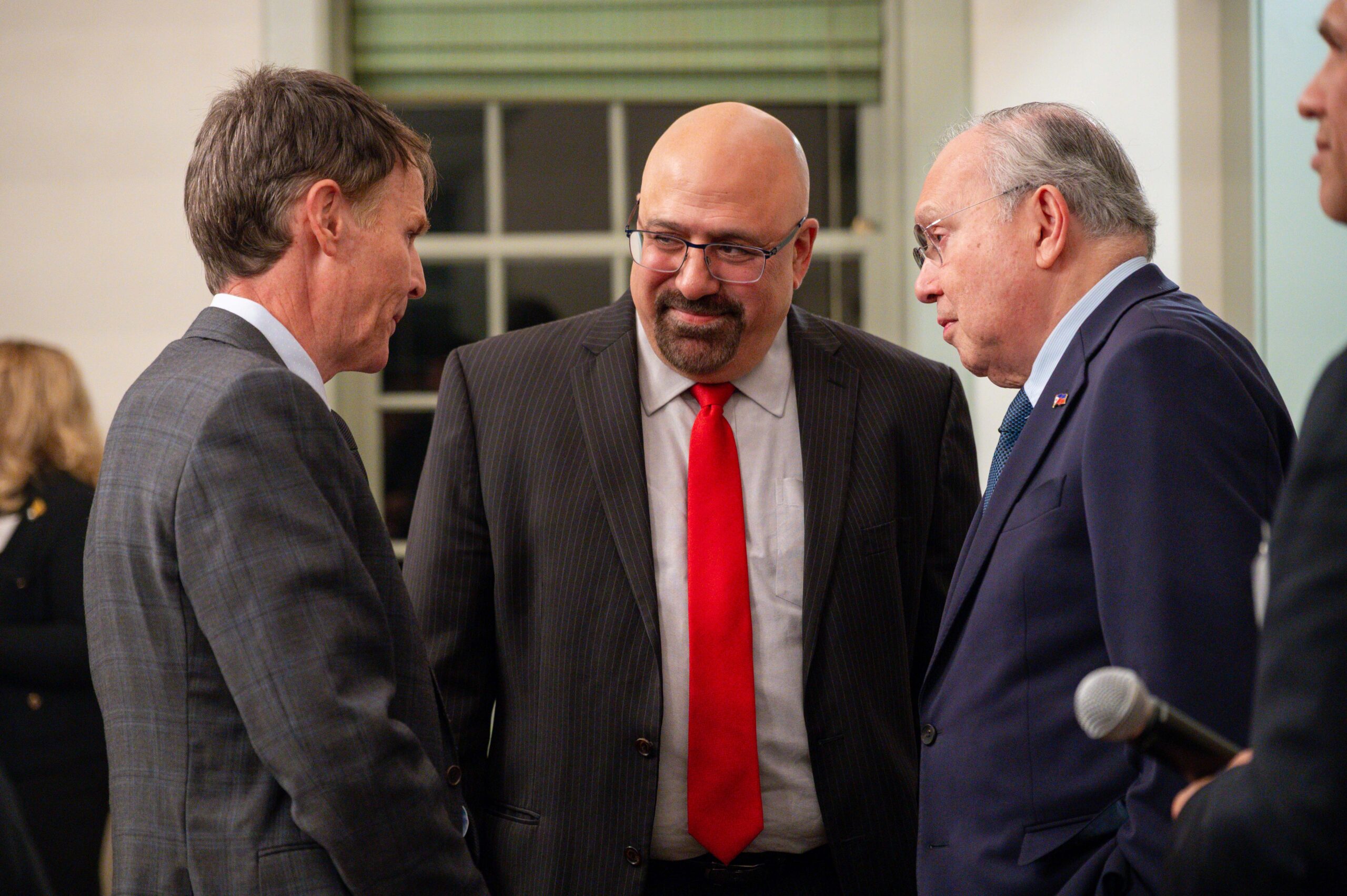
Romualdez, 78, is no stranger to diplomacy or to Washington, for that matter. A media executive who never held political office, he’s former president of the Manila Overseas Press Club, and vice president of the Rotary Club of Manila. Romauldez is also his country’s third ambassador in Washington with the same name. The first was the brother of the current envoy’s father, and the second was a cousin of his father.
The ambassador took over in November 2017 from his predecessor, José Cuisia Jr., following his appointment by former President Rodrigo Duterte, elected in 2016 with 38.5% of the vote.
Duterte raised eyebrows from the moment he moved into Manila’s Malacañang Palace when he compared himself to Adolf Hitler. He boasted that, “Hitler massacred three million Jews. We have three million drug addicts. I’d be happy to slaughter all of them.”
The current president, Ferdinand “Bongbong” Marcos Jr., is the son of longtime Philippine dictator Ferdinand Marcos, who died in 1989. In 2022, the younger Marcos was elected by a 59% majority. By that point, Romualdez had already been ambassador here for five years.
One of the biggest issues facing the Philippines today is its love-hate relationship with China.
The South China Sea is a potential flashpoint, given that six countries—the Philippines, China, Brunei, Indonesia, Taiwan and Vietnam—all lay claim to parts of it. About 5% of the world’s commercial container traffic moves through the South China Sea, and it’s also a repository of valuable oil and gas deposits, not to mention commercial fishing operations.
On Oct. 12, in the latest incident, the Philippines blamed Chinese maritime forces for deploying water cannon and ramming a Filipino vessel near Thitu Island, also known as Pag-asa. Reuters resported that in response, China’s coast guard said the vessel had “illegally entered” waters near Sandy Cay, a coral reef within the disputed Spratly Islands, leading to a collision.
The situation is “still very volatile,” said the ambassador.
“We’re very far from where we want to be, although today we have a regular bilateral dialogue with China at least once a month, if not every other month,” he said. “People come from Beijing to the Philippines and vice-versa. We need to find a peaceful way to resolve these issues.”
Romualdez called China’s 10-dash line “hogwash,” which elicited laughter from the audience.
“First, they had a nine‑dash line. Now it’s a 10‑dash line,” he explained. “They made a line from the shores of mainland China all the way up to the end of the Pacific region. Obviously, all the countries say that’s absolutely absurd.”
He added that in 1898, when Spain ceded the Philippines to the United States for $20 million following the Spanish-American War, a map was drawn up clearly showing the territory as including the Spratly Islands and Scarborough Shoal, among other places.
“Our fishermen have been fishing in this area for hundreds of years,” he said. “Today, every time they go out, they are harassed and intimidated. Very often, they go home with just enough to feed their families, and sometimes not even that. These are the people we’re fighting for.”
Yet despite the tensions, China remains the largest single trading partner of the Philippines, followed by the United States and Japan.
“Many countries within ASEAN have stronger ties with China when it comes to trade, especially with the tariffs the United States is imposing,” he explained. “Nonetheless, it is in our mutual interests that we have strong economic ties between our two countries. At the same time, we’re also clear—just like Vietnam and the other claimants—that the territory is non‑negotiable.”
Romualdez praised direct talks between Trump and Chinese President Xi Jinping.
“Anytime there is some kind of communication or dialogue between two leaders, it’s always good. It is when there is no communication that the problem begins,” he said. “We hope they come to an agreement, which is good for the economy of the world.”
For this reason, Philippine defense officials are keeping a close eye on what Beijing does with regard to Taiwan, which the Chinese consider a renegade province.
“We all feel that China won’t make a move on Taiwan. It is a calculated move. It’s a soft check to see where the problem really is,” he said. “This type of confrontation happens every now and then. Our assessment is that they’re looking to control the South China Sea so that they can blockade or isolate Taiwan. That’s their long‑term plan, and now it’s getting shorter.”
Romualdez said his country intends to spend 2% of its GDP on defense, but that in order to do that, the Philippine economy has to grow. And it can’t grow when the economy is hobbled by US tariffs and endemic corruption.
In July, the Philippines negotiated a deal with the Trump administration under which its exports to the United States are now subject to a 19% tariff, down from the 20% rate Washington initially planned to impose. In exchange for the 1% reduction, Manila agreed to drop all tariffs on US products including vehicles and pharmaceuticals.
“We managed to bring down the 20% tariff rate for the Philippines to 19,” Marcos said in a July 23 press briefing in the Oval Officee, after his meeting with Trump. “Now, 1% might seem like a very small concession. However, when you put it into real terms, it is a significant achievement.”
In 2024, the US ran a $5 billion trade deficit with the Philippines, with imports accounting for 0.4% of U.S. trade, according to data from the U.S. International Trade Commission.
“Fortunately, when President Trump visited Manila in November 2017, I met him and we had an immediate connection,” he recalled. “Fortunately again, we have some mutual friends who play golf, so I had a chance to play golf with him at his course in Mar-a-Lago in Palm Beach. That’s probably the reason I’m still here.”
He added: “This job requires you to have personal relationships, and we’re doing everything we can to make sure our relationship with the United States continues to remain strong.”
Meanwhile, the Philippines remains embroiled in political intrigue after the country’s Senate voted July 25 not to proceed with an impeachment trial against Vice President Sara Duterte, daughter of the ex-president. Last year, Duterte had threatened to hire an assassin to kill Marcos, his wife and the speaker of the House of Representatives in the event she herself was killed. The drama unfolded even as the International Criminal Court investigated the former president for “crimes against humanity”—specifically the killing of more than 6,000 people in anti‑drug operations during his presidency.
“The latest is that the vice president is hoping President Marcos is going to resign so that she can become president, but that’s not going to happen,” he said, explaining that his government is taking her threat seriously. “There was a move to impeach her, not only for that, but also on other corruption issues that were thrown against her.”
On another subject, Romauldez discussed how Trump’s crackdown on non-citizens has affected the Filipino-American community of 4.3 million people—one-third of them in Caifornia alone.
“I’ve advised many of those Filipinos that moved here in the United States many years ago—and even before President Trump began his second term—that if you can find a way legally to stay in the United States, by all means, do that now,” he said. “If you do not, then it is best that you voluntarily leave. DHS has told us that if they leave voluntarily, then there’s no record of them being deported, and there’s a chance for them to be able to come back legally.”
He added: “Many have done exactly that, but still, quite a number of them thought they could stay on. Unfortunately, many of them have been detained, and the process takes a long time.”
Right now, said the ambassador, “we’re facing many problems. Perhaps our GDP this year is not going to grow the way we want it to, because the president has canceled most infrastructure projects until he’s sure that they’re free from any kind of corruption.”
During the Q&A, an Indonesian journalist asked if there’s a “Plan B” in case the US commitment to the Philippines wavers.
“I don’t think we really need to have any kind of plan B because the bottom line, is if countries believe in what we believe in—which is democracy, freedom of speech and freedom of navigation in the South China Sea—then we’re on the same page,” he said. “That’s why we have a lot of support from countries all over the world because we’re on the right side of history.”
All photos by Ben Droz.