

|
Cover Story
With Trump’s Jerusalem Recognition,
|
||
|
Trump’s Tariffs
Trump’s Aluminum, Steel Tariffs
|
||
|
Votes to Watch
Latin America Has Big Votes This
|
||
|
Cuba in Transition
Cuba’s Raúl Castro to Step Down as
|
||
|
Nordic Vantage Point
Op-Ed: Security Cooperation
|
||
|
Medical
Why Does the U.S. Spend More on
|
||
|
|
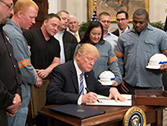 President Trump’s imposition of tariffs on steel and aluminum imports as part of his “America First” agenda has ignited a worldwide firestorm of anger, frustration and confusion — and fears of a tit-for-tat trade war.
 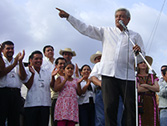 Against the backdrop of high-profile corruption scandals, a series of unpredictable elections and transitions will take place this year, notably in Brazil, Mexico, Colombia, Venezuela and Cuba. In total, nearly two-thirds of Latin Americans will elect a new president in 2018, possibly transforming the region’s politics for years to come.
 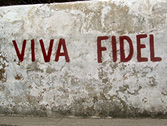 Come April 19, Cuba — for the first time in nearly six decades — will be led by a man whose last name isn’t Castro. But that doesn’t mean relations with Washington will get any better.
  The meeting on March 20 between U.S. Secretary of Defense James Mattis and Norwegian Minister of Defense Frank Bakke-Jensen confirmed the long-standing defense relationship between the United States and Norway. It also confirmed that our security cooperation is a two-way street.
  It’s well known that the United States spends a lot more for its health care than other industrialized nations do. But a new study claims that some of the purported explanations for why America’s health care bill is so huge simply do not wash.