
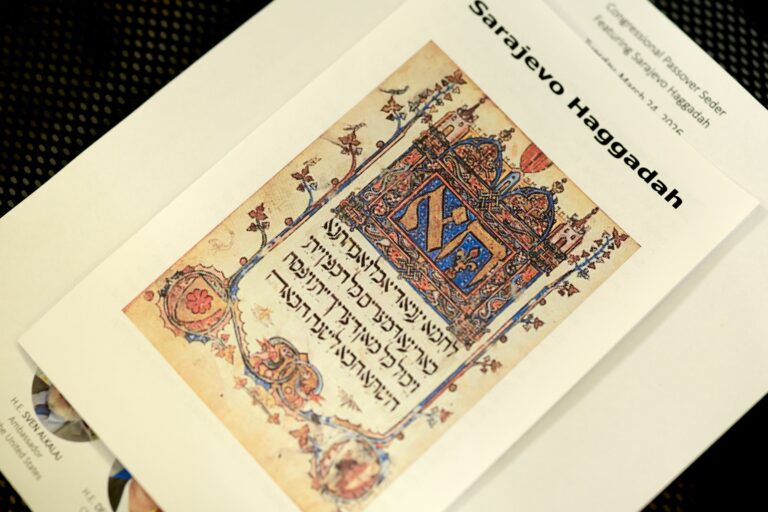
A priceless manuscript that survived the Spanish Inquisition, the Nazi invasion of Yugoslavia and the Bosnian civil war of 1992-95 was the focus of a special Passover celebration last week on Capitol Hill.
The Sarajevo Haggadah, an illuminated manuscript that originated in Barcelona, is believed to date from around 1350—making it one of the oldest Jewish texts of its kind in the world. The original document is today guarded in a special temperature-controlled room at the National Museum of Bosnia & Herzegovina in Sarajevo.
Readings from this Haggadah were featured in a cemetery marking Passover 2026, corresponding to the Hebrew year 5786. The eight-day holiday, which this year begins the evening of April 1, tells the Biblical story of the Jewish exodus from Egypt and their redemption in the land of Israel.
Some 200 people attended the March 24 festival, which took place at the Canon House Office Building. The event was co-sponsored by the Bosnian Embassy and by Project Legacy, a nonprofit organization that promotes Jewish history and funds the restoration of synagogues, Jewish cemeteries and other heritage sites threatened by neglect or destruction.
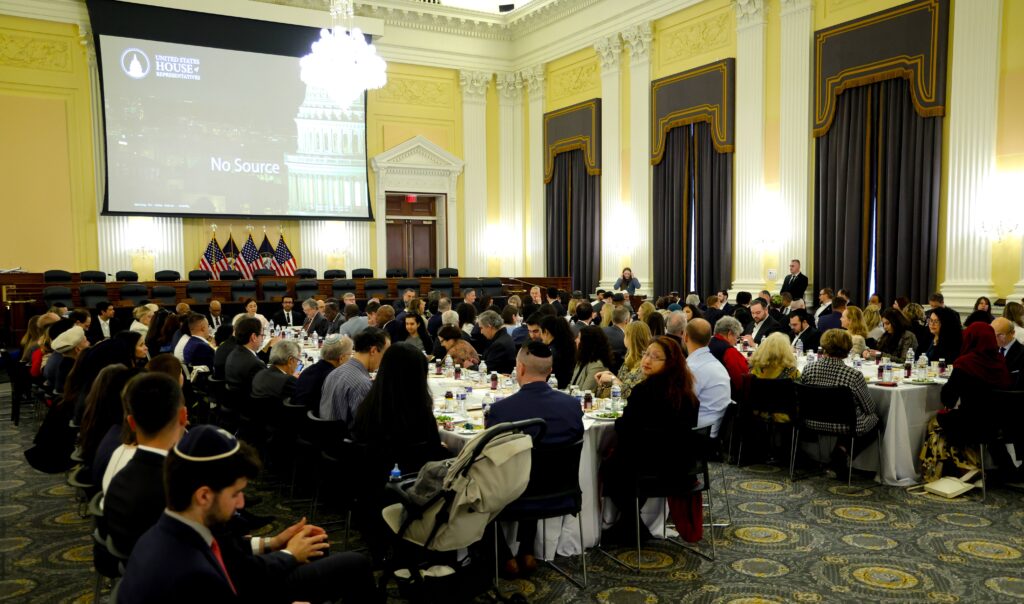
Rep. Randy Weber (R-Texas), organized the bipartisan Seder, along with a dozen other lawmakers including Reps. Chuck Fleishman (R-Tennessee), Marianette Miller-Meeks (R-Iowa), Josh Gottheimer (D-New Jersey), Steny Hoyer (D-Maryland) and Steve Cohen (D-Tennessee).
The Seder itself was led by Bukharian Chief Rabbi Itzhak Yehoshua. The traditional “four questions” were asked by attending ambassadors, including Sven Alkalaj, Bosnia’s ambassador to the United States and a member of one of Bosnia’s most respected Sephardic Jewish families. Other participants included Rabbi Yonothan Yehoshua, the dean of Yeshiva Ohr David in Jerusalem, and ambassadors from South Sudan and Grenada.
Somaliland’s representative to the United States was also in attendance and was warmly received by Ezra Friedlander, founder of Project Legacy.
In a recent interview with the Sarajevo Times, Alkalaj said the presence of Bosnian Foreign Minister Elmedin Konaković and Denis Bećirović, chairman of the presidency of Bosnia & Herzegovina, was highly significant.
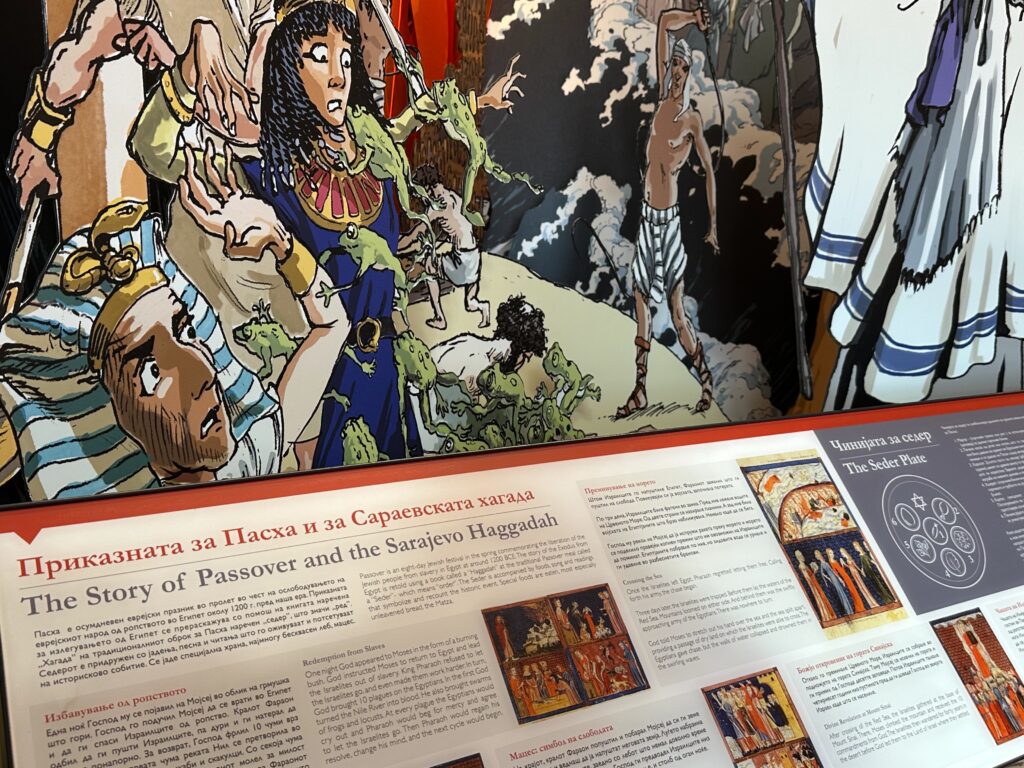
“In this way, we are making it known that we understand, support and actively participate in events that are important for BiH, especially in light of developments on the domestic and international political scene,” he told the online newspaper, calling the Sarajevo Haggadah “the most famous, most beautiful, most valuable Jewish book in the world.”
During the Nazi occupation of Bosnia, the manuscript was saved from destruction by Bosnian Muslims, most notably Derviš Korkut, who risked his life to conceal the text rather than allow it to be seized or destroyed. Its preservation has since been widely cited as a powerful example of interfaith solidarity during one of history’s darkest periods.
Other dignitaries offering remarks included Daniel Lawton, deputy assistant secretary in the US State Department’s Bureau of European and Eurasian Affairs, and Ellen Germain, the State Department’s special envoy for Holocaust issues. Mohammad Bin Abdulkarim al-Issa, secretary general of the Muslim World League, addressed the gathering via video.
Friedlander said the tribute aimed to “underscore themes of remembrance, tolerance and shared responsibility ahead of the Passover holiday, using the Sarajevo Haggadah as a central example of how acts of courage across faith lines can preserve history and inspire future generations.”
