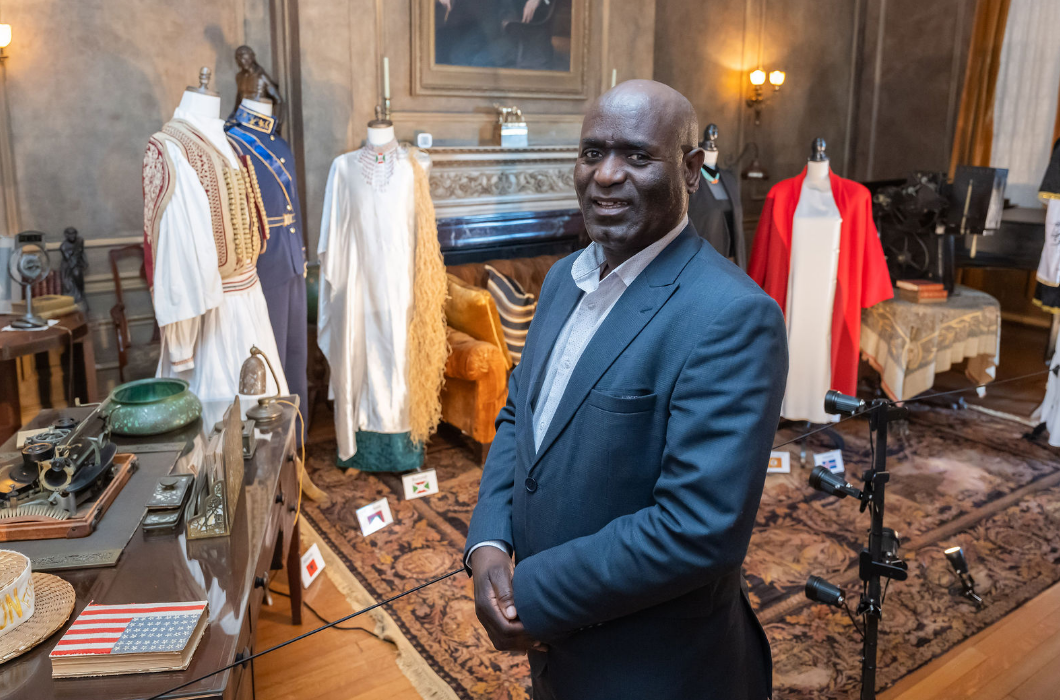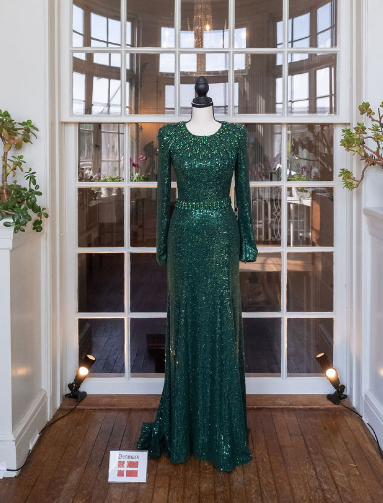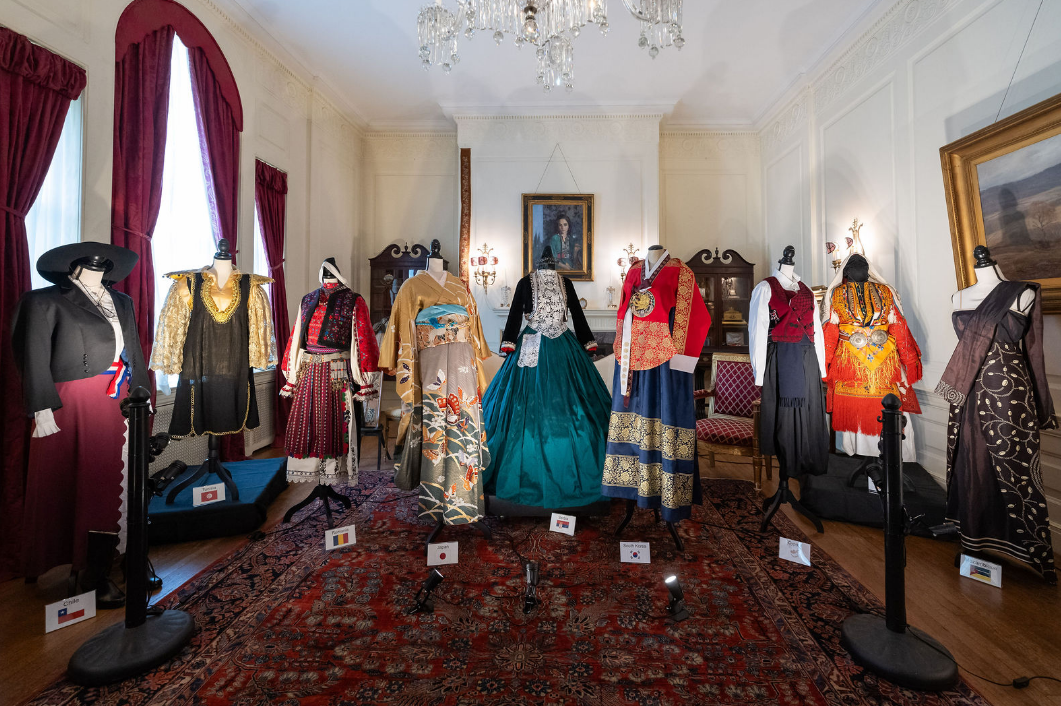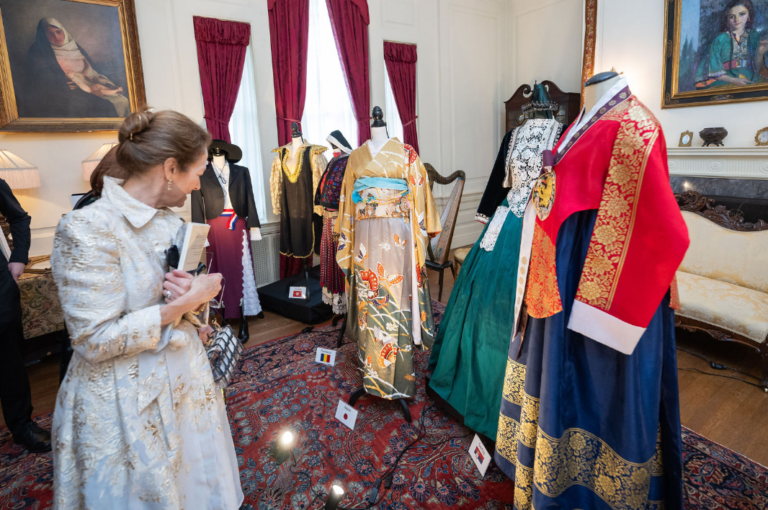
Denmark’s Princess Marie was the guest of honor at an annual fashion show hosted April 27 by the Woodrow Wilson House that featured unique garments representing 59 countries from Albania to Zimbabwe.
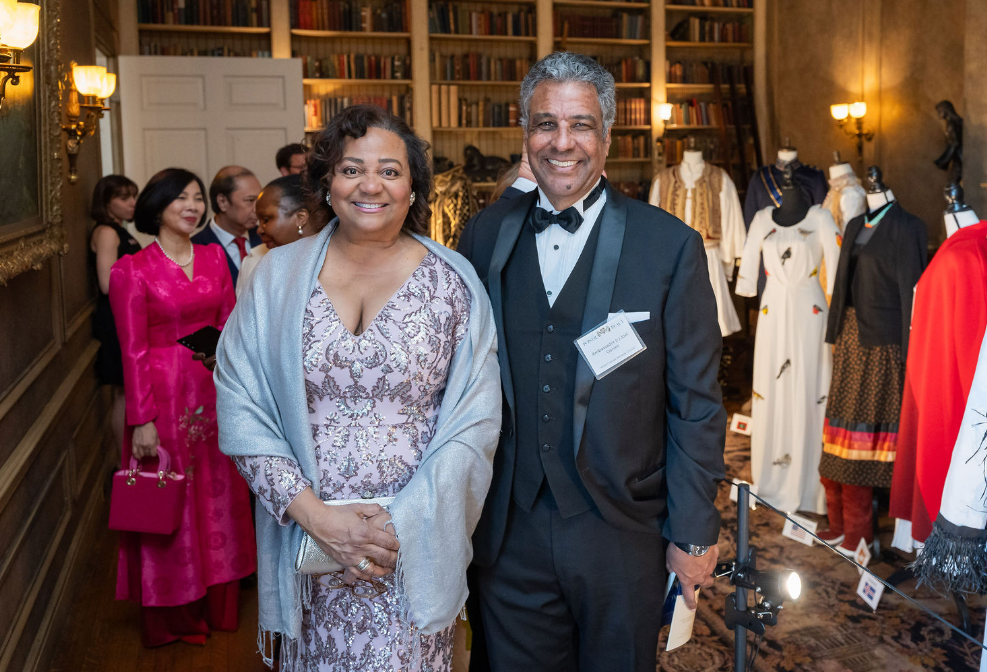
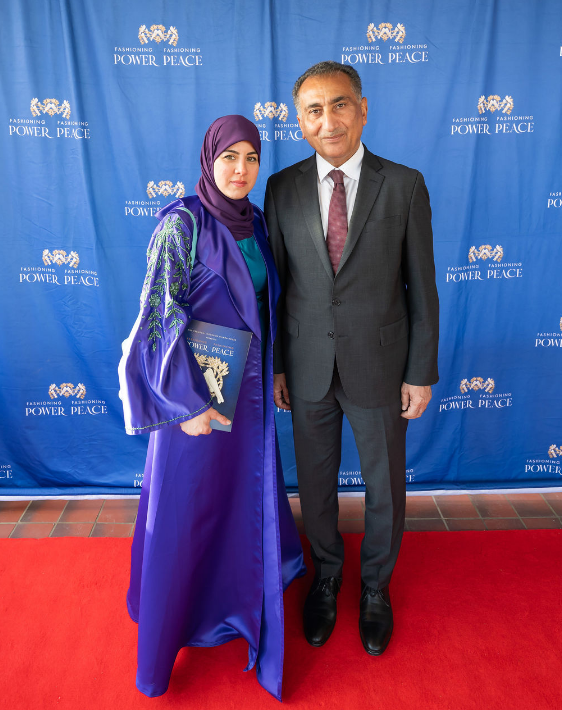
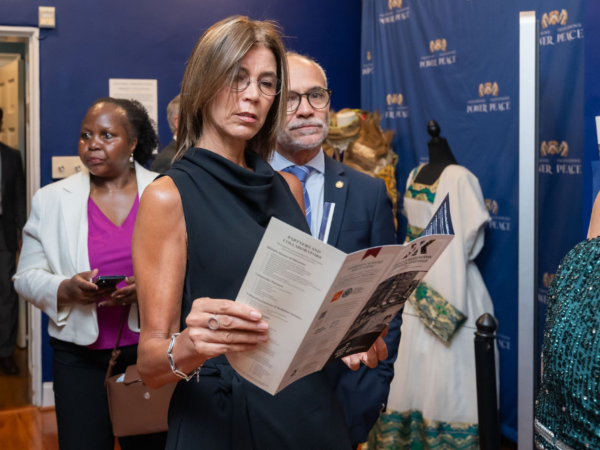
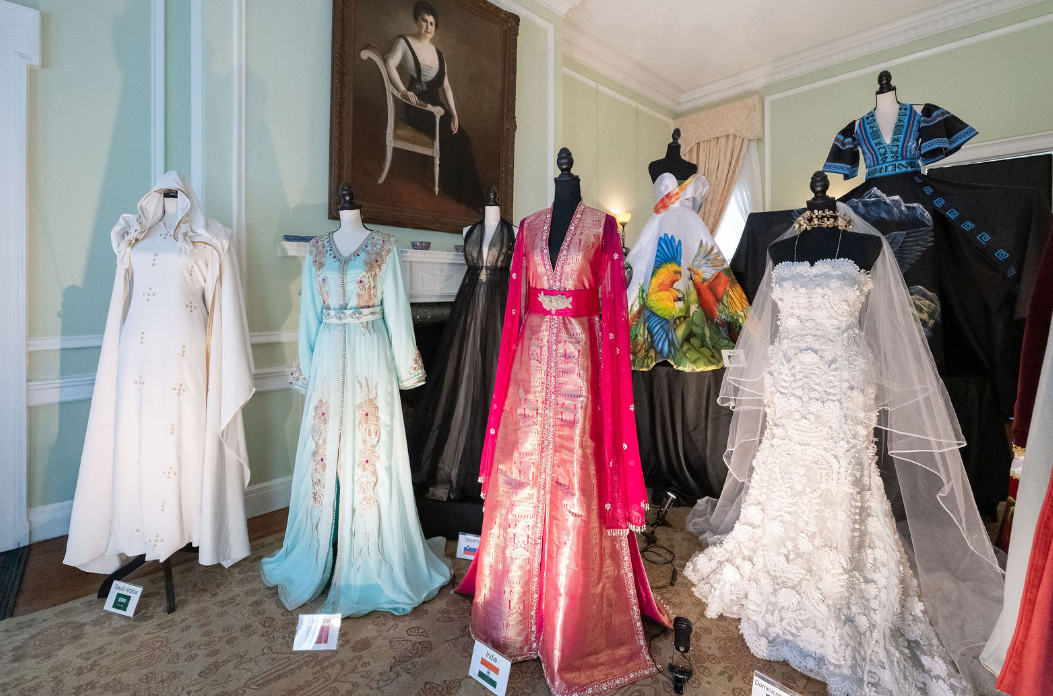
The 2026 “Fashioning Power, Fashioning Peace” exhibit attracted ambassadors, cultural leaders and fashion enthusiasts who came together to celebrate global identity and design.
Organized mainly by Elizabeth Karcher, the event’s creations showcased a unique and fun aspect of each country’s culture.
Uruguay, for example, displayed a silver, sparkly candombe costume designed by Walter and Edith Miranda featuring a headdress filled with feathers and a diamond-studded top. Candombe is a vibrant, drum-based Uruguayan music and dance rooted in African Bantu heritage.
“It represents the spirit of the culture of carnival, which is so important in Uruguay,” said Daniel Castillos, the country’s Washington-based ambassador.
Panama, participating in the show for the first time, displayed a dark blue denim jacket paired with a flowy skirt featuring fish, turtles, flowers and geometric patterns. The outfit, designed by Annie Chaijin, was accompanied by a bold neck piece.
“She designs these Panamanian textiles with denim and mixes them, so that you can use them for everyday use,” said Ana Irene Delgado, Panama’s ambassador to the Organization of American States. She added that the goal was to create a piece that promotes sustainability and respect for natural resources.
Also featured was a shiny, strapless mermaid-style gown designed by the late Oscar de la Renta, a native of the Dominican Republic. Paired with a bedazzled large necklace, the piece demonstrated that the Caribbean nation’s contribution to the fashion world are significant, according to Dominican Ambassador María Isabel Castillo Báez.
Janet Pitt, chair of the event’s host committee, said fashion serves as a bridge to create meaningful connections between people who would not typically cross paths.
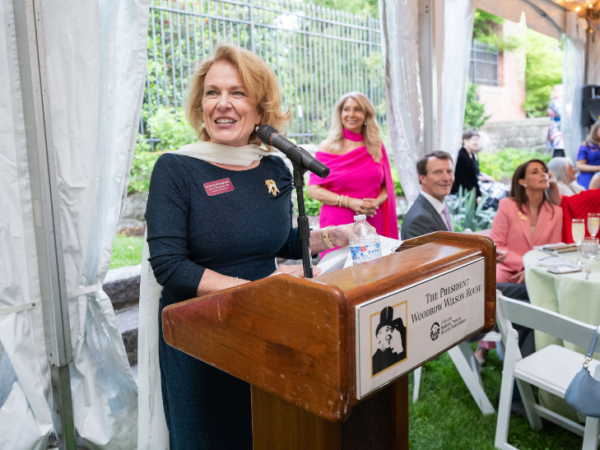
“There are so many ways that we can come together, and fashion is one,” said Pitt, who then read a poem she had written for the occasion.
In a poem that Pitt had written and prepared for the evening, she expressed how significant and memorable the clothes we wear are both in a professional and everyday setting.
“Before a word is spoken, before a hand is shaken, before a seat is offered, before a careful note is taken, there is a quieter language, one seen but never heard, the diplomacy of fabric, more fluid than a word,” she said. “Because long before ‘Dear Ambassador’ or ‘With all due respect,’ your outfits are already speaking—sometimes with more effect.”
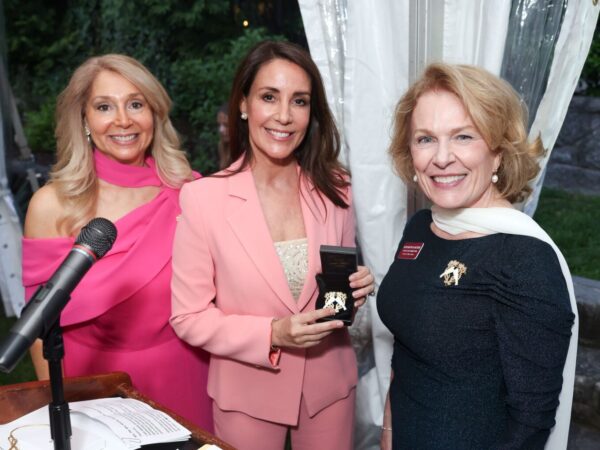
Princess Marie, the evening’s honored guest, then took the stage in a classy, feminine pink pantsuit. The event’s executive director, Elizabeth Karcher, presented her with the “Esther Pin” designed by local jewelry retailer Ann Hand.
“I am deeply honored to receive the Fashioning Power, Fashioning Peace award this evening. I’m especially touched to accept the Esther Pin,” said the 50-year-old princess, a humanitarian widely praised for her support of the Danish UNESCO National Commission, and her advocacy on behalf of health and education.
“Fashion in this sense is far more than design. It reflects identity, history and dignity,” she said. “It carries stories of nations and individuals alike, and when we share those stories across borders, fashion becomes a form of dialogue—one that invites understanding, respect and connection.”
All proceeds from the exhibit will support the ongoing operations, preservation and educational mission of the Woodrow Wilson House.
All photos courtesy of the Woodrow Wilson House.