

America is the world’s runaway leader in attracting foreign direct investment (FDI), its dominance driven by an abundance of factors, including economic strength, numerous strategic sectors and pro-business policies. America’s value proposition was in evidence once again at the SelectUSA Investment Summit, May 3-6, in National Harbor, Maryland, the largest yet of a yearly U.S. Department of Commerce program that promotes inward FDI.
Dozens of countries hold conferences and networking summits, though few replicate the federal-state structure and scale of SelectUSA. So, what are a few ways other nations pitch themselves to American companies? After all, American investment is highly prized, cherished for its ability to serve as a magnet for even more FDI and in creating jobs.
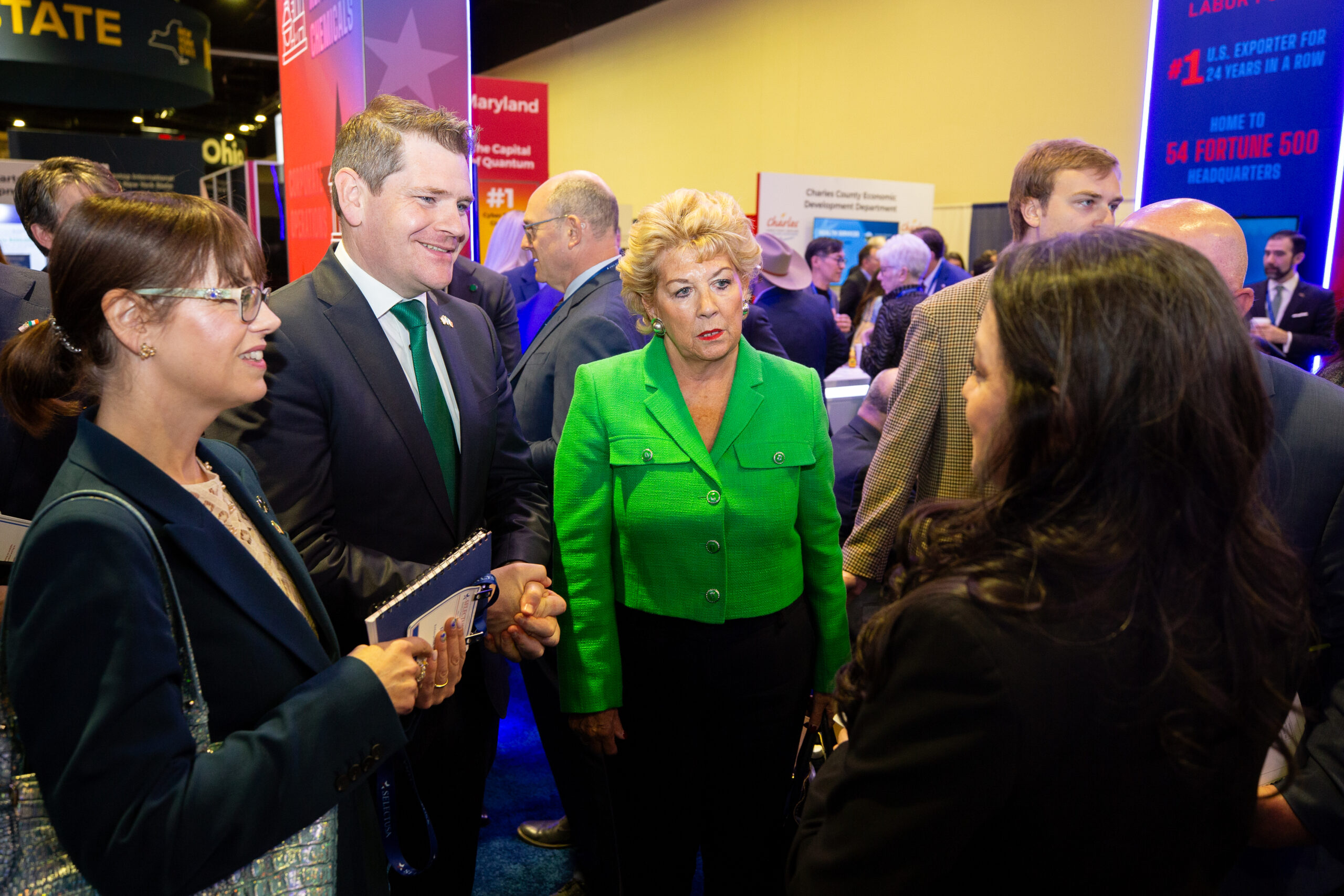
In terms of attracting American FDI, countries will often begin by highlighting enticing assets they possess, such as a particular natural resource, a low-cost yet capable workforce, or extended periods of political stability. Where a nation is lacking in one or another of these qualities, it will stress other attributes.
For decades, Argentina has endured multiple spasms of economic distress, reverberating through its society and impacting not only its own perception globally, but also stigmatizing Latin America as a whole.
Nonetheless, with its rich natural resources, 99% literacy rate, and boasting the highest English proficiency on the continent, Argentina remains attractive to American investors across sectors such as mining and agribusiness.
Through instruments like bilateral investment treaties and the extensive use of trade missions Argentina actively courts American business. It does so by highlighting various economic processes the government in Buenos Aires has undertaken, such as the easing of regulations and calling attention to improvements it has made in economic stability.
Another positive feature that a foreign nation may emphasize when courting prospective American investors is its business and legal protections such as with land rights, intellectual property, and in meeting contractual obligations. Without it, American companies, especially those involved in advanced technologies, are unlikely to set up operations.
For American knowledge-based industries, strong real estate and intellectual property rights are critical for attracting and sustaining investment because they create the legal certainty and incentives needed for long-term economic activity.
Finland is the world leader regarding property rights protections, according to an index compiled by the U.S. Chamber of Commerce, while Singapore maintains one of the most robust intellectual property rights systems, including copyrights, trademarks, patents, and trade secrets. Other nations, for example, India, point to the significant legislative strides it has made in intellectual property rights owing to the nation’s impressive growth in patents and trademarks.
Kazakhstan has been actively pursuing U.S. business, with a high-profile meeting having taken place in New York this past April with firms such as Citigroup. In his opening remarks at the meeting the ambassador of Kazakhstan, Magzhan Ilyassov, called attention to his nation’s constitutional reforms and steady institutional modernization. Meanwhile, the chairman of the Kazakhstan National Bank outlined the country’s current macroeconomic agenda, while highlighting the key priorities of its financial policy.

Nations possessing large diaspora communities in the United States will build off sister cities/sister state agreements, thus drawing upon shared ancestries and cultural connections. Even the existence of direct flights can serve as a catalyst for developing international ties.
Perhaps the most important attribute a country can emphasize in luring American investment is the trade and market access it provides. Since investment from other nations tends to follow American money into new markets, thus mitigating risk and taking advantage of established supply chains, the presence of U.S. firms is an all-around plus for host nations in attracting even further FDI.
“North Africa has been positioning itself as a manufacturing hub and export platform linking Europe, Africa, and the United States,” said David Hamod, president and CEO of the Washington, D.C. based National US-Arab Chamber of Commerce (NUSACC).
By their mere presence in a country, U.S. companies send a signal about a host nation’s standing in the world… its integration into global supply chains, its economic competitiveness and ability to attract capital. Ignoring for a moment the ebb and flow of tariff levies, Bahrain, Chile, Colombia, South Korea, Morocco, Panama, and Peru are prime examples where U.S. companies have enjoyed increased geographic reach.
Approximately half of all global trade occurs between countries sharing a preferential trade agreement (PTAs). Especially for small to medium enterprises seeking to expand beyond American soil, it is crucial to map one’s target markets to a PTA, if available. It is here that many smaller businesses are often in the dark, sometimes even about the mere existence of a PTA. Foreign nations need to be aware of this oversight in their promotional material.
–
This article was originally published in our 2026 Embassy Directory. Get your copy here.
