
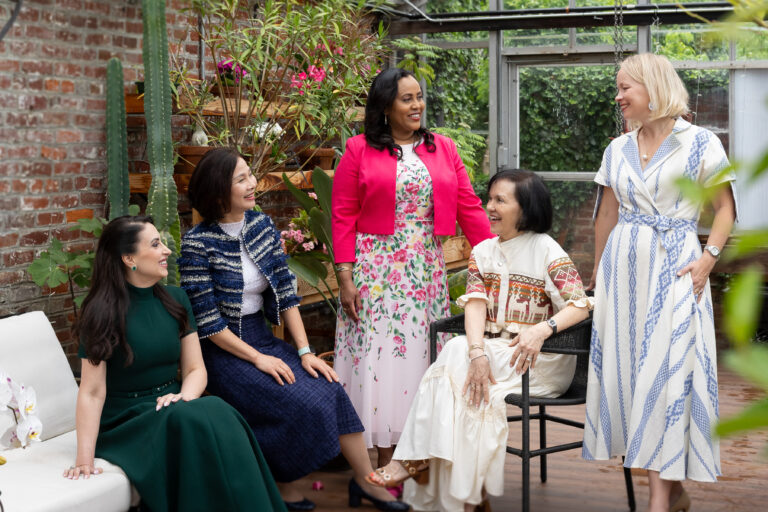
From hosting formal gatherings to fostering connections across cultural divides, Washington’s diplomatic spouses live in an overlooked—yet vital—world of diplomacy.
The wives and husbands of ambassadors posted in the nation’s capital take center stage in cultural diplomacy, bringing the traditions of their countries to the United States while engaging in the international mosaic of DC’s diplomatic community.
It’s not an easy job, as many of them readily admit. They must navigate protocol and public life alongside their partners while juggling personal responsibilities and the expectations that come with representing their countries—a role which often comes with no clear training.
To better understand them, I interviewed five of the nearly 180 diplomatic spouses in Washington from Bahrain, Mexico, Estonia, Djibouti and Vietnam. Whether it’s their first time living abroad, like Mexico’s Cecilia Moctezuma, or seasoned spouses like Vietnam’s Bich Van Tran— a former diplomat herself—each play a vital role in Washington and the diplomatic scene during their tenure.
Meet the Spouses
Shaikha Aisha Al Khalifa is the wife of Bahrain’s Shaikh Abdulla Rashed Al Khalifa, They have been posted here since July 2017 and have five children between the ages of 9 and 19.
Cecilia Moctezuma and her husband, Ambassador Esteban Moctezuma, have been in Washington since February 2021. This is the couple’s first international posting. They have three grown children and seven grandchildren.
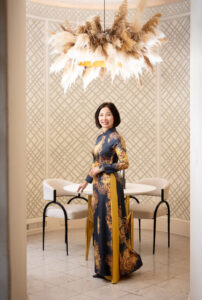
Liis Prikk and her husband, Estonian Ambassador Kristjan Prikk returned in May 2021 for their third stint in Washington. They have three teenage children.
Fatouma Souleiman Aouled is the wife of Ambassador Mohamed Siad Doualeh of Djibouti. The parents of four children, they’ve been in the United States since January 2016, making this their third diplomatic posting.
Bich Van Tran is the wife of Vietnamese Ambassador Nguyen Quoc Dzung. This is their second diplomatic posting. The parents of two sons and two grandchildren, they’ve been here since February 2022.
Their stories offer a rare glimpse into the personal side of diplomacy, where soft power is just as vital as global policy and protocol.
How do you define your role as a diplomatic spouse?
For these women, being married to an ambassador gives them front-row seats to the exchanges that shape ties between their countries and the United States.
Al Khalifa sees her role as an extension of Bahrain’s diplomatic mission.
“Whether through organizing receptions, participating in cultural showcases or supporting charitable initiatives,” she said, “I work to build bridges between Bahrain and the United States, highlighting our shared values and distinct heritage.”
Cultural initiatives are at the core of their roles, not only by hosting events but also building bridges to diaspora communities and supporting other Washington-based embassies and charities.
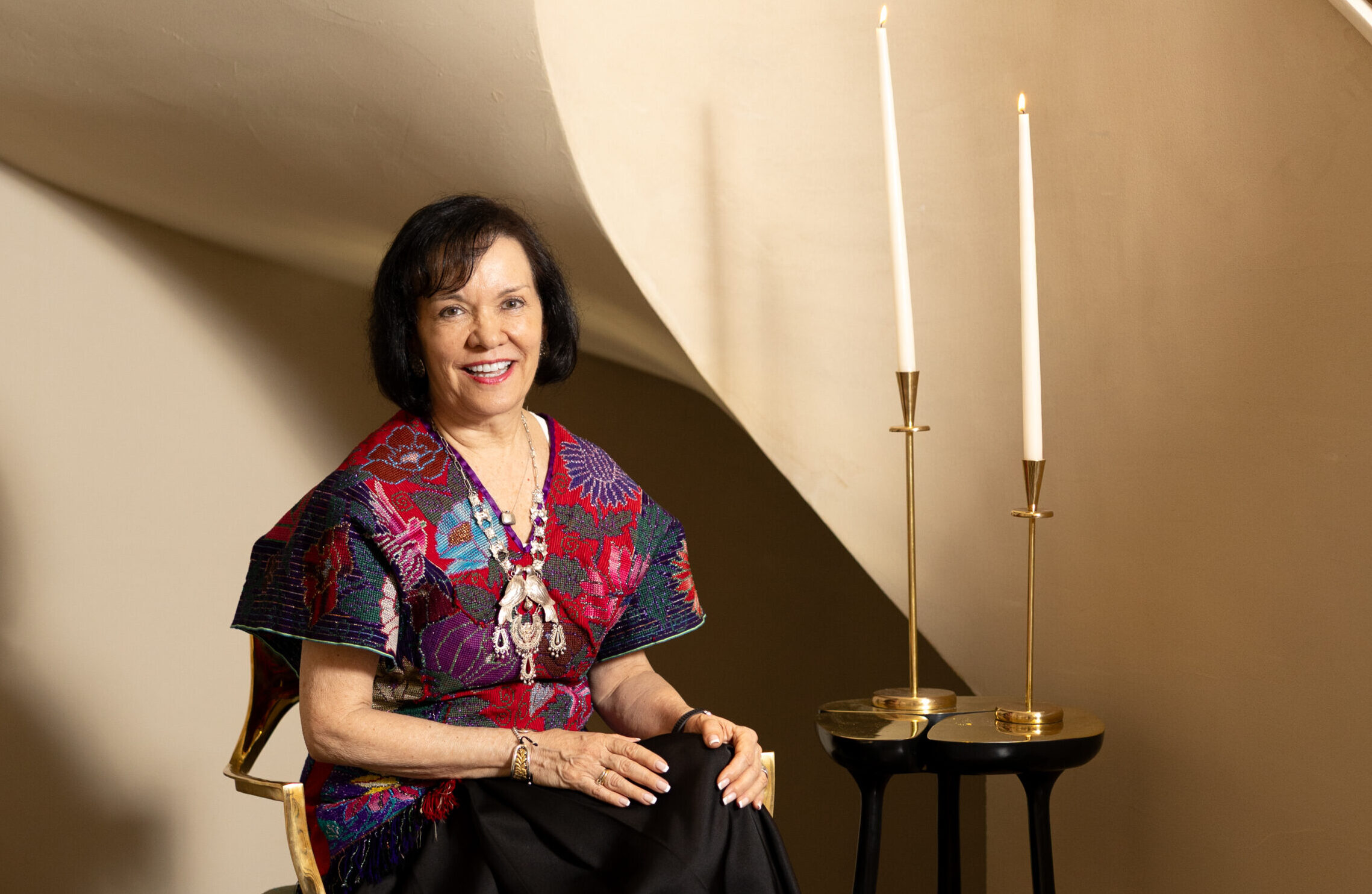
Moctezuma, who has long supported the arts, helps curate exhibits and events at the Mexican Cultural Institute. Promoting it helps her and her husband “be close to the Mexican community in the US, which is almost 40 million people,” she said.
Vietnam’s Van Tran says she was initially nervous about taking on this soft diplomacy role after her own career came to an end. However, she’s found that her past experiences have given her greater appreciation and excitement about sharing the customs of her Southeast Asian country.
“I kept wondering about adapting to a new life which I thought might be boring and dull. Amazingly, that was not the case,” she said, noting that this her second time in this role; the first was in Budapest.
“I found the chance to apply my diplomatic skills and my own innovative thinking to practically support the embassy’s works,” she said. “I devoted myself to initiating cultural showcases and exchanges, bringing Vietnamese culinary arts, artworks and artistic performances, as well as our traditional costumes, to friends from various circles here in the US.”
But that’s not the only aspect of their role. These women often find themselves educating Americans and other diplomats who know little about their countries.
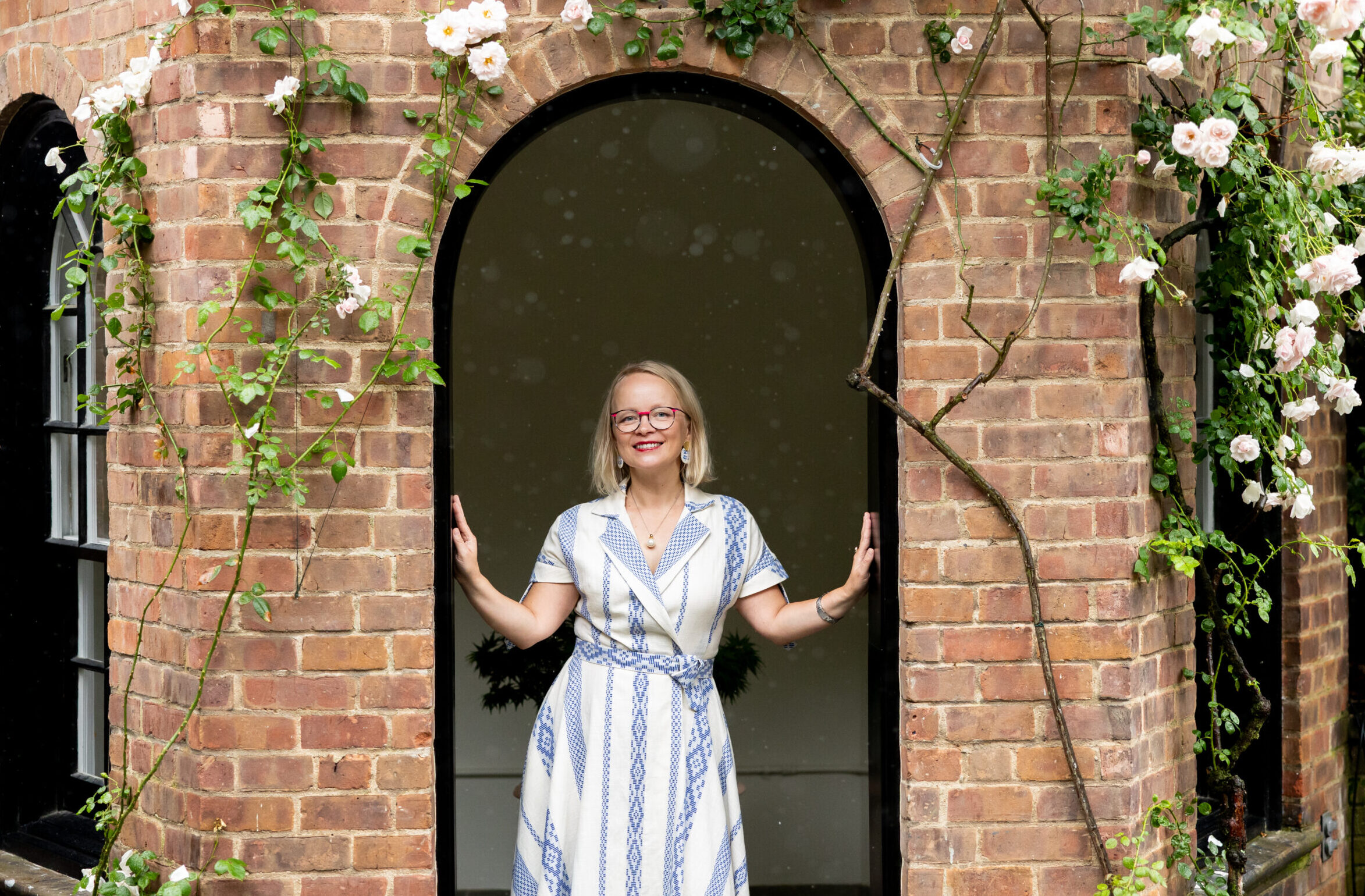
“I stay up to date with what is happening back home, here and around the world. And I try to bring that perspective into conversations and gatherings,” said Prikk.
“We welcome groups to the embassy and the residence that is our home, engaging with Americans who want to learn more about Estonia or are preparing a trip there, and it’s always a pleasure to share a bit of our culture and experiences.”
Djibouti’s Aouled says it’s important for her to shine an upbeat spotlight about her small East African nation.
“I have tried to the best of my ability to also tell a positive story about my country,” she said. “My fellow colleagues and American friends have been passionately curious about Djibouti…a very strategically located country, but also a hidden travel gem.”
“I never tire of telling them about the good, kind hearted and compassionate people of Djibouti, and our culture, art and food.”
How much time do you devote to organizations in Washington?
Upon their arrival in Washington, all the women we interviewed joined one of five DC-based international clubs that cater to political, military, civic, cultural and media leaders.
Al Khalifa and Moctezuma belong to the International Friendship Club, Van Tran and Aouled are part of International Club 1, and Prikk is a member of International Neighbors Club 1. Most also participate in a book club exclusively for ambassadorial spouses in Washington.
Beyond diplomatic circles, these women volunteer in charities and organizations that strengthen their own interests and heritage. Besides the Mexican Cultural Institute, Moctezuma belongs to the Sulgrave Club, an elite women’s group that hosts frequent lectures, concerts and fine dining.
Aouled is the dean of the Association of Spouses of African Ambassadors and is active in both Cultural Exchange for Diplomats and the Muslim Women’s Association.
Van Tran is also a member of Cultural Exchange for Diplomats, along with the International Ladies Club and the ASEAN Spouses Circle—a group for diplomatic spouses of the 10 member states of the Association of Southeast Asian Nations. She’s also an honorary member of the Asian-American Chamber of Commerce.
Prikk, meanwhile, co-chairs the Eleanor Roosevelt Dialogue at the Center for Strategic and International Studies. She and her husband also support various charities including the National Multiple Sclerosis Society and the Choral Arts Society of Washington.
Likewise, besides spearheading her own initiatives, Al Khalifa is a member of the Muslim Women’s Association and is on the board of Washington Performing Arts.
“The arts are a powerful form of diplomacy, and my husband and I are deeply committed to supporting them. We attend and occasionally co-host events that promote emerging and established artists, both from Bahrain and the US,” Al Khalifa said.
“I’ve had the privilege to participate in international art fairs, cultural panels and museum partnerships that celebrate the richness of Bahraini culture while embracing the diverse artistic scene here in Washington.”
What is most rewarding, and challenging, about being a diplomatic spouse here?
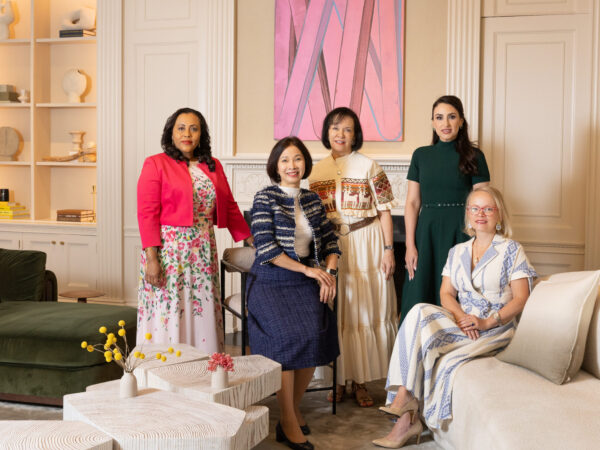
These women say the most meaningful aspect of their tenure in Washington is the connections they’ve made with each other and in the community. That camaraderie was evident when they gathered for their photo shoot: different walks of life and in different stages of their lives, they’re united by the unique experience of being the spouse of a serving ambassador.
“This is an amazing and inspiring country,” said Aouled. “It is a center of innovation full of people filled with enthusiasm and a phenomenal can-do spirit. You have colleagues and diplomats that are at the top of their game with whom you learn and grow.”
Despite occasional feelings of homesickness, these women agreed that representing their various countries through cultural programs, engaging with their diasporas and forging links with their diplomatic peers are all essential in shaping the image of their nation abroad.
While these wives won’t be in Washington forever, many are creating an unforgettable legacy in the meantime, including Prikk, who is bringing local Estonians back home in July to perform at the Estonian Song and Dance Festival. Likewise, Aouled is writing a cookbook dedicated to the cuisine of Djibouti.
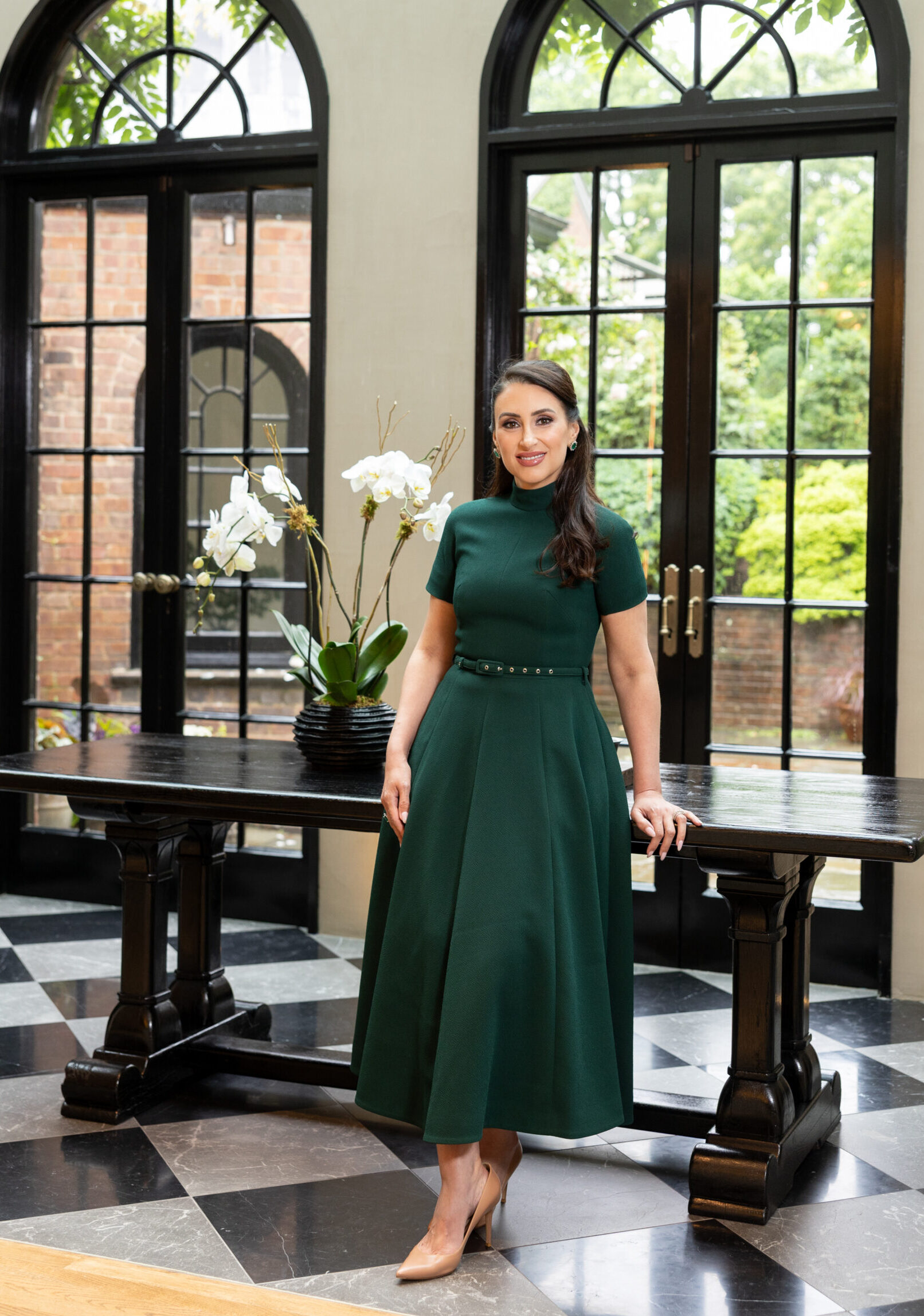
Photos by Jessica Latos, taken at LXIV DC, a private villa available for rent in Georgetown, Washington DC.
