
By: Malak Hijazi
Israel wants you to believe that airdrops and symbolic aid trucks will solve the famine in Gaza. Don’t believe them. These measures are not meant to end hunger, only to quell growing global outrage as the genocide continues unchecked.
Recently, several friends and colleagues messaged me about protests and international outrage over the famine in Gaza. “There’s been a huge push,” they said. Israeli media spoke of growing global pressure on Israel and how its image had been damaged in the eyes of the world. Some Arab and Western countries even floated the idea of airdropping aid again, ignoring how unsafe and ineffective it has always been.
On Saturday night, July 26, Telegram chats where people in Gaza discuss news went crazy. It started with Israeli officers admitting that aid had never been stolen by Hamas. Then came the surreal headline: Israel deciding to drop aid, as if they weren’t the ones controlling all crossings and borders, as if trucks had not been stacked for months that they refused to let in. They also declared tactical humanitarian pauses, notably from 10 a.m. to 8 p.m. in Gaza City, Deir al-Balah, and Muwasi, to create limited aid corridors for UN convoys. Egypt announced it would allow dozens of trucks carrying tonnes of humanitarian aid to pass through the Karam Abu Salem (Kerem Shalom) crossing in southern Gaza.
We didn’t believe our eyes. What happened? What suddenly changed the Israeli stance?
How could this be possible when the same people had just announced they were no longer interested in ceasefire negotiations?
Visuals of parachuted food packages and aid trucks accompanied the news, along with statements filled with numbers and achievements. Hundreds of trucks were reported heading to Gaza. Relief seemed near. Finally, real action. We felt hopeful. After four months of documenting and speaking, it seemed someone had listened.
Meanwhile, many jokes circulated online: that Israel had agreed to let us be fed before completing the slaughter. Still, a small wave of relief passed through. Parents would finally have something to offer their children, even if only briefly.
But on the ground, nothing changed. The crisis ended only in the headlines.
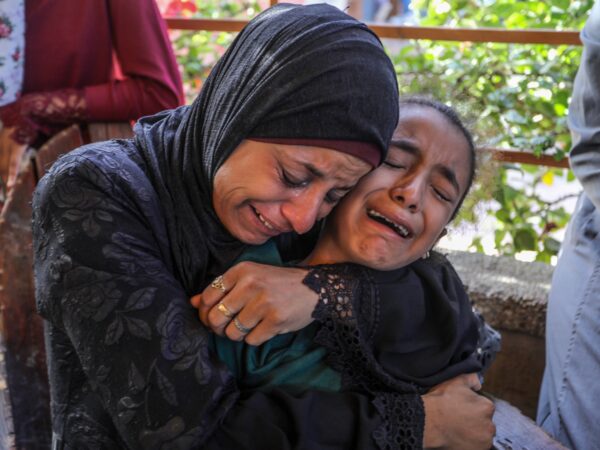
In the two days following Israel’s announcement of the tactical pause, Israeli forces killed over 160 Palestinians, including children. People thought they could take the chance to move, collect aid, or breathe, but that too became another Israeli trap. It was a lie crafted by Israel, amplified by Western media, declared without our knowledge, and never enforced. The bombing never stopped. The death toll remained just as high. Some Arab governments echoed the false narrative, while only a handful of aid trucks entered—much of it looted before reaching the people. Food prices soared to unbearable levels.
In fact, none of the current methods of aid distribution are functioning. Egyptian trucks are often looted before reaching civilians due to the collapse of order and lack of secure passage. Israeli forces have repeatedly attacked police escorts and civilians waiting for aid. Airdropped aid is minimal, scattered, and deeply dehumanizing.
There is massive media buzz around humanitarian pauses and aid convoys, but the reality is far worse. Aid enters in small, inconsistent trickles. Israel has allowed only symbolic amounts of fruit or goods, just enough for photos, not to solve the crisis.
Israel wants the famine to appear complicated—something out of its hands and nearly impossible to resolve. However, improving quality of life and ending the crisis can be done quickly and easily by simply opening the crossings and allowing aid, medicine, and commercial goods to enter.
It is striking how they try to invent other methods, such as airdrops or the Gaza Humanitarian Foundation. But these are well-planned performances. Both share humiliation and carry the underlying message that aid will not reach everyone equally. They are solutions that are not meant to solve.
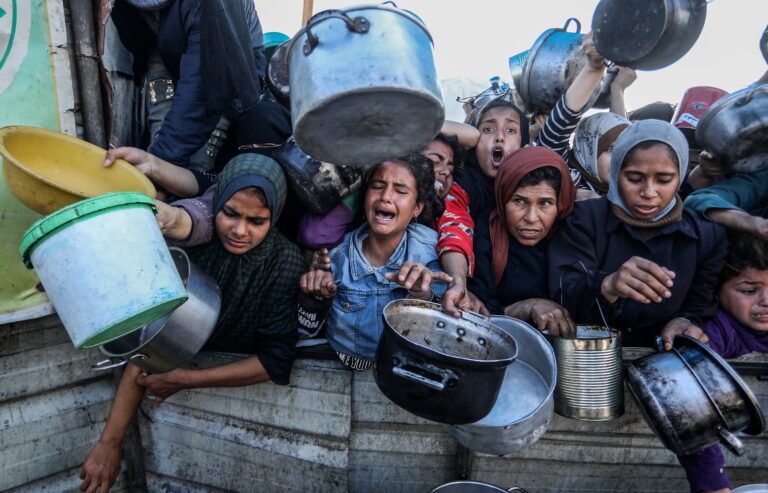
When an airdrop falls anywhere in Gaza or trucks arrive, it becomes like a battle. People shout and fight over a can of beans or a few grams of sugar because those simply do not exist in markets, and the amount of aid is small compared to the need. This is a natural reaction after months of severe famine and deprivation. There should be no expectation of organized behavior from someone who has been starved for so long. But this fractures us. It chips away at our sense of community, turning survival into competition. People in Gaza were always generous, but Israel has turned them into people scrambling for food. And while the headlines focus on aid and chaos, Israel goes on committing crimes and quietly executing its plans in the background without questioning.
Don’t stop talking about the famine and genocide. Don’t let Israel and the complicit Arab countries manipulate you into thinking they’ve made efforts or a difference. Famine isn’t over. It still exists. And the killing has not stopped for almost two years.
This article was originally published in Mondoweiss on July 29.
