

|
Cover Story
Bucking Austerity, Socialists
|
||
|
Moon in the Shadows
South Korea’s Moon Takes
|
||
|
State of U.S. Immigration
Trump Makes Strides on
|
||
|
Overlooked Repression
Uyghur Muslims Stage Protest
|
||
|
Book Review
Steil’s ‘Marshall Plan’ Details
|
||
|
Nordic Vantage Point
Op-Ed: Humanitarian Aid Needs
|
||
|
Medical
Big Rise Seen in U.S. Kids,
|
||
|
|
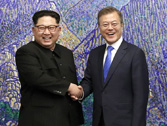 As President Trump and North Korea’s Kim Jong-un wrangle back and forth over a historic détente, behind the scenes stands South Korean President Moon Jae-in, the son of refugees who fled the North and the low-key mediator who has hitched his reputation on bringing the two wildly unpredictable leaders together.
  One of the issues that catapulted President Donald Trump into office was immigration. Simply put, he wants less of it, both the illegal and legal kinds, and he has not let up on the issue since assuming the presidency.
  Recently, about 150 protestors gathered in front of the Chinese Embassy, waving light-blue flags and shouting slogans on behalf of an ethnic group few Americans have ever heard of – the Uyghurs – an ancient people spread across much of East and Central Asia.
  Few initiatives better exemplified American effectiveness and excellence than the Marshall Plan, the economic assistance program designed to help rebuild Europe after the devastation of World War II. “The Marshall Plan: Dawn of the Cold War” by Benn Steil impressively describes the complex history of this initiative.
  According to the United Nations, there has never been a greater need for humanitarian assistance in the world than there is today. More than 136 million people from 26 different countries are in need of protection and humanitarian assistance.
  In a troubling sign that anxiety and depression are taking hold of America’s youth, new research shows a doubling since 2008 in the number of kids and teens who’ve been hospitalized for attempted suicide or suicidal thoughts.