
|
Cover Story
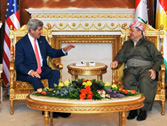
Iraqi Kurds Battle Islamic State, Pursue
|
||
|
People of World Influence
Richard Engel of NBC News Reflects
|
||
|
New Cold War?
U.S. Defense Spending Surges
|
||
|
Pariah Pain
North Korea Continues
|
||
|
Curbing an Outbreak
Spread of Zika Virus Alarms
|
||
|
Cracking Capitol Hill
Op-Ed: Former Staffer Shares Advice
|
||
|
Global Vantage Point
Op-Ed: Ratifying Law of Sea Treaty
|
||
|
Book Review
‘President and Apprentice’ Details
|
||
|
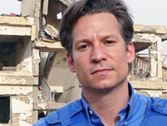 In an era when newsrooms are consolidating and closing foreign bureaus, Richard Engel has managed to duck the budgetary chopping block — and occasional crossfire — while reporting on conflicts throughout the Arab world as chief foreign correspondent for NBC News.
 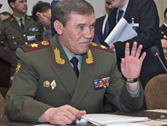 Russia has annexed Crimea, and Moscow’s intervention in Syria put Russia at loggerheads with Turkey, a member of the North Atlantic Treaty Organization. The Obama administration has reacted to Russia’s irredentist policies by requesting a quadrupling of defense spending in Central and Eastern Europe for fiscal 2017.
  With Washington’s attention focused on trouble spots like Syria, Iran and Russia, perhaps North Korea was perhaps feeling a bit neglected. But as it conducted its fourth nuclear test, the hermit kingdom quickly reminded U.S. policymakers that it is as dangerous and impervious to pressure as ever.
 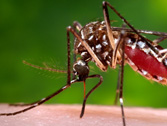 Not since the AIDS outbreak of the early 1980s has a virus as mysterious as Zika frightened so many people throughout Latin America and the Caribbean. And like everyone else, the region’s envoys in Washington are struggling to get a grasp on an outbreak that is rapidly spreading throughout the Western Hemisphere.
 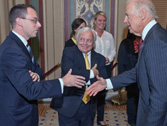 The congressional landscape is dotted by small and autonomous fiefdoms. Staff turnover is high. Institutional memories are low. Couple this with the reality that diplomats steadily rotate through Washington and the results are obvious. For embassies navigating the Capitol Hill gauntlet, the experience can be byzantine and opaque.
 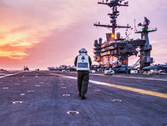 UNCLOS defines the rights and responsibilities of nations with respect to their use of the world’s oceans, establishing guidelines for everything from deep-sea mining to control over a country’s coastal waters. Over 160 nations have ratified the document, but the Senate has refused to approve the treaty for over 30 years.
 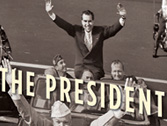 Irwin F. Gellman’s “The President and the Apprentice: Eisenhower and Nixon, 1952-1961” is an ambitious book. Gellman clearly admires both Eisenhower and Nixon, but he is also a fair-minded scholar who is intent on examining the complex relationship between the two men.