
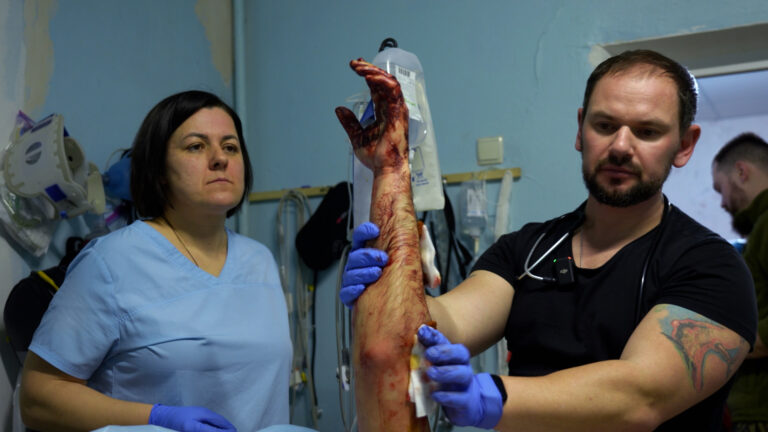
Vladyslav, a combat lifesaver in the Ukrainian Army whose call sign is “Savage,” was completely drained after two years of constant bloodshed.
“The only thing that kept me going was the hope of bringing every soldier home—to give families a chance to say goodbye. But the very work that gave me purpose also brought deep despair,” he recalled. “After seeing thousands of deaths, one question kept repeating itself: when will it be me?”
After Vladyslav joined the Repower project, however, he felt a renewed sense of purpose.
“Thanks to the specialists and training, the heavy thoughts began to fade, the dead stopped appearing in my dreams, and my mind became clearer,” he said. “The breathtaking views of Sweden gave me the most strength. Repower helped me feel alive again.”
Khrystyna, an evacuation crew member codenamed “Glory,” said that before Repower, “I felt small and insignificant, like I was always doing too little or doing it wrong. And at the same time, I was terrified that if I allowed myself to rest—even briefly—everything would fall apart without me. It didn’t.”
Khrystyna went to Sweden for 14 days this past March as a guest of Repower and came back inspired. She even started a morning group neuro-gymnastics routine.
“Two things helped me the most. First, delicious food, a cozy place to stay, and the chance to put on lipstick for the first time in nine months. Nature, architecture, music, museums—after so much gray and rubble, it felt like pure joy,” she said. “It was like summer camp, but for tired, sad adults. I still think of everyone with deep gratitude.”
Vladyslav and Khrystyna are among 1,200 Ukrainian medics and doctors who have participated in Repower since the program’s launch in December 2022, says Repower spokesman Sebastian Lindstrom.
“We’re the only NGO that has permission from Ukraine’s Ministry of Defense to take active military medics out of the country. Nobody else is allowed to do it,” Lindstrom told The Washington Diplomat at a recent event at the French Embassy about Repower and its work.
The program has already brought 17 groups of medics and doctors to Sweden as well as Denmark for two-week vacations. Each rotation costs €200,000 and involves 100 participants, as well as 10 in-country psychologists who assist them.
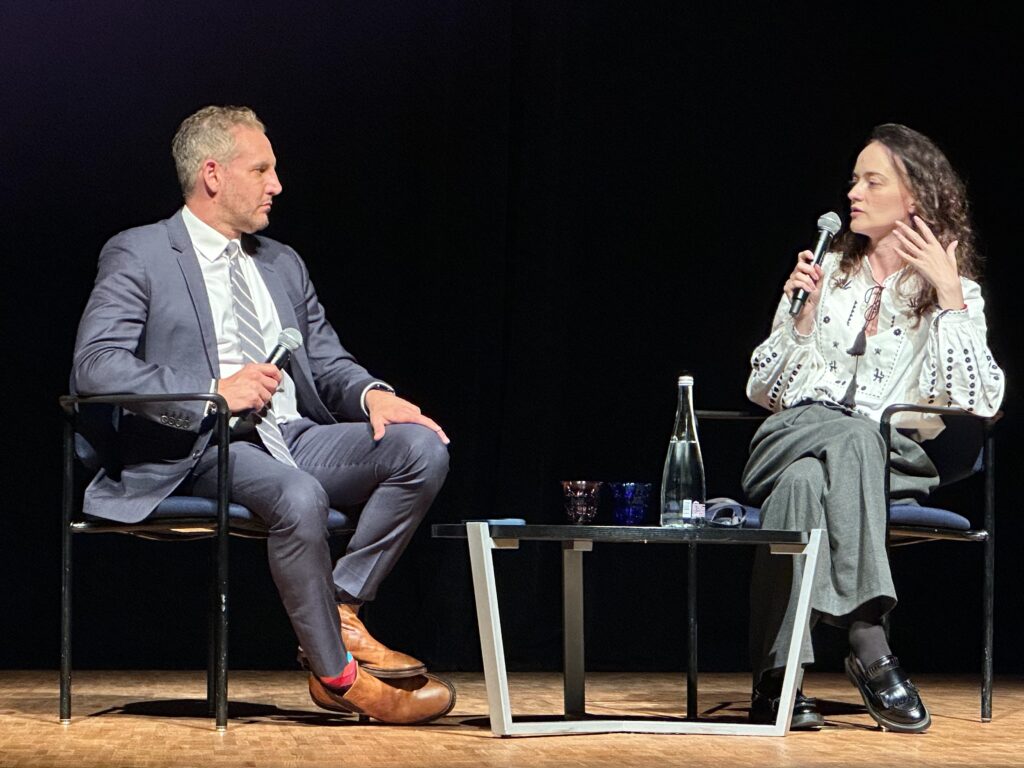
The highlight of the Oct. 10 event was the showing of a documentary titled Can You Hear Me? The Invisible Battles of Ukrainian Military Medics. The screening—organized by the Ukrainian and Swedish embassies—was followed by a discussion between journalist Jason Bellini and Olga Rudenko, editor-in-chief of The Kyiv Independent.
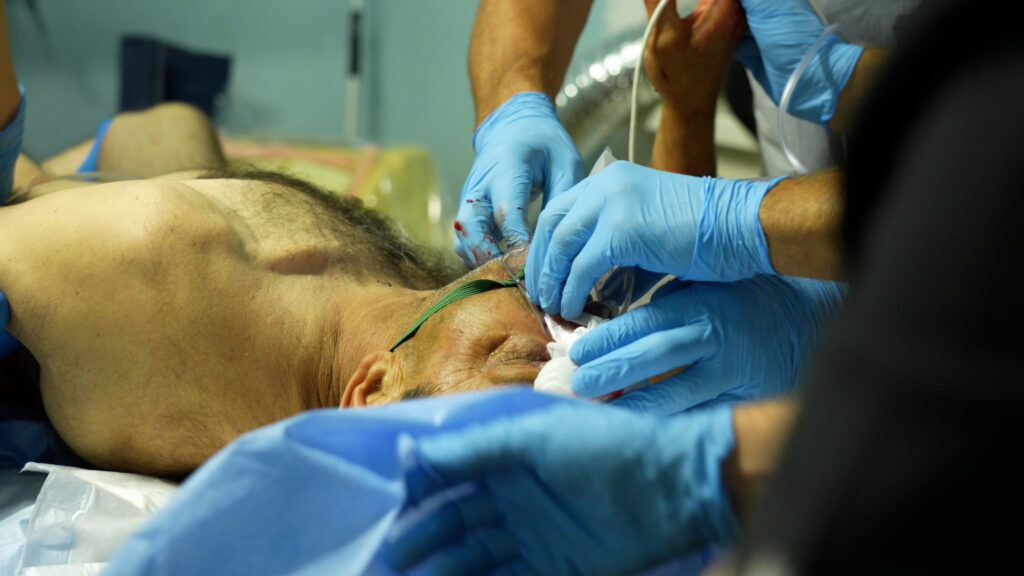
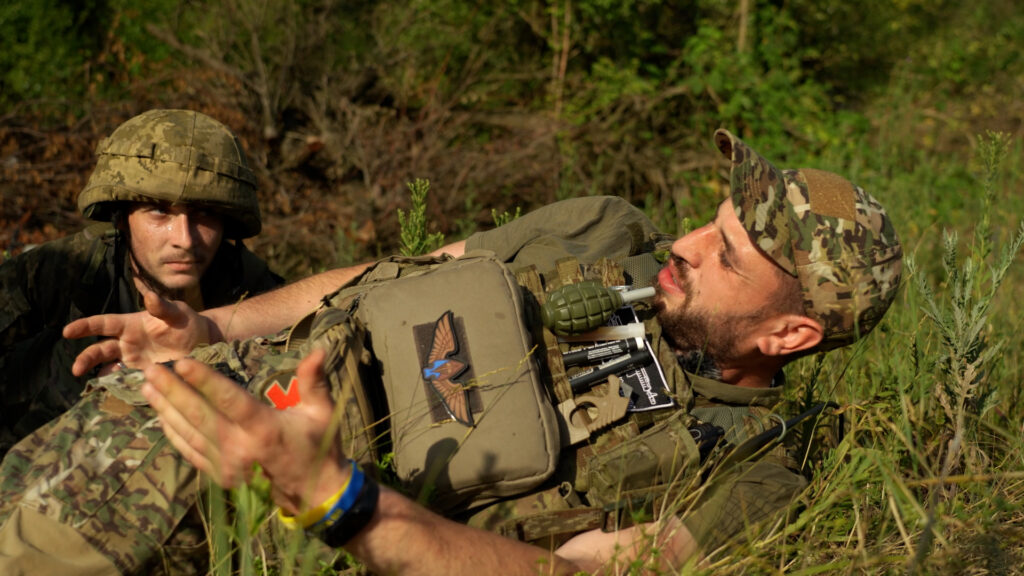
In the 58-minute film, journalists Francis Farrell and Olena Zashko follow a group of Ukrainian military medics as they journeyed from the heat of battle in Ukraine to the serene forests of Sweden for a short mental health retreat. For the first time since 2022, the medics have a chance to process the trauma they’ve experienced—grappling with the loss of brothers-in-arms, surviving Russian captivity, and the weight of guilt over soldiers they couldn’t save.
“I wanted this film to come to the US because this is a critical moment, and I see this as my moral responsibility,” said Lindstrom, who went to Ukraine right after Russia invaded its neighbor in February 2022 and has gone on every program since Repower’s inception.
“There’s a lot of nonsense circulating in Washington and in European countries about this conflict and why it started,” said Martin Rosen, a top official at the Swedish Embassy. “People think it’s about religion, or language, or NATO aspirations. To me, the truth is pretty simple: Russia started this war because it cannot accept an independent Ukraine. It’s not about religion, it’s about Ukraine making decisions at all.”
Rosen added: “I want to highlight the Ukrainian resistance showed by the military medics under extreme pressure. When people face aggression, the rest of us must listen. Sometimes we choose to look away. My hope is that this film will make it more real for everybody.”
Katerina Smegley, a counselor at the Ukrainian Embassy, said Can You Hear Me? has already been shown in 18 countries.
“This film reminds us about ordinary people doing extraordinary things,” she said, noting that in recent weeks, Russia has stepped up its bombing campaigns against Ukrainian civilian targets. More than 800 hospitals have now been damaged or destroyed, while ambulances and pharmacies have been looted.
Rudenko, in discussing the documentary with Bellini, said despite its graphic nature, “Can You Hear Me?” is an optimistic film.
“My country is full of people like this. They could have lived a more or less normal life away from the front lines, but they decided to do this instead,” she said, adding—in answer to a question from Bellini—that she does not see this war going on for years and years.
“This is not a forever war, even though Russia wants you to think that,” she replied. “The war can end in a Russian military defeat. Making people believe Russia is unbeatable is not right.
And Russians are targeting journalists only because they don’t want the story to be told.”
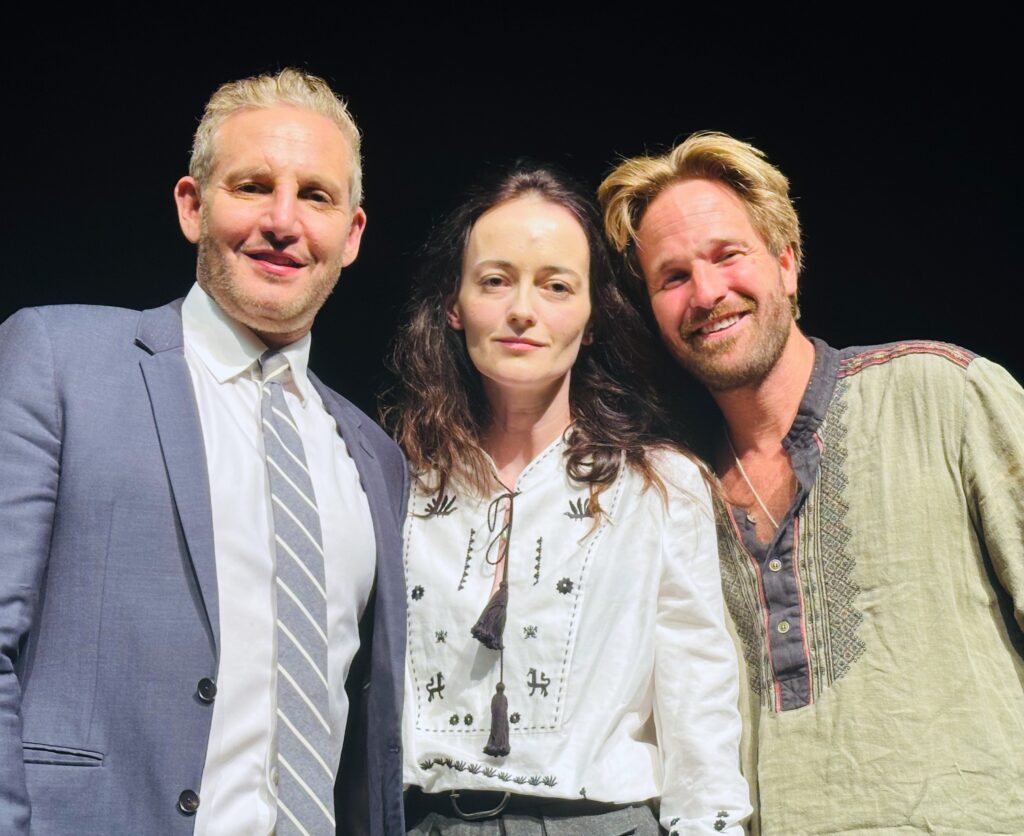
Yet Rudenko stressed that her job is not to sway the public toward Ukraine’s point of view, only to tell the unvarnished truth.
“We’re a news outlet. We don’t serve as Ukraine’s PR agents,” she said. “That’s part of being independent and in no way colored by any political agenda. People appreciate our impartiality and clarity. That said, we do want to serve the American public by keeping them informed.”
Meanwhile, Repower continues to bring Ukrainian medics from the front for two-week vacations of relaxation and recharging in Sweden.
Nadiia, a paramedic, volunteered for the army after her husband was drafted; she wanted to be with him. After three years at the front, Nadiia returned in autumn 2024 with a diagnosis of mixed anxiety and depressive disorder caused by chronic stress, trauma and exhaustion.
“It affected how I thought, how I felt, and how I functioned each day. Even simple things became difficult,” she said. “Repower was my first time abroad in my life. And for the first time, I felt the weight lift a little, I believed in my strength again—and in the chance that something better still lies ahead.”
