
There’s so much to study here: an intricately detailed globe, a striking red admiral butterfly, a half-eaten ear of corn, an abundance of spectacular flowers, an hourglass and then a skull, eye sockets aloft.
That’s all just in one painting, Maria van Oosterwijck’s masterful Vanitas Still Life, on display at the must-visit new National Museum of Women in the Arts exhibition. “Women Artists from Antwerp to Amsterdam, 1600-1750” reinvigorates our understanding of a well-known era, adding new names, artistic practices and stories to the conversation and ultimately upending the art history canon.
Now, back to Vanitas Still Life. The oil painting includes van Oosterwijck’s only known self-portrait inside the reflection of a glass bottle in the work labeled Aqua Vitae, or water of life. It teems with life and death in its details and symbols, and the brushwork is a thrill to behold. Van Oosterwijck’s patrons, the museum notes, included Holy Roman Emperor Leopold I — and that’s who she painted this wondrous image for. This is the work of a true master, and it’s such a gift that this work is in D.C. for this exhibition.
So why don’t most people know her name, and those of the many other women artists in this exhibition, the museum asks?
“They were known, published, and talked about in their day,” senior curator Virginia Treanor told The Washington Diplomat. “And why don’t we know about them today? Why is there that gap? I want to get people to think critically about the larger state of the field.”
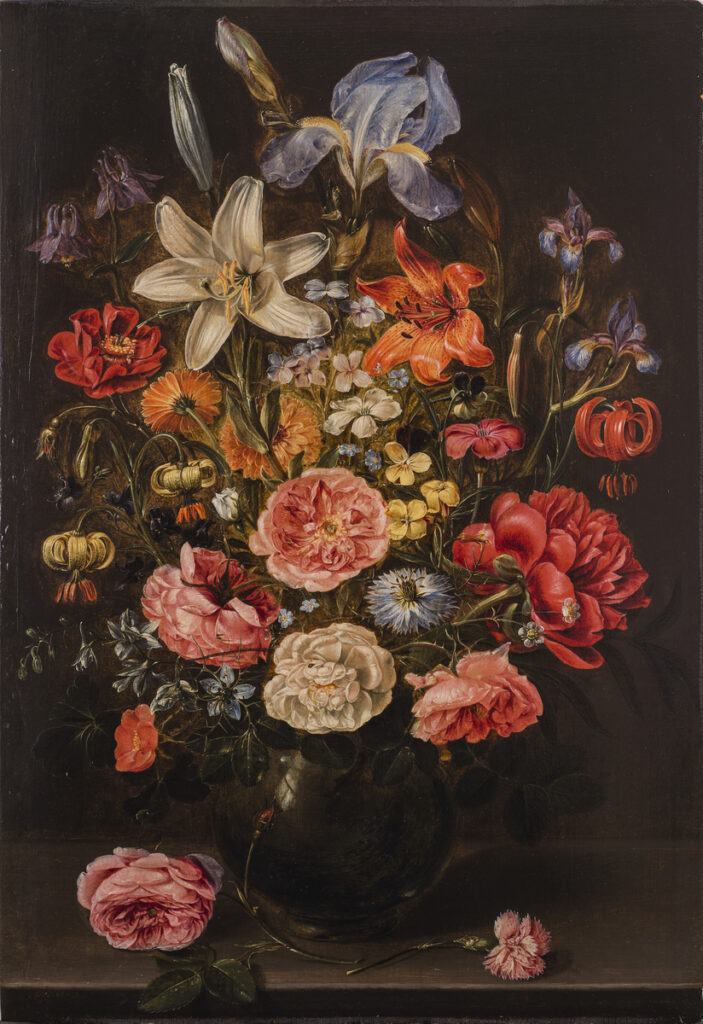
Through this show, visitors can get to know so many extraordinary but largely forgotten artists: Judith Leyster, Maria Sibylla Merian, Cornelia van der Mijn, Clara Peeters, Catharina Questiers, Cornelia de Rijk, Maria Tassaert and Rachel Ruysch, to name a few.
“I hope that this exhibition helps to push the narrative along, open up the dialogue about this period so people realize that women were part and parcel of this wider artistic environment at the time,” Treanor added.
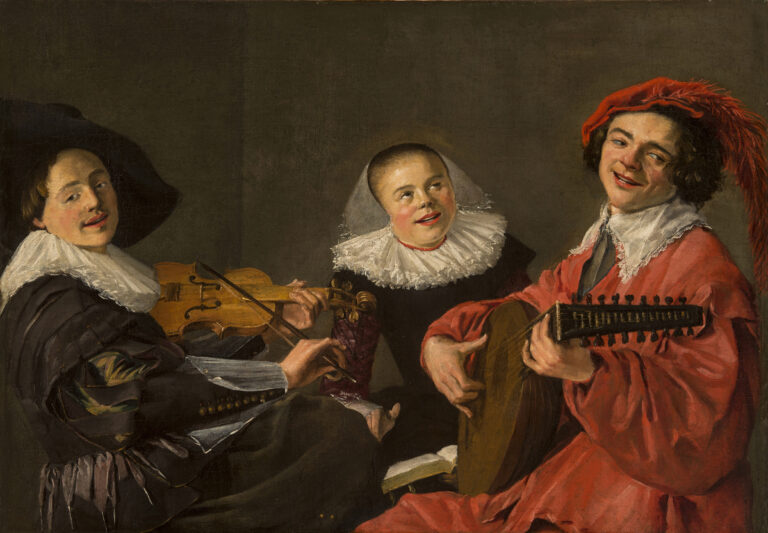
Take a moment with Leyster’s wonderful, lively self-portraits featuring herself at an easel, or her strange and captivating oil painting, The Last Drop (The Gay Cavalier). The image is replete with symbolism and endlessly fascinating, a snapshot of two guys partying with a grinning skeleton. Leyster was renowned in her time, but her work was often misattributed to male artists for two centuries.
Or spend some time with Ruysch’s beguiling Still Life of Flowers, with Butterflies, Insects, a Lizard and Toads, beside a Pool. Mushrooms sprout out of the mossy ground. Butterflies are a breath away from becoming a lizard’s dinner. Flowers curl around vines in various moments of bloom — the movement and vitality springs out across the canvas. Ruysch has often been omitted from scholarship on the era, despite having strong sales in the 18th and 19th centuries. The first monographic exhibition of her work was only just recently organized by the Toledo Museum of Art, Alte Pinakothek, Munich and the Museum of Fine Arts, Boston.
The exhibition does an excellent job of immersing visitors into the history, culture, science and economy of what’s typically been called the “Dutch Golden Age.” It’s a term the museum explores as outdated and inconsistent with what gave rise to the region’s stunning success: colonialism and slavery.
“The wealth that enabled that this flourishing of art and making in this period was engendered by the slave trade and enslaved labor,” Treanor noted. “One exhibition can’t do it all, but that’s a really important part of the story for any exhibition of this time period.”
While the exhibition rigorously unpacks traditionally-held impressions of this era, it also revels in the undeniable beauty and ingenuity of its lesser-known or totally forgotten artists. There are paintings, prints, lace veils, sculptures, books, engravings and scientific drawings on display. It examines what it meant to be famous, a working artist, or an anonymous maker of more practical arts at the time. There’s a great respect here for the artists on display: for their craft, their scientific approach, and their business acumen.
There’s a painting by Maria Tassaert in the exhibition, Still Life with a Garland of Fruits. It’s just one of two currently attributed to the artist, who was the daughter of a landscape painter and the niece of another painter in this exhibition, Catarina Floquet, also known as Catarina Ykens I.
Treanor was at a conference in Antwerp a few years ago when a curator came up to her and shared that he had just acquired the still life by Tassaert. He asked Treanor, “Have you heard of her?”
“I said, ‘No, I have not.’ And it was just this moment — I had been immersed in this for a few years, but here’s another name I’d never heard of before,” Treanor recalled. “Her work has been relatively recently rediscovered, which is not uncommon as more and more attention is focused on historical women artists.”
The exhibition demands visitors engage with some important questions as they walk out the doors: What does it mean for all of these artists to be recognized, to be seen and studied, at the time or hundreds of years later? What does it mean to reassess the canon, and to know that there are gaps? How, and why, are legacies obscured?
“It’s going to benefit everybody if we have a more nuanced conversation, a more nuanced understanding of this time period,” said Treanor. “I equally hope that scholars will be introduced to artists they may never have heard of, and that might inspire them to do a bit more work… There’s so many new names here.”
“Women Artists from Antwerp to Amsterdam, 1600-1750” is on view at NMWA through Jan. 11, 2026.
