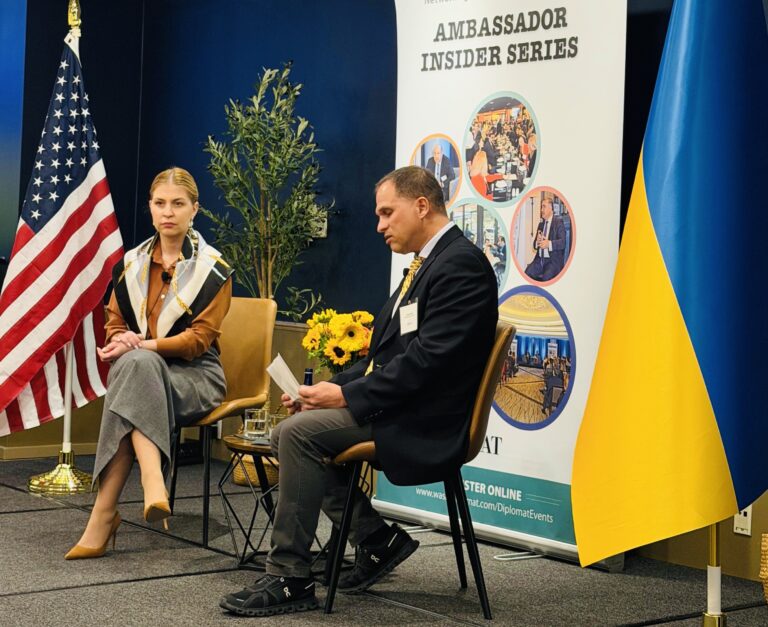
Early on the morning of Feb. 24, 2022, as Russian fighter jets began attacking Ukraine without provocation, Olga Stefanishyna gathered up her kids and grandparents, and rushed them to a safe location outside Kyiv.
Then she headed straight to work.
“By 5 a.m., I was already in the office with members of the security and defense council, and the president, to make decisions needed for our nation to continue functioning,” she recalled. “These were the very first moments of the war.”
Stefanishyna could not have imagined back then that the conflict launched by Russian President Vlamir Putin would still be raging exactly three years and eight months later—and that one day she’d be dealing with its consequences as Ukraine’s ambassador to the United States.
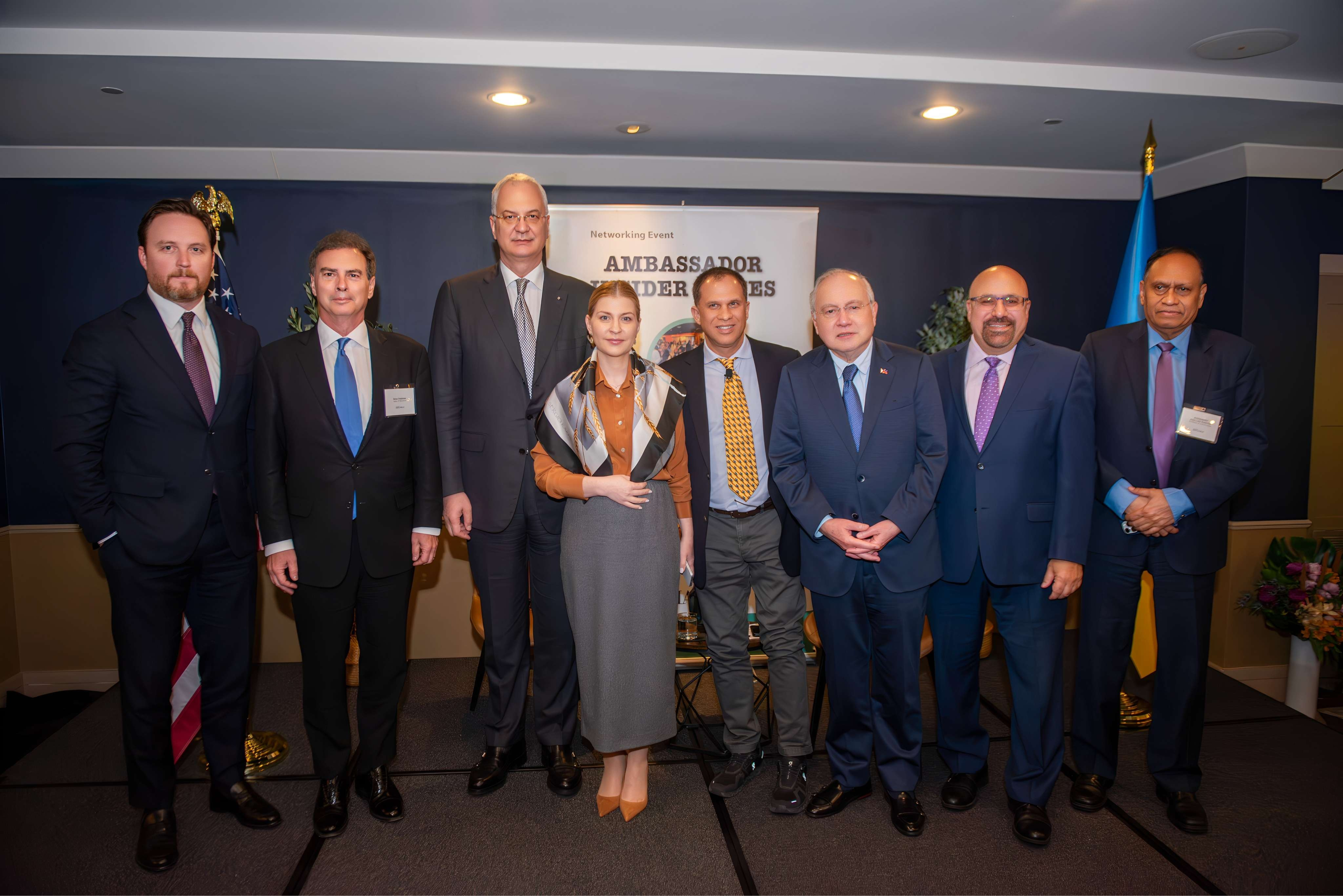
On Oct. 20, Stefanishyna recounted the horrors of her country’s ongoing conflict with Russia during our latest Ambassador Insider Series—a program launched by The Washington Diplomat 10 years ago this month that features a one-on-one interview with a DC-based ambassador, followed by a Q&A with the audience and a networking dinner.
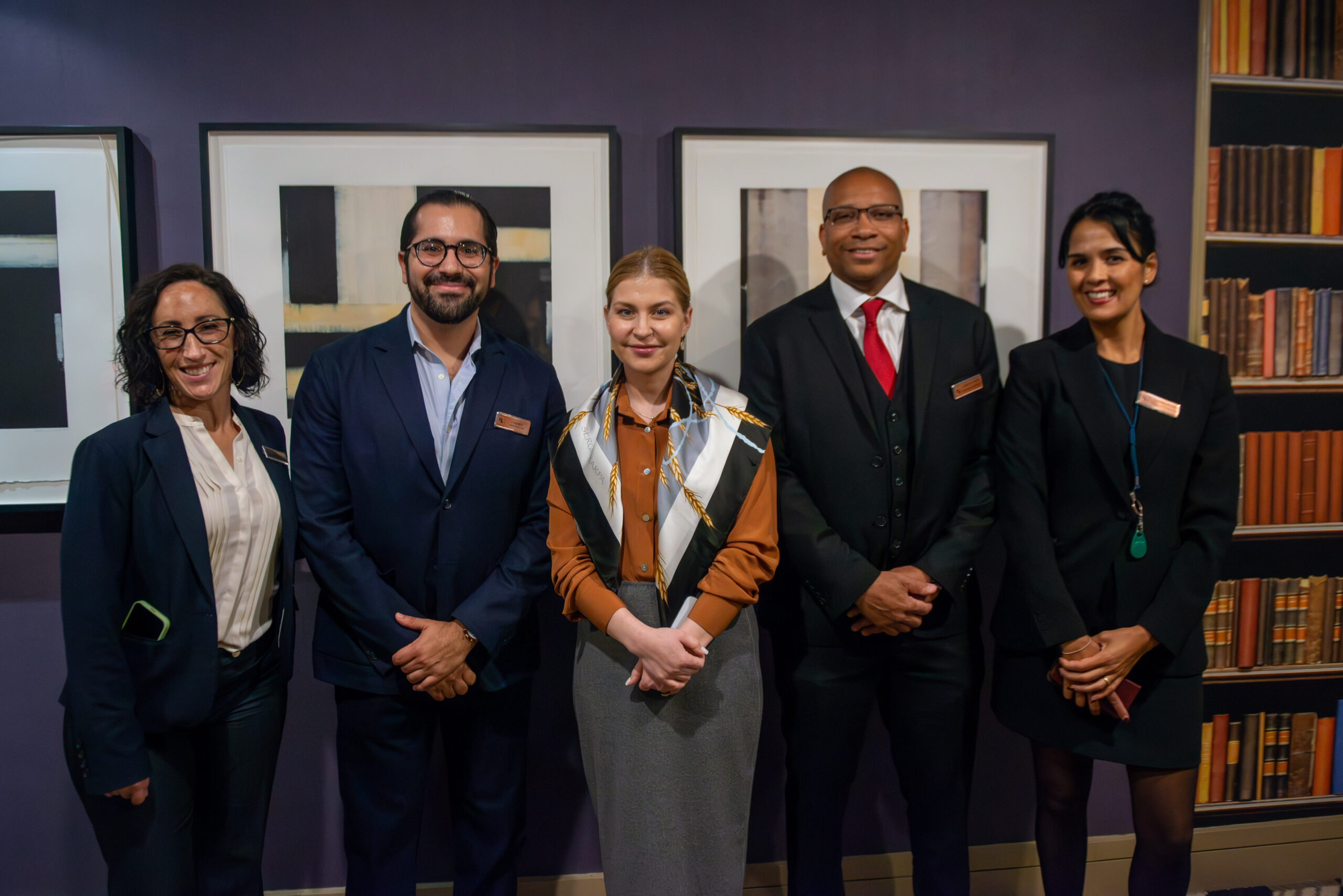
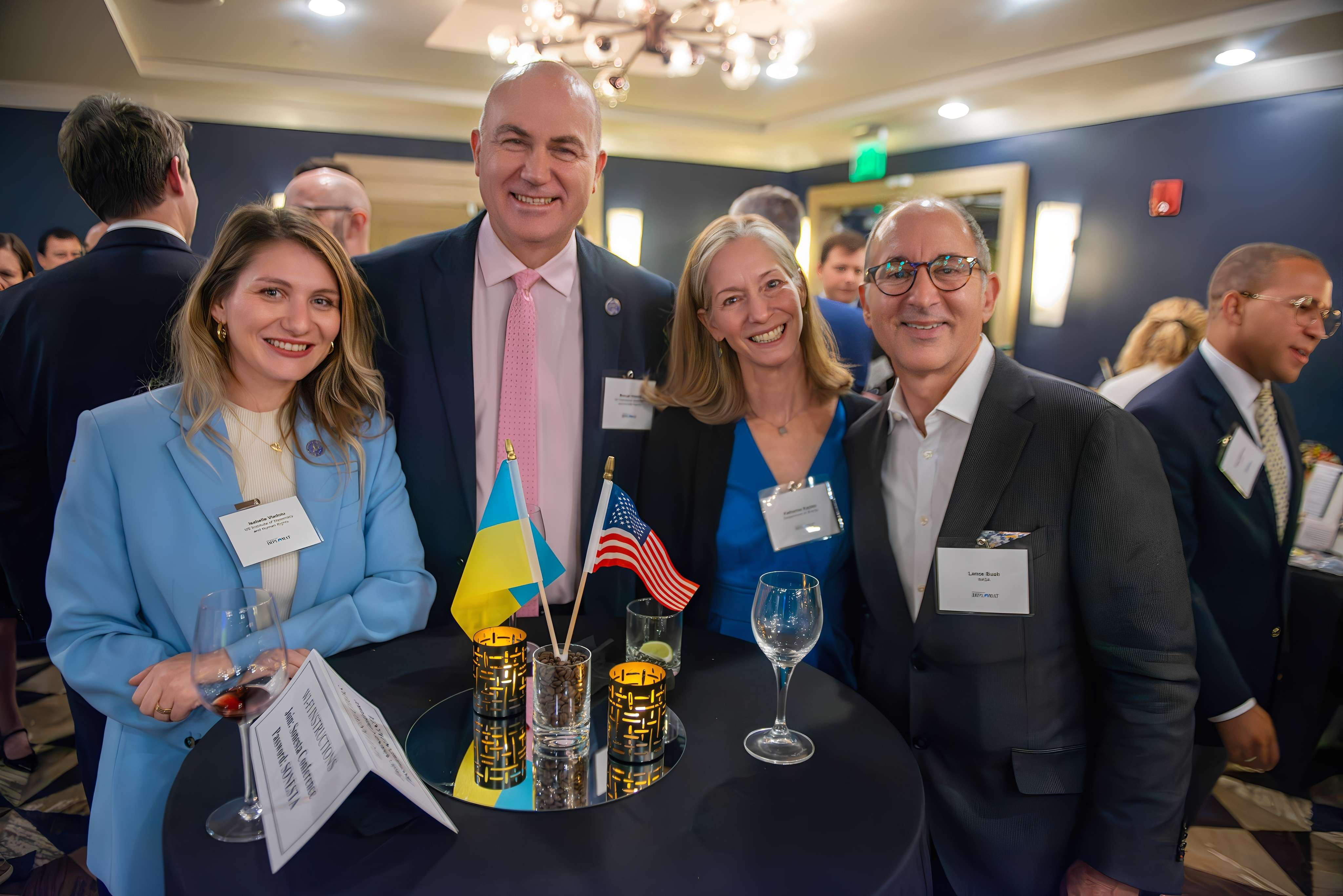
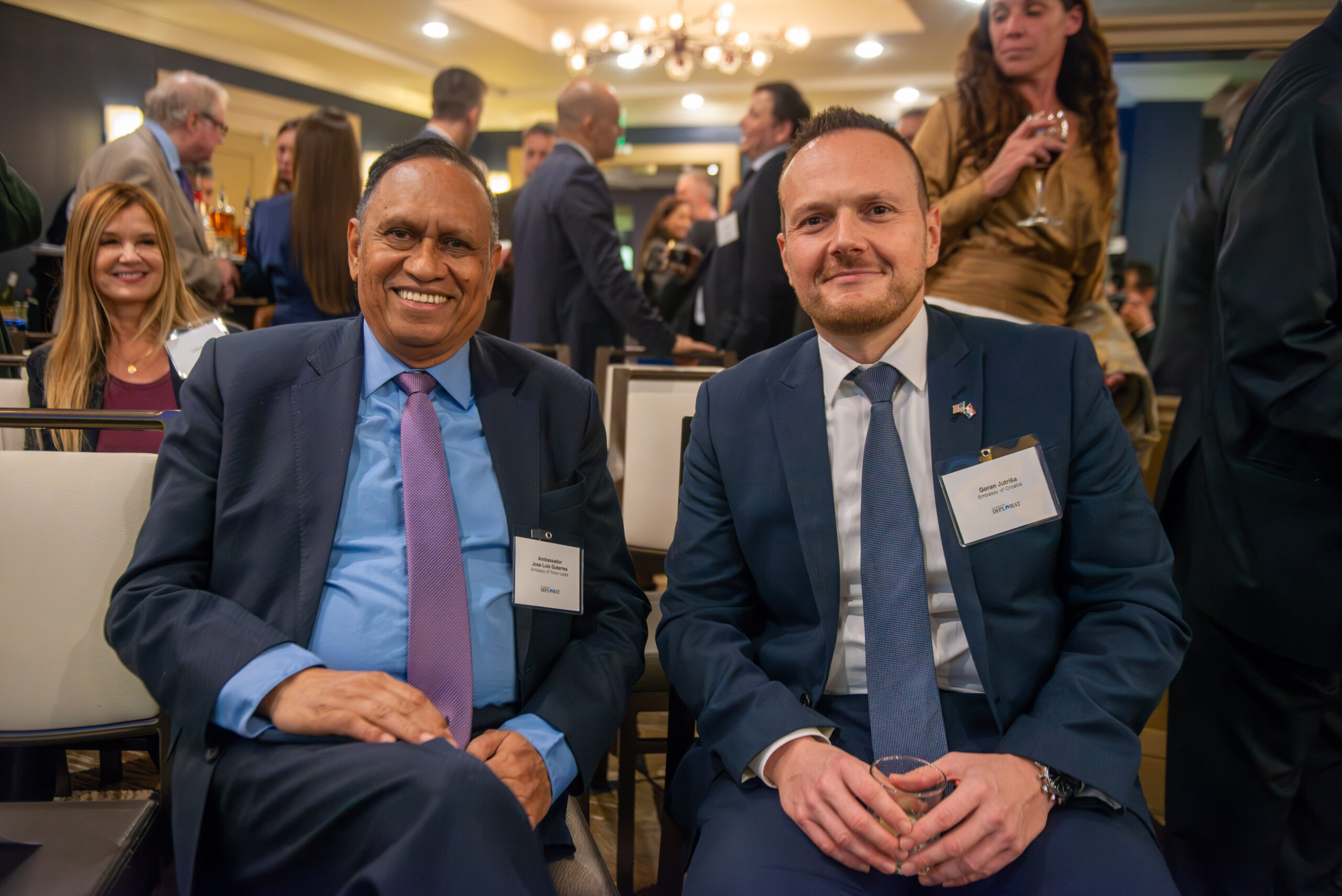
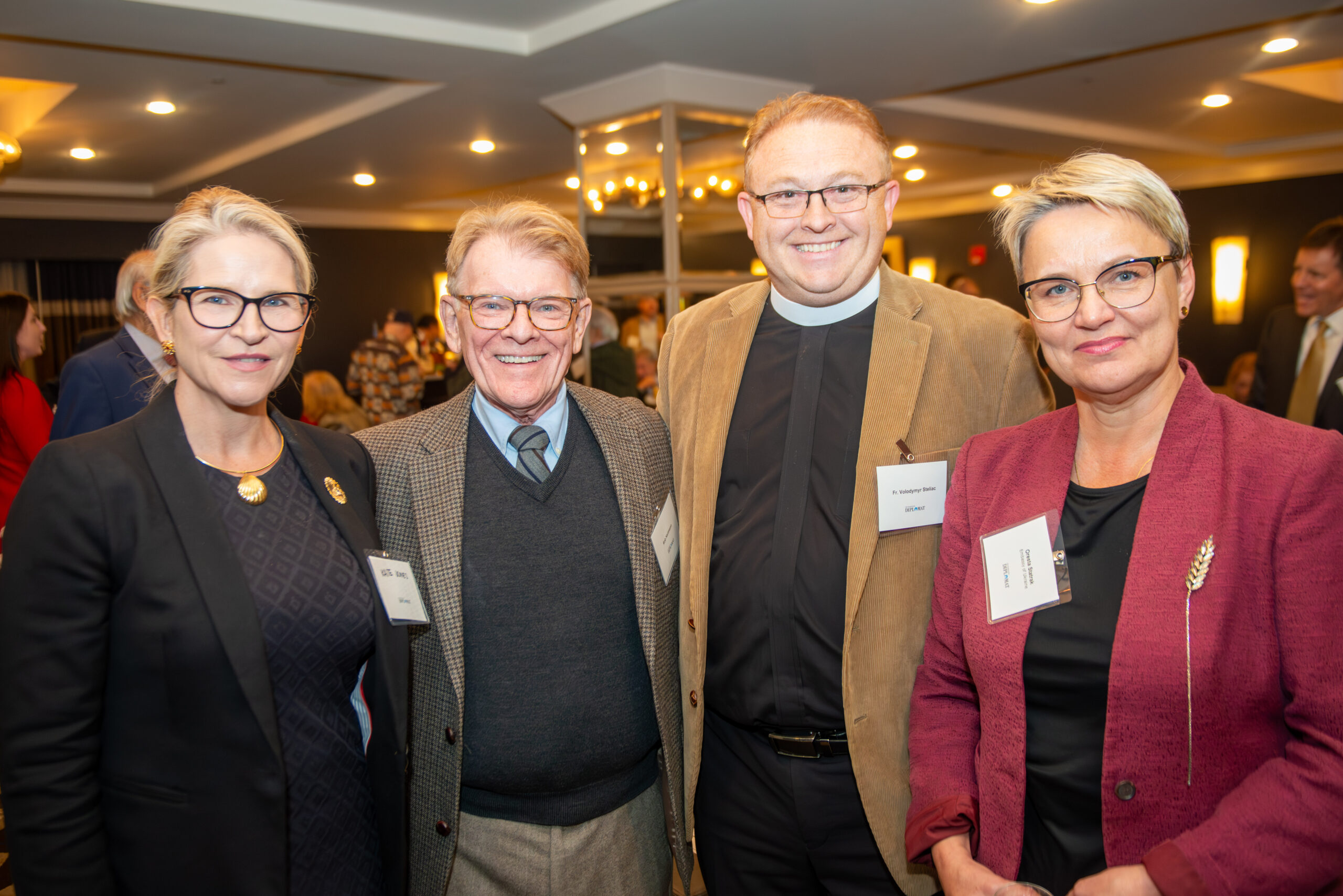
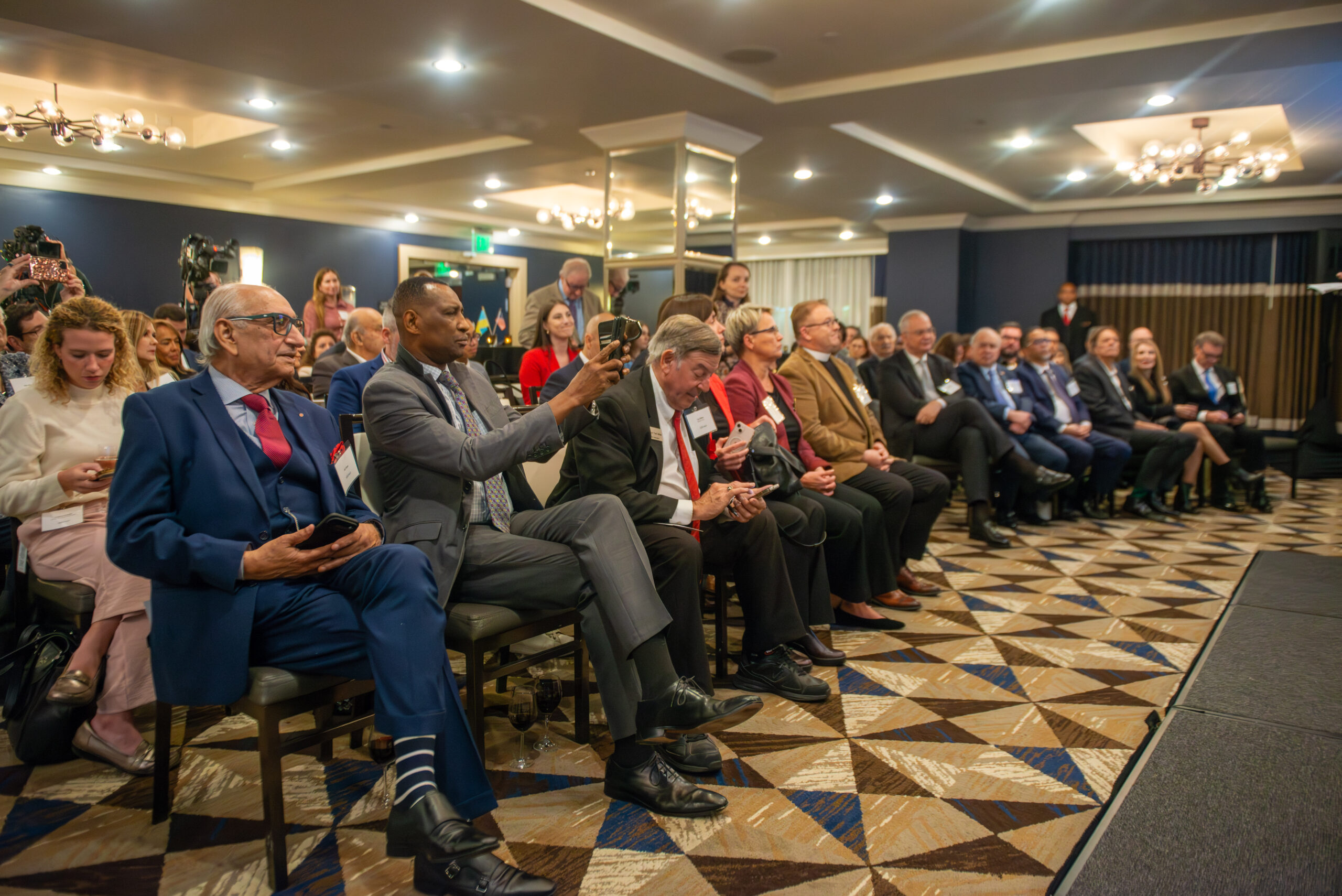
The gathering, representing Stefanishyna’s first public event as ambassador, attracted some 120 people including diplomat, business executives, government officials and journalists. CNN, Politico and the New York Times were there, and C-SPAN livestreamed the entire event from Washington’s Royal Sonesta Hotel in Dupont Circle.
Stefanishyna, 39, is originally from Odesa. On Aug. 27, she replaced Oksana Markarova as ambassador here, becoming the second woman to hold that position since Ukrainian independence in 1991.
“My major effort is to make sure Ukraine and the United States are building bilateral relations and strengthening efforts to end the war, which means that both sides have to communicate all the time and read the signals properly,” she said. “but also, to leave no second wasted in doing whatever we can to save people who are dying.”
Indeed, civilian casualties in Ukraine are going up as Russia uses increasingly sophisticated missiles and short-range drones on residential areas. In all, more than 14,000 civilians have been killed and 35,000 injured, according to the UN Human Rights Monitoring Mission in Ukraine (HRMMU).
This pales in comparison with the estimated one million Russian casualties so far; as of June, about 250,000 Russian soldiers have died and 700,000 have been injured, “a sign of Putin’s blatant disregard for his soldiers,” according to a June 3 analysis by the Washington-based Center for Strategic & International Studies.
Two days after our event, the Trump administration announced sweeping US measures targeting the Russian oil industry. The following day, Oct. 23, the 27-member European Union imposed a new package of economic sanctions on Moscow. The coordinated actions mark an intensified effort by the West to choke off the revenues and resources that sustain the Kremlin’s military campaign.
“There is trust, and trust brings frankness into the discussion,” Stefanishyna said of her current dealings with the Trump administration. “You do not spend too much time on diplomacy, reverence or nice meetings. You get straight to the point, and go back to your offices and do your job.”
At this point, she said, “there’s literally nothing that could disappoint Ukrainians other than a bomb falling on your head or losing somebody from your family. Everything else is just process.”
Before her current appointment, Stefanishyna was Ukraine’s deputy prime minister for European and Euro-Atlantic integration, and also minister of justice. In that capacity, she supervised Ukraine’s integration efforts with both the EU and NATO, shaped legal policies, and set priorities for her ministry.
Following Ukraine’s application for EU membership on Feb. 28, 2022—four days after Russia invaded it—Stefanishyna led the accession process. In June 2024, Zelensky designated her chief negotiator and head of Ukraine’s delegation for EU accession talks in Brussels.
Stefanishya studied at the Diplomatic Academy in Vienna, and has a master’s degree in international law as well as a diploma in economics.
Since the war’s onset, Stefanishyna has strengthened Ukraine’s collaboration with the UN to provide comprehensive support to those affected by the war, in particular assisting survivors of conflict-related sexual violence.
“We have bombs falling at night, but in the morning, the whole country wakes up, gets dressed and goes to work,” she said. “People continue living their lives. It’s a matter of survival, and it’s impossible to put this into any framework of normality.”
One of Stefanishyna’s key functions in government before becoming ambassador was chief negotiator for Ukraine’s EU accession talks. That meant trying to get all 27 EU members to agree on anything related to Ukraine.
“This was a 24/7 job, and because of this experience, as one of the key allies of the Ukrainian president, I’ve been chosen to be among those people who prepare for our engagement with the United States,” she said, adding that since 2024, she’s participated in every delegation led by Zelensky to meet Trump—and even before the president was inaugurated for the second time.
The current fighting is only the latest in a strong of hostilities that began in 2014 with Russia’s annexation of Crimea, as well as its invasion and subsequent occupation of the breakaway Eastern provinces of Donetsk and Luhansk.
“I think there’s a big difference between what’s happening right now and what was happening since the beginning,” she said. “Even if we go back to 2014, this is the first we’re speaking about ending the war.”
Yet every day seems to bring headlines that contradict those of the day before. On the day of our AIS, word was that Trump and Putin would be meeting within a few weeks in Budapest to discuss a comprehensive peace plan. But then Trump—noting continued deadly Russian drone and missile attacks on Ukrainian civilians—abruptly said there would be no meeting, declaring that he didn’t want to waste time.
“It just didn’t feel right to me,” said the president, according to CNN. “It didn’t feel like we were going to get to the place we have to get. So I canceled it.”
Asked about Trump’s oft-repeated claim—that if he were president instead of Biden in 2022, Russia would have never attacked Ukraine—the ambassador responded carefully.
“If this man has this thought in his mind and says it out loud, that really deserves huge respect. Because if the president of the most powerful country in the world says that, it means that probably back in time he would have done everything he could to prevent war from happening.”
She also said that if Ukraine had not agreed to give up its nuclear stockpile in exchange for security guarantees, the war would not have taken place, and “secondly, I think if the mineral deal between Ukraine and the United States would have been signed back in 1994, the war would not happen as well.”
On Oct. 20, the Washington Post reported that a tense White House meeting two days earlier, Trump told Zelenskyy to make territorial concessions to end the war or risk facing destruction by Russian forces. “Putin will destroy you if you don’t agree now,” a person familiar with the exchange told the newspaper.
Quizzed about that exchange, Stefanishyna played it down.
“I don’t know who is this person, but probably this was a very emotional moment,” she explained. “As my president said right after the meeting, there was a discussion about potential ways to stop at the existing line while thinking of what comes next. Definitely, it was not aggressive. It was not negative. It was just a dialogue between two leaders.”
During the Q&A, a reporter for CNN asked Stefanishyna if Trump has laid down any red lines for Russia or Ukraine, and whether he has committed not to negotiate for territorial changes without Ukrainian consent.
“Nice question,” she responded. “We are far from sitting at a table with Russia and speaking about ending the war, because this war is the blood which keeps Russia alive.”
A big problem, Stefanishyna said, is that too few Westerners really understand the Russian mindset. That’s why she urged her audience to have hopes based on facts rather than wishful thinking.
“It’s very nice talking to European and American colleagues about Russia,” she said, “but it’s not possible to think about this country through the prism of our own knowledge, perception and values. That’s why we had such small hopes at the beginning of the war. The whole world has seen online the bodies of murdered Ukrainians lying on the streets, the massive graves where Ukrainians are buried with no names and no identification signs. This is something that really goes beyond any comprehension.”