
|
Cover Story
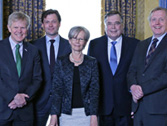
Ambassadors of Five Nordic Nations
|
||
|
People of World Influence
Expert Surveys Post-9/11
|
||
|
Middle East
Obscure Young Prince Catapults
|
||
|
No Way Out
Under Intense Pressure, Balkan
|
||
|
Sykes-Picot at 100
Secret Deal That Carved Up
|
||
|
Art of Gift-Giving
U.S. President, Officials Showered
|
||
|
Observing, From Afar
U.K.-Based Outfit Attempts to Fill
|
||
|
Global Vantage Point
Lawsuits Force Foreign Governments
|
||
|
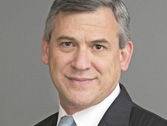 Daniel Benjamin, one of America’s leading counterterrorism experts, says the U.S. shored up its defenses following 9/11, while Europe has yet to absorb the lessons of recent terrorist attacks.
 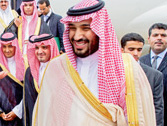 When Saudi Arabia’s King Salman named Mohammed bin Salman the country’s deputy crown prince, with an expansive portfolio that transformed him from an obscure 29-year-old royal to arguably the nation’s leading powerbroker overnight, longtime Saudi watchers were stunned. A year later, they’re still trying to figure him out.
 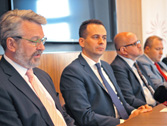 Amid increasingly chaotic scenes of Syrian refugees fleeing violence at home and Balkan nations hastily throwing up fences to keep out the never-ending influx, the D.C.-based ambassadors of four European countries recently debated what the European Union and U.S. should do about the continent’s worst refugee crisis since World War II.
 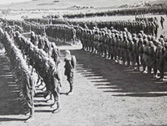 In May 1916, European powers ratified the Asia Minor Agreement, better known as the Sykes-Picot Agreement, to partition the collapsing Ottoman Empire between British, French and Russian spheres of influence. One hundred years later, the borders drawn by this secret agreement continue to influence state and regional affairs.
  Each year, the first couple (and U.S. government officials) receives millions of dollars of swag, all of which they can accept on behalf of the country, but not of themselves. The main reason for this is to avoid the possibility of bribery, a notion so objectionable, that America’s founding fathers even wrote it into the Constitution.
 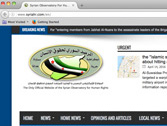 Information about the Syrian civil war remains elusive. Even the death count is a mystery. The figure that has been quoted is 250,000, though a Syrian research center announced that the death toll has likely surpassed 470,000. With data so hard to come by, the Syrian Observatory for Human Rights has proved an invaluable tool for the media and Syria experts.
 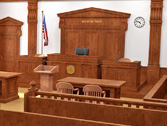 The majority of lawsuits in the U.S. are filed against American companies and nationals, but each year a significant number is filed in U.S courts against foreign governments, their ministries and their state-owned companies.