

|
Cover Story
Denmark’s First-Ever Ambassador
|
||
|
People of World Influence
Singapore’s ‘Undiplomatic
|
||
|
In or Out?
Iran Nuclear Deal Reaches Pivotal
|
||
|
Bolton of Lightening
Shrewd Operator, Controversial
|
||
|
Iraq’s Unstable Peace
Parliamentary Elections Will Test
|
||
|
The Revolution Marches On
Tunisia’s Democratic Experiment
|
||
|
Global Vantage Point
Op-Ed: U.S. Must Build on Its Diverse
|
||
|
|
 The prosperous city-state of Singapore isn’t like most other nations, and Bilahari Kausikan isn’t like most other diplomats. A former permanent secretary of foreign affairs, Kausikan talks candidly about President Trump, China, trade and “Western delusions” about democracy.
 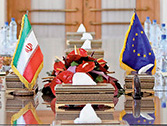 President Trump must decide by May 12 whether to stay in the Iran nuclear agreement or scrap it, and his choice of John Bolton as national security adviser and Mike Pompeo as secretary of state increase the likelihood that he will abandon the landmark accord. But what happens next?
 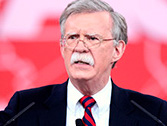 John Bolton’s resume is as long as it is polarizing. As the fiery former ambassador to the U.N. takes the reins of the National Security Agency, observers wonder whether Bolton will reinforce President Trump’s hawkish impulses on Iran and North Korea, or if the savvy bureaucratic operator will succeed where H.R. McMaster failed.
 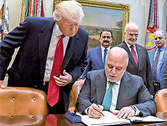 There are myriad forces, both internal and external, preventing Iraq from achieving stability. It’s not an impossible goal, but it will require savvy political management to keep the various factions of society from turning on one another, plus continued support from other countries.
  The early optimism of the Arab Spring has since dimmed, as the revolutionary protests led to chronic instability in places like Yemen and Libya, the rise of a new authoritarian regime in Egypt and a bloodbath in Syria. Except in Tunisia. The country has clung to its initial hopes to enact reforms.
  The U.S. national agenda calls for a discussion on the changing composition and nature of its population. Today, minority groups make up 35 percent of the entire population. If current growth patterns of minorities continue, the U.S. will be made up entirely of minorities by 2050.