
|
Cover Story
Taiwan Finds Itself Between Territorial
|
||
|
People of World Influence
Burns Reflects on Russia,
|
||
|
ISIS Déjà Vu
Obama’s Strategy to Defeat Terrorist
|
||
|
Obstructionists or Idealists?
House Freedom Caucus Set to Roil in
|
||
|
U.N. Progress Report
U.N.’s Guterres Manages
|
||
|
AUMF Blank Check
No U.S. President Has Wanted a New
|
||
|
Cuban Shuffle
U.S.-Cuba Ties Backtrack Amid
|
||
|
An Undiplomatic President
Off the Cuff and Gruff, Trump
|
||
|
Medical
Can a Blood Test Detect a Range
|
||
|
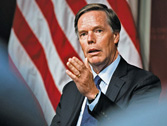 Having worked with six presidents over his 27-year career, Nicholas Burns’s opinions still carry weight in this polarized political landscape. And the former ambassador — who was inspired to enter the Foreign Service by the Vietnam War — remains vocal about a range of threats, from Russia to the hollowing out of the State Department.
  In January, President Trump gave his defense secretary 30 days to come up with a plan to defeat the Islamic State. As far as anyone outside of the White House can tell, that plan has yet to materialize. In fact, the billionaire’s rhetorical flourishes aside, Trump has largely stuck to his predecessor’s script of working with locals to dislodge the terrorist group from its sanctuaries in Iraq and Syria.
  Capitol Hill Republicans face a contentious autumn as they grapple with a backlog of daunting fiscal issues, relatively narrow majorities, virtually united Democratic opposition and an erratic president. But there is another unknown in this combustible mix: the House Freedom Caucus, a group of about three dozen combative conservatives ready to defy and derail their leadership’s plans.
 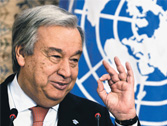 This month, the U.N. General Assembly meets for its first session with António Guterres at the helm. The secretary-general has already begun to leave his mark on the sprawling bureaucracy, responding to humanitarian crises while managing a U.S. president who has repeatedly questioned the usefulness of the world body.
 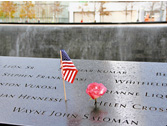 Calls to re-examine and update the “Authorization for Use of Military Force,” or AUMF, have grown louder in the wake of President Trump’s August announcement that he would boost troop levels in Afghanistan. The further the 9/11 attacks recede into history, the more slippery the slope becomes for presidents relying on the AUMF to combat an ever-evolving array of terrorist threats.
  In late June, President Trump announced he would roll back what he called the Obama administration’s “one-sided” opening to Cuba — a move widely expected to hurt Cuba’s economy in the long run while depriving nascent private businesses, especially in Havana, of an increasingly lucrative source of income: U.S. visitors.
 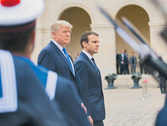 Partisanship aside, we should all be able to agree that Donald Trump takes a nontraditional approach to the presidency. This is particularly evident in his communication style. To some, it’s a breath of fresh air. To others, especially foreign leaders accustomed to their counterparts strictly adhering to protocol, it, well, stinks.
  A new genetic blood test might pave the way for detecting early stage cancers that often prove fatal when caught too late, a new study suggests. The test scans blood for DNA fragments released by cancerous tumors, explained lead researcher Dr. Victor Velculescu.