

|
Cover Story
Economically Battered Brazil
|
||
|
People of World Influence
Ex-U.S. Trade Official Talks
|
||
|
Climate Consensus
Paris Seeks to Square What’s
|
||
|
Selective Sympathy
Paris, Beirut Tragedies
|
||
|
Quiet Peacemaker
Oman Assumes Low-Key Yet
|
||
|
Not-So-Promised Land
For Refugees, Asylum Seekers
|
||
|
Medical
U.S. Summit Draws Attention
|
||
|
 After a long career in government, Wendy Cutler shifted gears in October and took over as director of the Asia Society’s Washington office while simultaneously assuming the role of vice president of the Asia Society Policy Institute.
  Negotiators at the Paris climate change summit were determined not to repeat the mistakes of the past as they scrambled to lock down a landmark accord that could put the world on the path to curbing greenhouse gas emissions.
  There was an outpouring of grief for the Islamic State-inspired terrorist attacks that shook Paris and Beirut, but the widely varying reactions to the twin tragedies had many people asking why one group of people appeared to be more deserving of sympathy than the other.
  Iran’s nuclear ambitions, Syria’s brutal civil war and ongoing hostilities in Yemen dominated Middle East news in 2015 — all while a fourth country that rarely makes headlines, the Sultanate of Oman, quietly worked behind the scenes to resolve all three crises.
 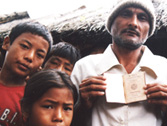 Refugees and asylum seekers who reach the United States may be free of the persecution, threats and dangers that drove them from their home country in the first place, but they face a whole new set of challenges once they arrive in the promised land.
  What if faulty genes in your DNA could be easily corrected, avoiding the ravages of diseases like cystic fibrosis or certain cancers? That is the promise of gene editing, a new technique being heralded as an enormous advancement in genetic engineering.