
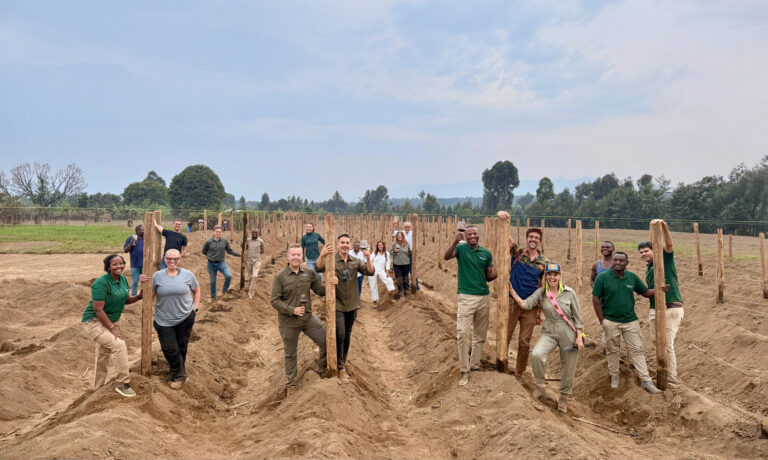
What do gorillas and wine have in common? Soon, they’ll both be part of the growing luxury tourism sector in Rwanda’s volcanic region. The latest addition is VINMUSA Vineyard Estate, the country’s first fine wine estate which broke ground on the first of its three sites in September.
“This is the very first vineyard in all of Rwanda,” VINMUSA co-founder Liam Dall told The Washington Diplomat. “There’s this really interesting burgeoning East African wine community…so we just feel super confident in the wine itself. But it’ll also be powered by the hospitality, of course.”
VINMUSA’s estate will expand across three locations in Kinigi, Lake Burera and Mount Karisimbi, totaling 55 acres in the highlands of Rwanda’s Northern Province. The Mount Karisimbi vineyard will be 8,860 feet above sea level, making it the highest-elevation vineyard in Africa.
Beyond the thousands of grapevines, the estate will also include a welcome center and tasting gallery, a guest experience pavilion, a boutique winery, several retreats, suites and more, which are “really the economic engine of this project, with about 78% of revenues generated to come from the hospitality,” said Dall.
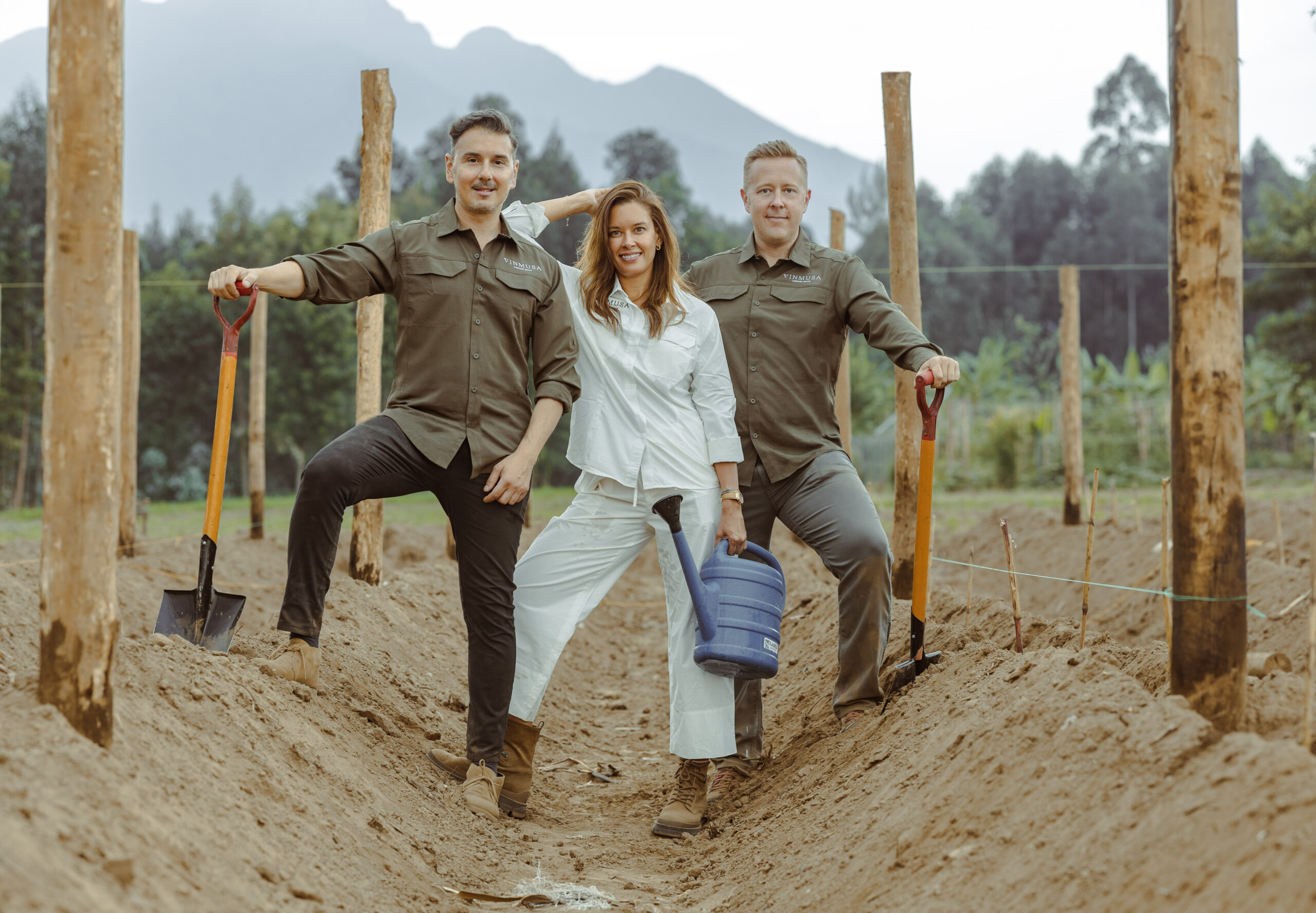
The $22 million project is being funded through a combination of private investment and its own development, with backing from Dall, VINMUSA Founder and CEO Andres de la Roche and founding partner Michelle Ressler. An estimated $10 million in funding they are aiming to raise from US investors will build out the vineyard and guest amenities at the Kinigi site. Then VINMUSA plans to finance the remaining estate from the revenue generated at the initial site. The expected completion date of the project is 2033.
“Most investors, American business, do not know the African market… so they are skeptical,” said Arthur Asiimwe, deputy chief of mission at the Rwandan Embassy in Washington. “But we want to demystify that picture to show that something good can come out of Africa.”
“Rwanda will give you a conducive business environment, welcome for investors, very secure environment, one of the least corrupt countries in the world, a dynamic young population, but also centrally located in the heart of Africa,” he said, adding that taxes generated by the venture will go back into the local community.
The region is no stranger to luxury tourism. Since the mid-2000s, the Rwandan government has prioritized a high-value, low-volume tourism model following post-1994 genocide economic recovery efforts under President Paul Kagame.
The star attraction is Rwanda’s mountain gorillas, which have steadily increased in population through decades of conservation work, building on the early efforts of Dian Fossey. Visitors can experience the gorillas in Volcanoes National Park for $1,500, fueling the tourism sector that generated $647 million in 2024 revenues, according to the Rwanda Development Board.
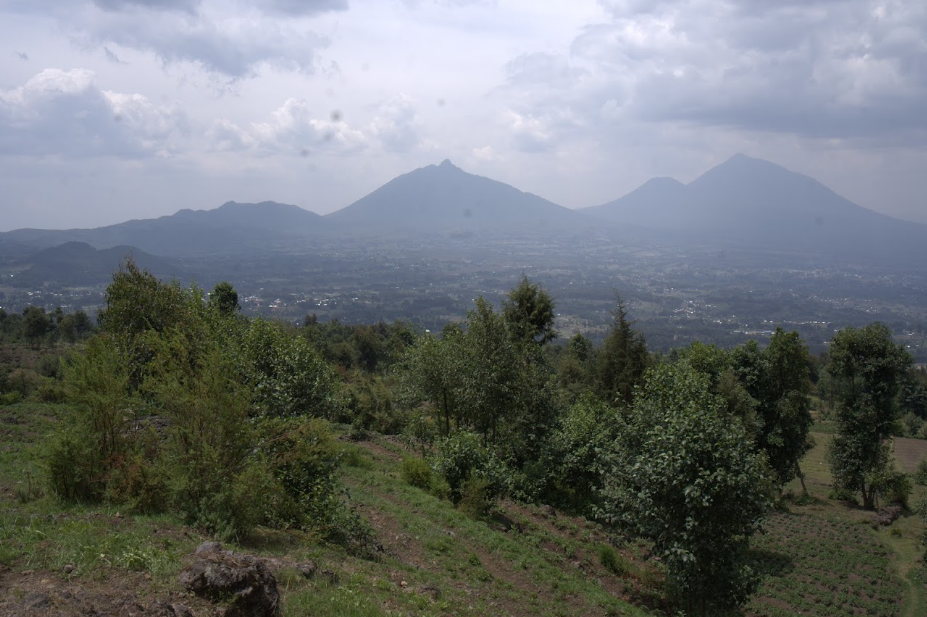
“Having a good vineyard that’s combined with high-end accommodation is value addition for [Volcanoes National Park],” said Asiimwe. “A tourist is going to climb the mountains and look at the gorillas, and then descend from there and enjoy a good moment at the vineyard and at the winery and maybe get accommodation at the estates that are going to be there.”
VINMUSA expands on the viticulture identity already present in Africa, including centuries-old vineyards in South Africa and newer wine-producing estates in Kenya and Ethiopia. Dall says inspiration in Rwanda came from seeing the success of Virunga Mountain Spirits, the first woman-owned distiller in Rwanda established in 2021, and VINMUSA’s food and beverage partner.
After contacting Vinpro viticulture experts in South Africa to do a series of environmental studies last year, they determined that Rwanda’s ground was suitable for grape cultivation.
“All the studies that Vinpro conducted passed with flying colors, from the soil to the climate,” said Dall. “We see this as an opportunity to put Rwanda on the map in terms of fine wine production and build out this East African wine community.”
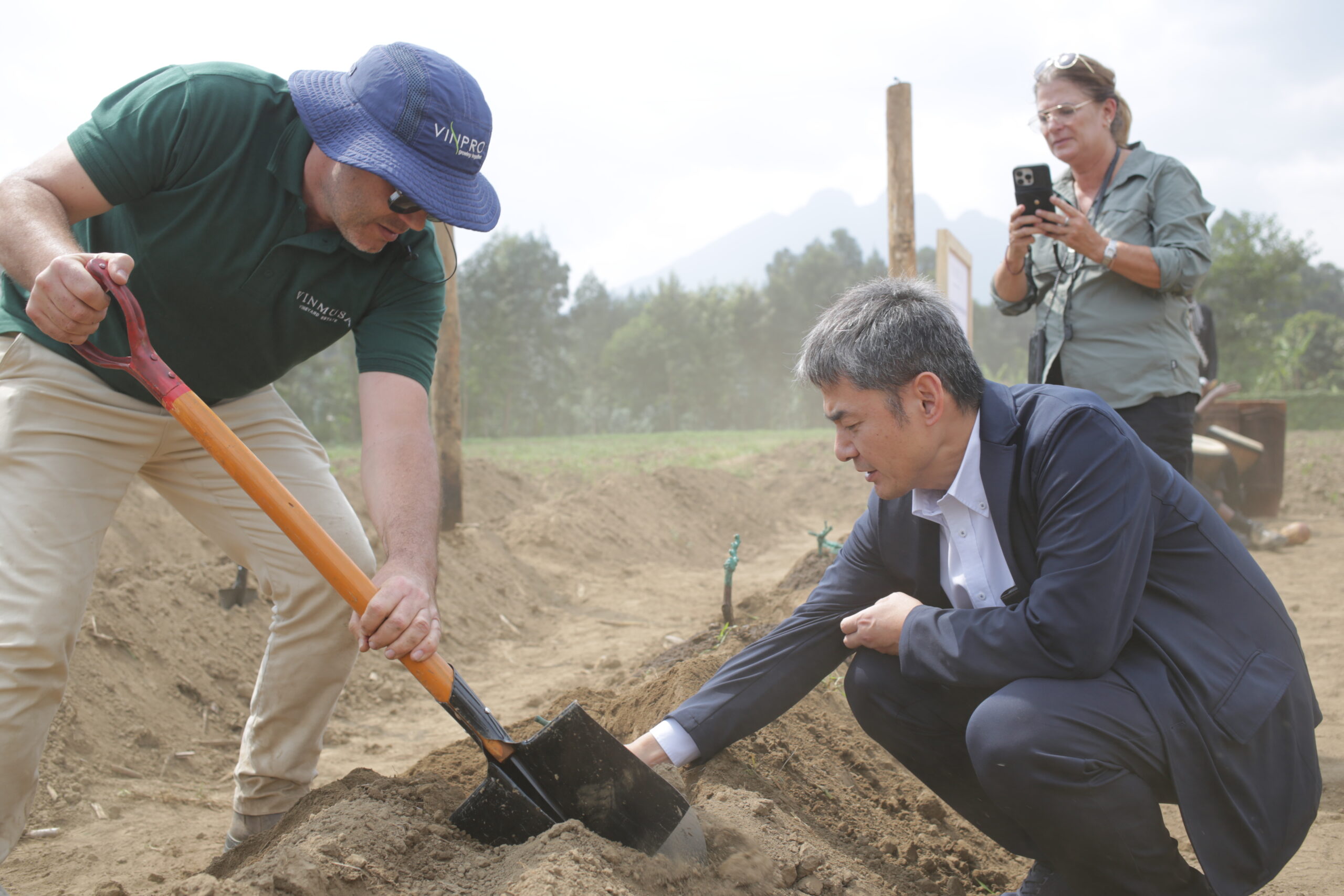
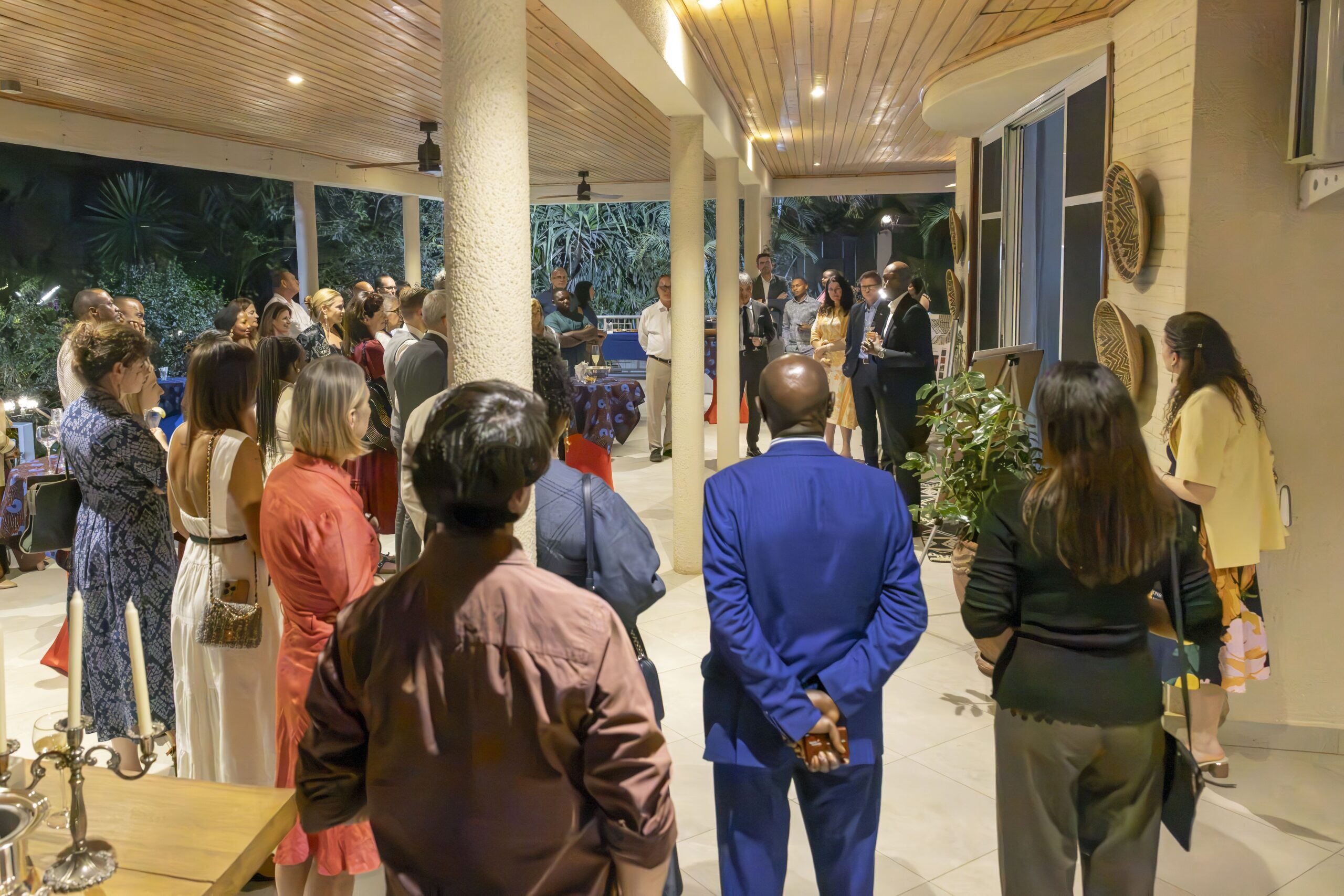
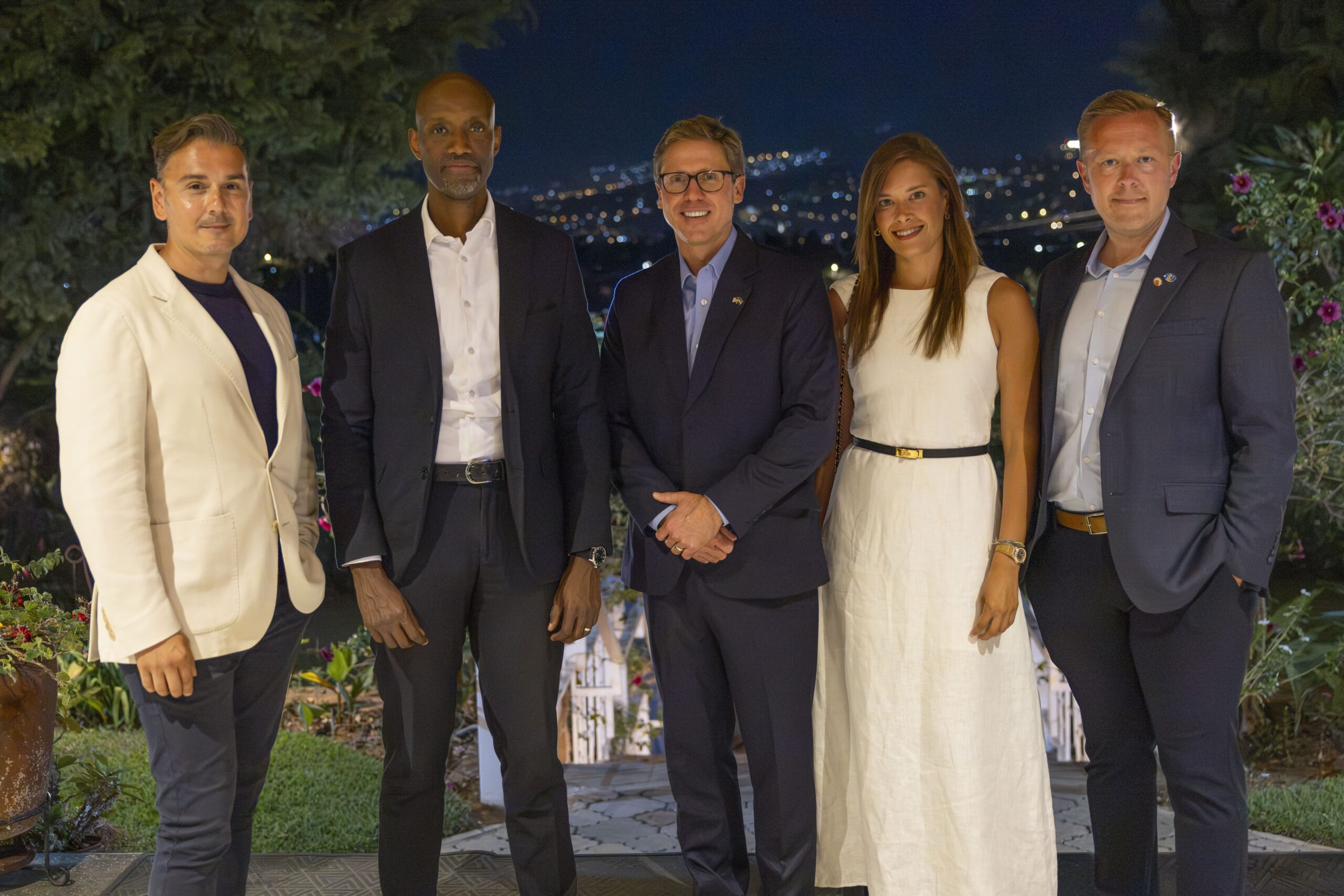
With the soil good to go, the inaugural planting took place Sept. 4 under sunny skies in Kinigi. Diplomats, government leaders, investors and local residents planted the first of what now totals 4,661 vines of three different cultivars —chenin blanc, sauvignon blanc and pinotage—across the three sites. To mark the occasion, John Armiger, chargé d’affaires at the US Embassy in Kigali, hosted a reception attended by Rwanda Development Board CEO Jean-Guy Afrika and diplomats representing the EU, Brazil, Japan, Israel, Germany, Luxembourg and the UK.
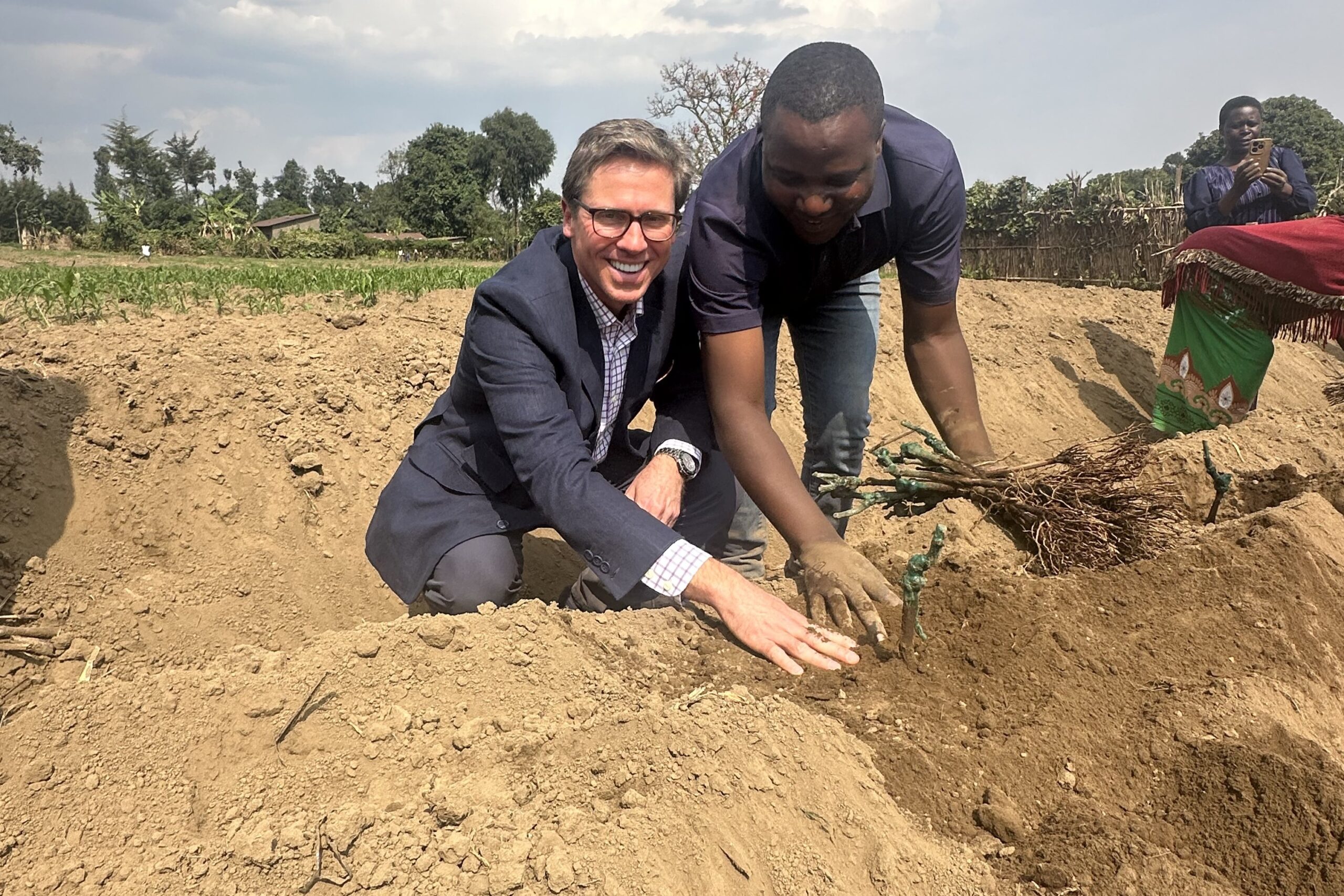
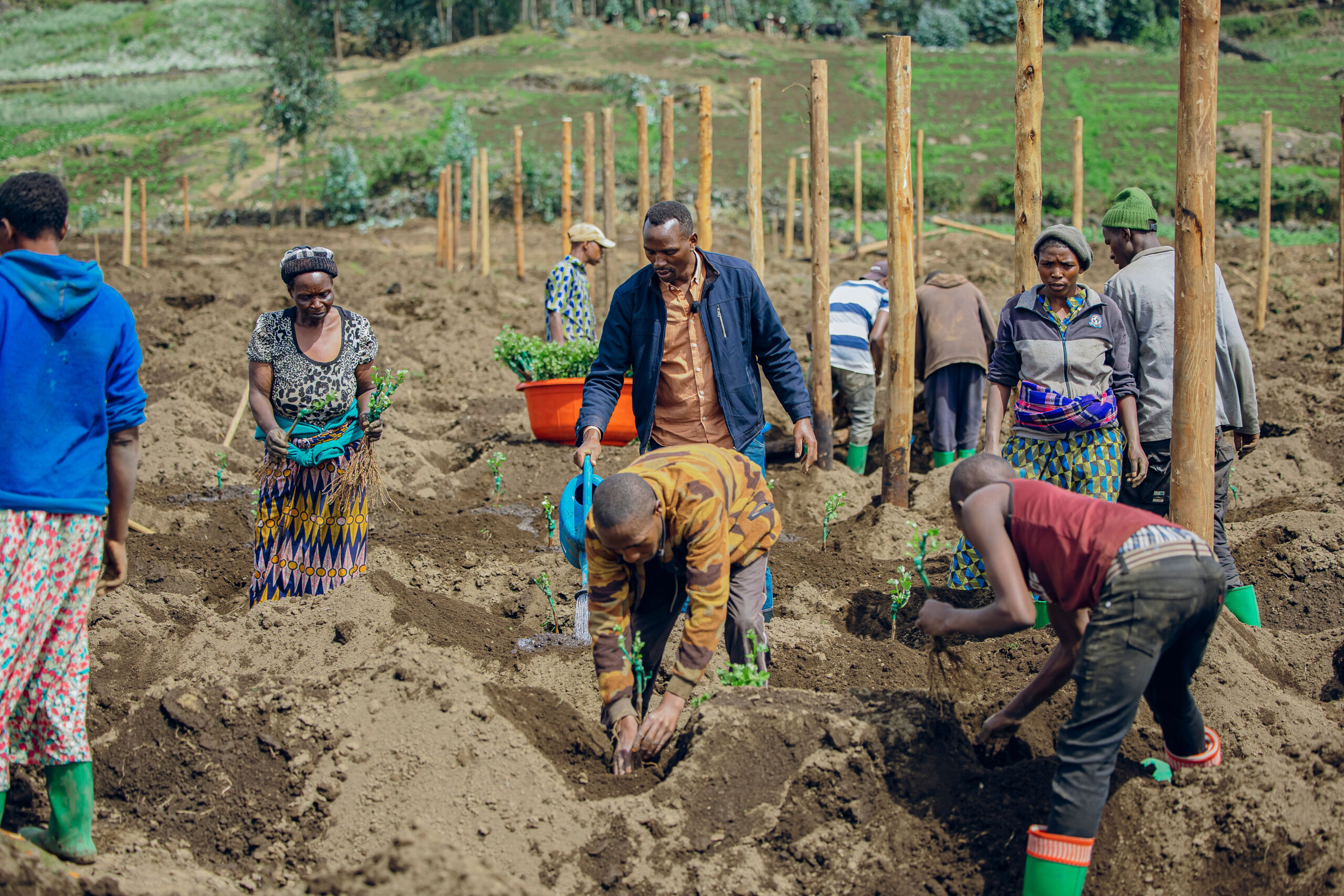
VINMUSA’s work is also creating jobs and educational opportunities for the local community. They have partnered with Gold Youth Development Agency to support young Rwandans, as well as with Bridge2Rwanda to offer viticulture training at the University of Rwanda. Seasonal and permanent positions will employ Rwandans in viticulture, hospitality, agriculture and more. As of November 2026, VINMUSA has already engaged over 500 locals on land preparation and vineyard planting.
The estate itself will also include architectural elements, decor and commissioned works by local Rwandan artists and makers, while the founders plan to name the wines after the gorillas that have made the region what it is today.
“Really telling that conservation story is part of our impact,” said Dall. “David Attenborough’s favorite gorilla that he has mentioned is called Poppy, which we think is a perfect name for kind of our sparkling. So we want to have this storytelling. We want to also give back to conservation.”
The project is currently in its first of three development phases. As of Nov. 5, an additional 27,000 vines have been ordered and the VINMUSA founders are looking to break ground on the welcome center and retreats in Kinigi in 2027. Once fully functional, the estate is estimated to produce 90,000 bottles at full capacity.
Photos courtesy of VINMUSA Vineyard Estate, unless otherwise stated.
