
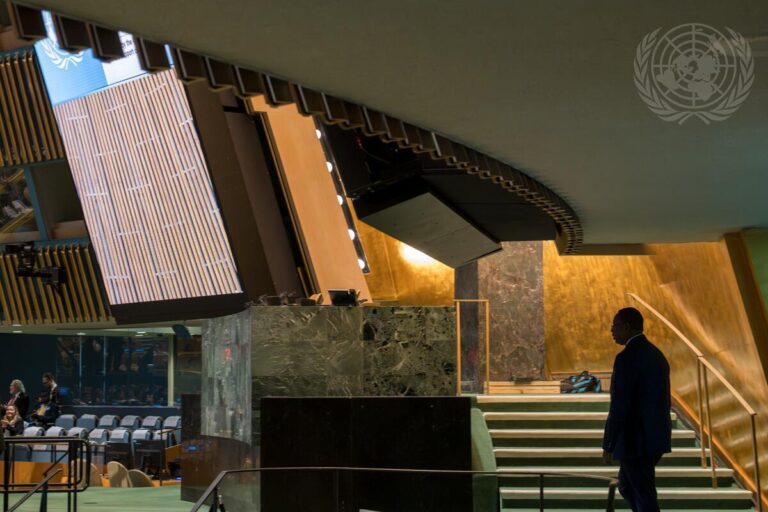
Embassy Row is watching a competitive race to select the next secretary-general of the United Nations, with candidates’ connections and support from influential governments drawing attention as the contest unfolds in New York.
The seventh, and latest reported straw poll on Oct. 30, showed Costa Rica’s Rebeca Grynspan leading with 11 “encourage” votes and four “discourage.” Argentina’s Rafael Mariano Grossi trailed in second with nine “encourage,” four “discourage,” and two “no opinion.” Lana Zaki Nusseibeh of the United Arab Emiratess received seven “encourage,” six “discourage,” and two “no opinion” votes, making her fourth behind Guyana’s Carolyn Rodrigues-Birkett, who received eight “encourage,” six “discourage,” and one “no opinion.”
Ivonne A-Baki, a veteran Ecuadorian diplomat with longstanding ties to President Donald Trump, is remaining in the race despite a lack of support in Security Council straw polls.
“My motivation isn’t about personal outcome,” A-Baki told The Washington Diplomat. “As long as the UN needs an unaligned bridge-builder who can talk directly to all powers without ideological baggage, my message belongs in this race.”
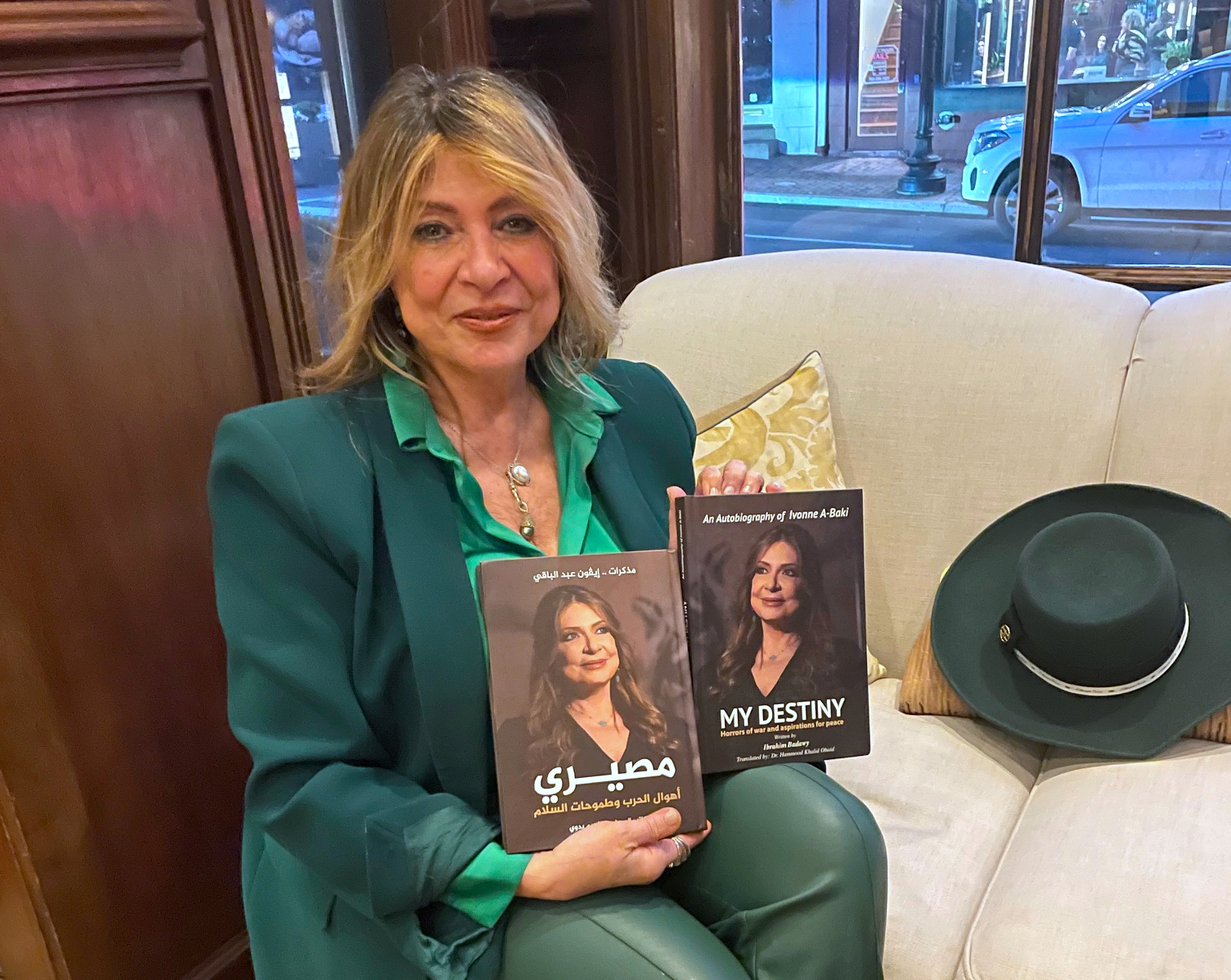
After serving as Ecuador’s ambassador to the United States from 1998 to 2002, A-Baki returned to Washington for another four-year posting in 2020. In public statements, A-Baki has described her relationship with Trump as a longstanding friendship.
“President Trump respects leaders who are direct, transactional, and focused on tangible outcomes rather than empty bureaucratic talk, and that is exactly the practical approach I bring to institutional reform,” she said.
In her vision statement, A-Baki underscored that she will prioritize peace and preventive diplomacy, drawing on her role in negotiating the 1998 peace agreement between Ecuador and Peru. She was nominated by Tonga in August.
Newcomer Nusseibeh
Meanwhile, Ambassador Yousef Al Otaiba of the United Arab Emirates has thrown his weight behind Nusseibeh, describing her as “one of the most accomplished diplomats I have ever had the privilege to work with,” and vowing to “work tirelessly to support her candidacy.”
Nusseibeh served as the UAE’s permanent representative to the UN for more than a decade and later became minister of state in the Ministry of Foreign Affairs. Her vision statement for the UN role underscores the importance of multilateral problem-solving and using “quiet diplomacy” to prevent conflicts from escalating.
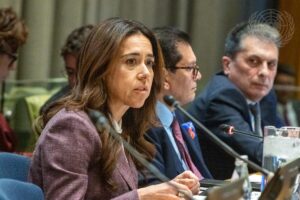
Nominated by the UAE on Oct. 21, Nusseibeh is the latest candidate to jump into the race. While diplomats have speculated on her candidacy for years, her late run has shaken up the race, said Richard Gowan, program director for global issues and institutions at the International Crisis Group.
“Diplomats find it unlikely that Lana would have run unless she had pretty strong signals from the veto powers that she can succeed,” Gowan told The Washington Diplomat, referring to the UN Security Council’s five permanent members with veto powers: the United States, China, Russia, France and the United Kingdom.
Nusseibeh’s record includes a role in negotiations leading to Security Council Resolution 2720, adopted in December 2023, that called for humanitarian aid for Gaza. Palestinian UN envoy Riyad Mansour endorsed Nusseibeh’s candidacy, hailing her as a “bridgebuilder.”
However, Nusseibeh has drawn opposition from Sudan and rights groups over her defense of Abu Dhabi’s human rights record in the region. Bruno Stagno Ugarte, chief advocacy officer at Human Rights Watch, accused her of whitewashing the UAE’s “war crimes in Yemen and support for the abusive Rapid Support Forces in Sudan.”
The UAE denies the accusations.
Who will Trump endorse?
Trump has not publicly endorsed any candidate. But earlier this week, the Wall Street Journal reported that he has advocated for former Hungarian Prime Minister Viktor Orbán. Citing unnamed sources from three countries, the Journal reported that the Trump administration was seeking support from China and Russia for Orbán’s candidacy.
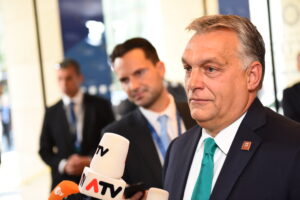
If all three countries backed Orbán, the right-wing populist and national-conservative politician would have the support of three of the five permanent UN Security Council members. Neither Moscow nor Beijing has publicly endorsed any candidate.
Despite strong backing from the White House, Orbán lost Hungary’s April parliamentary election in a landslide, ending his 16-year rule. He has not publicly commented about his potential entry into the race for UN secretary-general.
The Trump administration has questioned the value of multilateral diplomacy, sharply cut US funding to the UN and withdrawn from dozens of UN entities and agencies.
Candidates vying for the job
Along with A-Baki and Nusseibeh, five other candidates are currently vying for the job. They are:
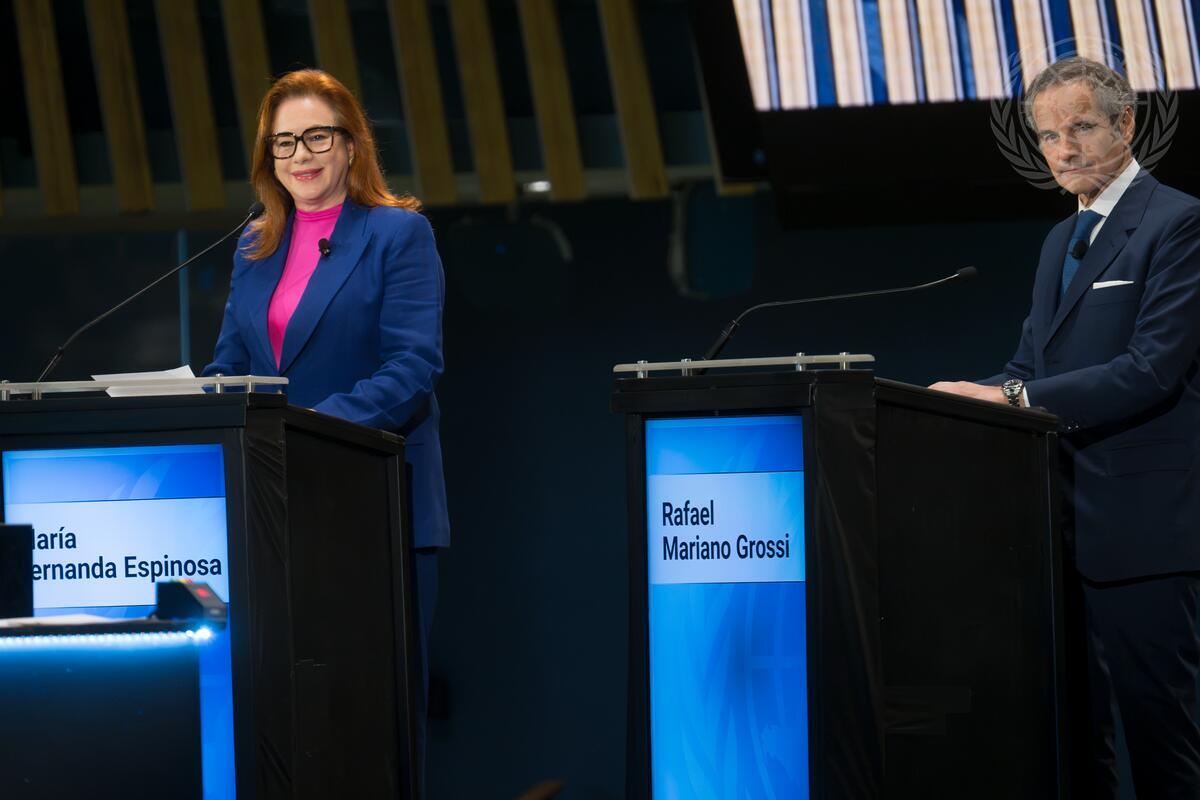
María Fernanda Espinosa Garcés, nominated by Antigua and Barbuda on May 11, 2026
Ecuador’s former foreign minister Espinosa Garcés is a former president of the UN General Assembly. Her platform focuses on peace and security, sustainable development, digital and energy transformation, improving the UN’s delivery of results and restoring its credibility.
Rafael Mariano Grossi, nominated by Argentina on Nov. 26, 2025
As the director-general of the International Atomic Energy Agency (IAEA) since 2019, Grossi, of Argentina, has led international diplomacy on nuclear safety and Iran’s nuclear program. He presents his experience managing complex international crises as preparation for making the UN more effective, responsive and results-oriented.
Rebeca Grynspan, nominated by Costa Rica on March 3, 2026
A former vice president of Costa Rica and current secretary-general of UN Trade and Development (UNCTAD), Grynspan is an economist with experience in government and multilateral institutions. Her campaign seeks to restore confidence in the UN, strengthen peacemaking and address the links between international security, development and economic inequality.
Olara Otunnu, nominated by Uganda on July 24, 2026
A former UN undersecretary-general and special representative for children and armed conflict, Otunnu also served as Uganda’s foreign minister and ambassador to the UN. He advocates restoring the organization’s moral authority, strengthening peace and security, mobilizing development financing and deepening cooperation with regional organizations.
Carolyn Rodrigues Birkett, nominated by Guyana on June 15, 2026
As Guyana’s permanent representative to the UN since 2020, Rodrigues Birkett previously served as foreign minister and held other senior government posts. Her campaign stresses adherence to the UN Charter, human rights, sustainable development and making the organization more effective at delivering on its commitments.
Two candidates have withdrawn from the race: Michelle Bachelet, the former Chilean president and former UN human rights chief, and Macky Sall, the former president of Senegal.
Selection process
Under Article 97 of the UN Charter, the secretary-general is appointed by the UN General Assembly upon the recommendation of the Security Council. The selection process includes public dialogues in which candidates present their priorities and answer questions from member states and civil society.
Since July, the Security Council has been conducting private straw polls to assess support for the candidates. To be recommended, a candidate needs at least nine votes among the Council’s 15 members and no veto from any of the five permanent members.
No woman has ever served as UN secretary-general and several candidates have emphasized the need to break that barrier. Meanwhile, some Latin American and Caribbean countries have argued that it’s their turn to lead the organization, having produced only one previous secretary-general: Peru’s Javier Pérez de Cuéllar, who served from 1982 to 1991.
The successful candidate will take office once António Guterres’ five-year term as UN secretary-general concludes at the end of 2026.
