
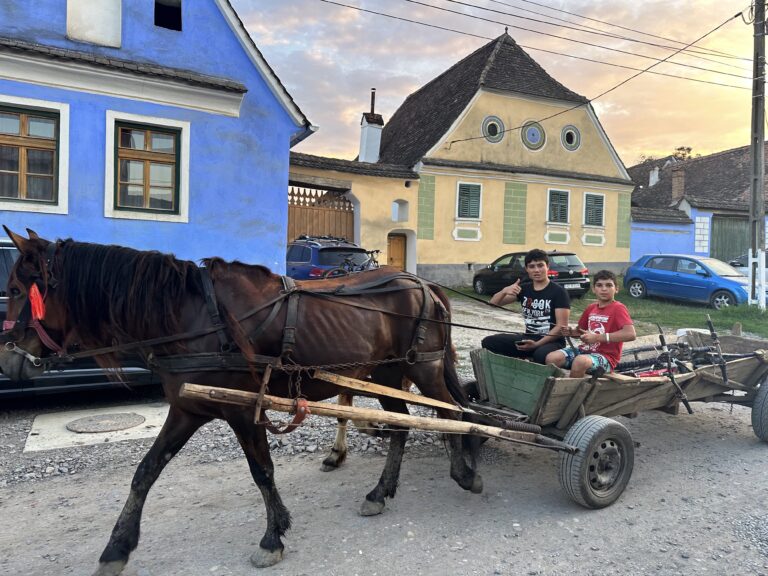
BUNEȘTI, Romania—Known mainly for the medieval legend of Count Dracula, Romania’s mythical Transylvania region is also home to fortified churches, stunning natural beauty and tiny hamlets where, except for WiFi, daily life hasn’t changed much over the last thousand years.
That’s precisely what makes the region so appealing to tourists. And now, 10 specific villages in Romania’s breadbasket that were once populated by German-speaking Saxons are marketing the region to foreign visitors through an annual summer weekend tourism campaign known as Săptămâna Haferland.
Haferland (German for “oatland”) was jointly established in 2012 by luxury automobile magnate Michael Schmidt and Romanian-born German musician and philanthropist Peter Maffay to promote local Saxon culture. The festival’s 13th edition took place July 31-Aug. 3 in the villages of Archita, Saschiz, Homorod, Rupea, Criț, Roadeș, Meșendorf, Cloașterf, Bunești and Viscri.
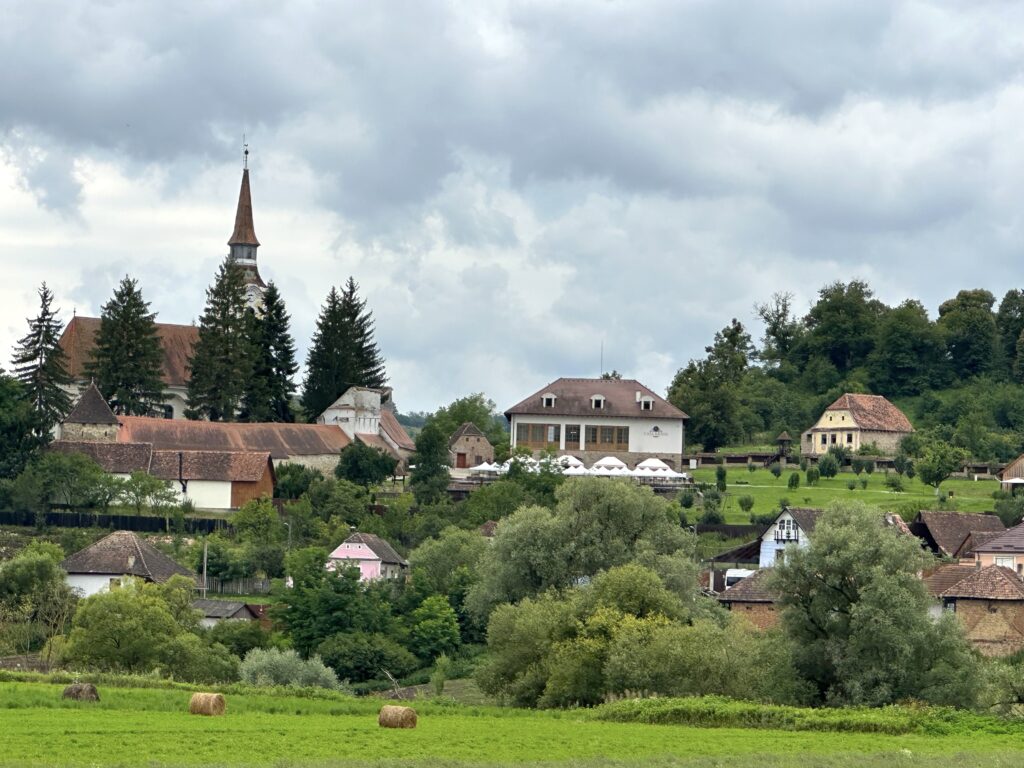
Over the course of four days, these 10 picturesque villages located within the triangle formed by Brașov, Sibiu and Sighișoara collectively hosted around 50 events including jazz concerts, handicraft workshops, dances, an organ recital, pottery, haymaking, embroidery, culinary experiences and traditional balls, with guest artists from both Germany and Romania.
Schmidt, interviewed at his Casa Kraus guesthouse in Criț (Deutsch-Kreuz in German), said about 8,000 people attended the 2025 cultural extravaganza. That’s up from only 500 the first year, when only Criț and two other villages—Roadeș and Viscri—took part.
“This festival started by chance,” he said. “I arrived by helicopter and stopped in Viscri. Peter Maffey was there and told me that next year, he was sponsoring an event in Roadeș called ‘Open Doors.’ At that very moment, I proposed to join forces and create something much bigger.”
He added: “That’s how the idea was born. We decided on the name Haferland, because in this area the climate is harsh, so you can’t grow grapes, but you can grow oats.”
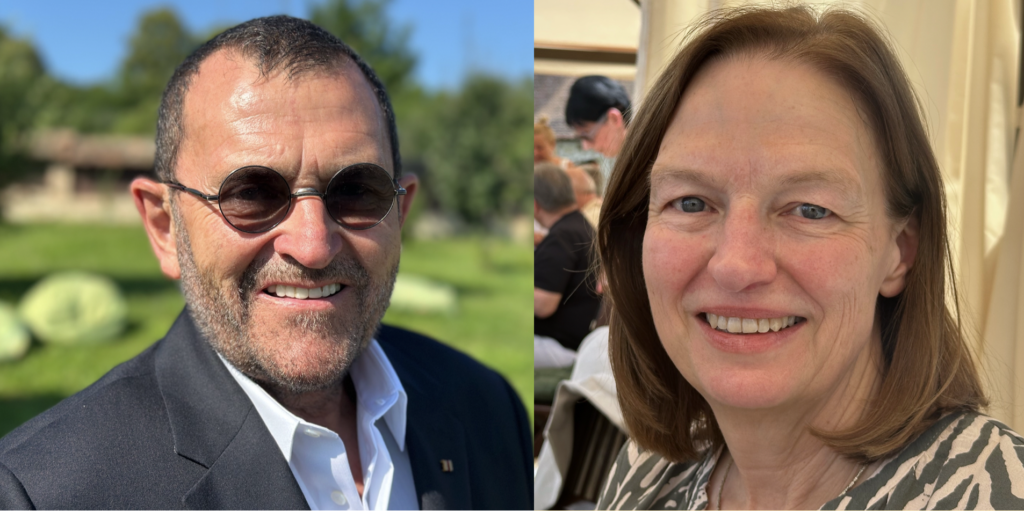
In a written message read aloud in Bunești, Romanian Prime Minister Ilie Bolojan praised the Haferland festival for creating economic opportunities in these medieval villages at a time of rising global nationalism.
“Romania’s destiny is the European Union, and in Criț, you can breathe the European spirit that demolishes prejudices and encourages all European peoples to coexist around the values of peace, solidarity, freedom of movement, tolerance and Christianity,” Bolojan wrote.
Angela Ganninger, Germany’s new ambassador to Romania, also spoke at the event.
“Among European states, Romania’s protection of minority rights is exemplary. This is part of a mosaic in which all these ethnicities live together harmoniously,” said Ganninger. “This festival is a great initiative to make the region’s unique landscape more known. I find it relaxed, welcoming and beautiful, and I think it deserves to be visited.”
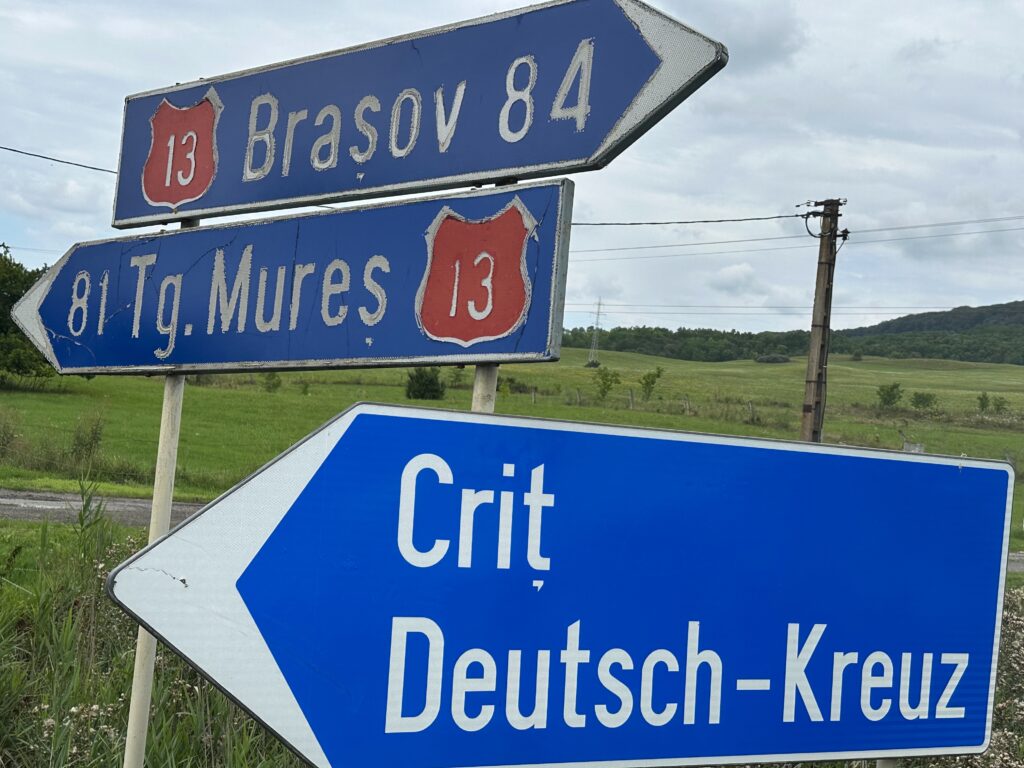
Andrew Noble was Britain’s ambassador to Romania from 2018 to 2023. He’s now on the board of four charities including Fundatia Adept, a nonprofit that seeks to preserve the region’s farming character and agricultural land biodiversity.
At the end of World War II, he said, Romania was home to around 750,000 German speakers. By the time Ceaușescu was overthrown in 1989, that community had dropped to 500,000, and by 1994, it was down to 10,000.
“There was a massive exodus between 1989 and 1994, when they were now free to leave. They had a very difficult life under communism, living in backwards conditions with no indoor toilets,” Noble explained. “Because of German nationality laws at the time, if you could trace your family roots to Germany, you had a right to live there. So people left these villages and now live in Germany. Every village here has an organization in Germany.”
Last year’s festival was also attended by Liechtenstein’s Prince Philipp, marking 800 years since the issuance of the Andreanum, a document signed by Hungarian King Andrew II confirming rights to a group of settlers from the Rhine-Moselle region in present-day Germany.
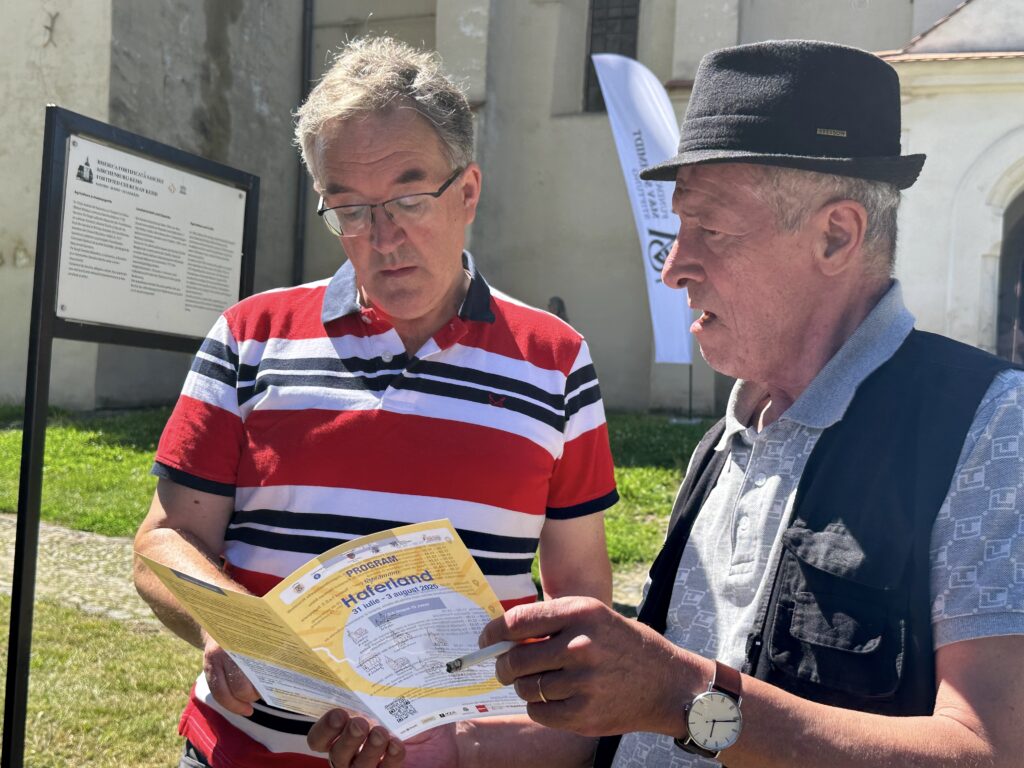
Another country closely involved with Haferland is Luxembourg.
“The dialect of German spoken in Luxembourg today is very close to the Saxon dialect spoken here,” said the retired British diplomat. “In 2007, when Luxembourg City and Sibiu were selected as European Capitals of Culture, the prime minister of Luxembourg visited and discovered people speaking his home dialect. They started coming here in 1224, and when the last ones left in 1994, that was the decimation of an 800-year-old cultural phenomenon.”
Now, thanks to the rural tourism boost fueled by Haferland, the villages are slowly recovering.
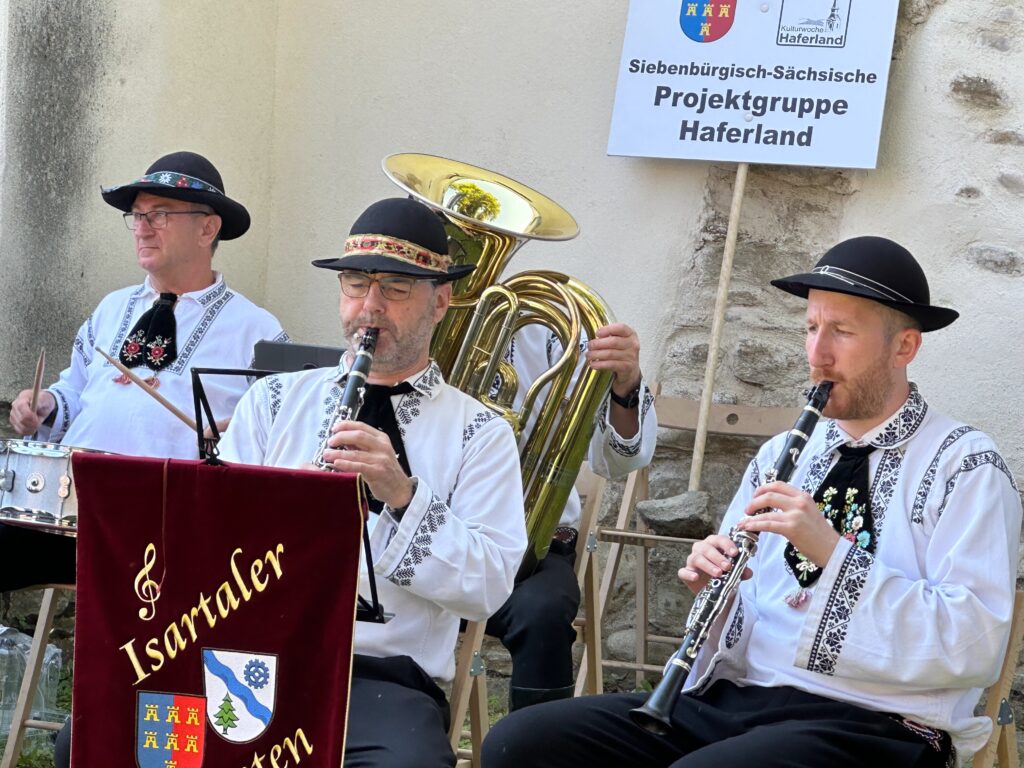
“By chance, in 2019 we were here in this area on holiday. Somebody asked if I was going to Haferland, which I had never heard of. We ended up doing the whole festival,” said Noble. “As a British ambassador, there’s a big link given King Charles’s involvement in this area. He’s a major engine for the restoration of Saxon architecture and the preservation of grasslands, which are better preserved here than in Europe as a whole.”
Looking back, Noble said he’s glad communism was ineffective in changing the laid-back character of rural Transylvania.
“Even though Ceaușescu tried to destroy ancient villages and the ancient way of life, he didn’t succeed. Life is still being lived as it was in medieval times,” he said, adding that “Romania doesn’t have a developed tourism market, and only recently have they started promoting themselves internationally.”
Thankfully, he said, “the product is far better than the promotion. If people come, they’ll fall in love.”
