
|
Cover Story
Despite Growing Economy, Peru
|
||
|
People of World Influence
U.S. Ambassador Thomas Shannon
|
||
|
Fresh Faces on Capitol Hill
New Committee Chairs in the House
|
||
|
Moscow’s Meddling
Russia’s Election Interference Playbook
|
||
|
U.S. MIA on World Stage?
White House Struggles to Fill
|
||
|
Christian Contradiction?
White Evangelicals Strongly Support
|
||
|
Book Review
U.S. Historians Frame Challenges
|
||
|
Nordic Vantage Point
Op-Ed: Women’s Health, Education
|
||
|
Medical
Newer Tallies Put Autism Cases
|
||
|
|
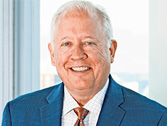 Venerated U.S. Ambassador Thomas Shannon retired in February 2018 after an almost 35-year career — a huge blow to a demoralized State Department. But the career ambassador who served under six presidents is confident U.S. diplomacy can thrive if we nurture the next generation of diplomats.
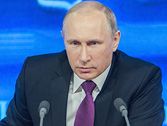 Russia’s successful blueprint for interfering in the 2016 U.S. election has been duplicated throughout Europe, most recently in the Balkans, an ethnic tinderbox where experts fear the tug of war between Moscow and the West could explode into a very real conflict.
 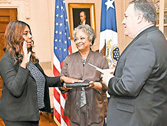 The diplomatic rupture with Saudi Arabia over the murder of journalist Jamal Khashoggi shed light on a more basic problem plaguing President Trump’s foreign policy strategy: the dearth of U.S. ambassadors in key posts across the globe.
  The United States admits more Christian refugees than Muslim ones every year, yet most white evangelical Christians are opposed to letting them into the country. The Trump administration has made the plight of persecuted Christians overseas a key plank of its religious freedom agenda.
 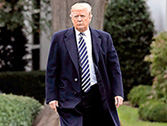 While it is too early for fair-minded historians to fully assess Trump’s presidency, several of the nation’s most celebrated historians are delving into America’s past to place the challenges posed by Trump into historical context. We review three books that are clear responses to the rise of Trump.
 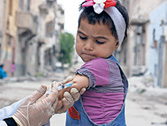 Any country should see its spending on health and education, particularly for women and children, as an investment, not a burden. This is particularly true for the poorest countries in the world. Such investments are the basis for growth and economic stability, ultimately contributing to global security.
  A federal study reported that one in 40 children have an autism spectrum disorder (ASD), with a second study arriving at the same conclusion. Previously, it was estimated that one in 59 children have autism.