
The Western Balkans—a region that was the scene of fierce ethnic bloodshed in the 1990s after the breakup of Yugoslavia—now wants to make a name for itself in renewable energy.
To that end, a conference will take place Oct. 6-7 at the Montenegrin resort of Budva. Organized by the UK-based renewables consultancy Invest in Network, Energy Week Western Balkans aims to bring together some 350 policymakers, regulators, utilities, investors and developers from Albania, Bosnia & Herzegovina, Croatia, Kosovo, Montenegro, North Macedonia and Serbia.
Their ambitious aim: 20 gigawatts of new renewable capacity by 2040.
At a similar conference last year, industry leaders outlined priorities for accelerating renewable capacity, focusing on solar, wind and storage solutions for driving the next wave of clean energy expansion. This is particularly urgent given current crude oil prices hovering around $100 a barrel in the wake of war-related disruptions in the Strait of Hormuz.
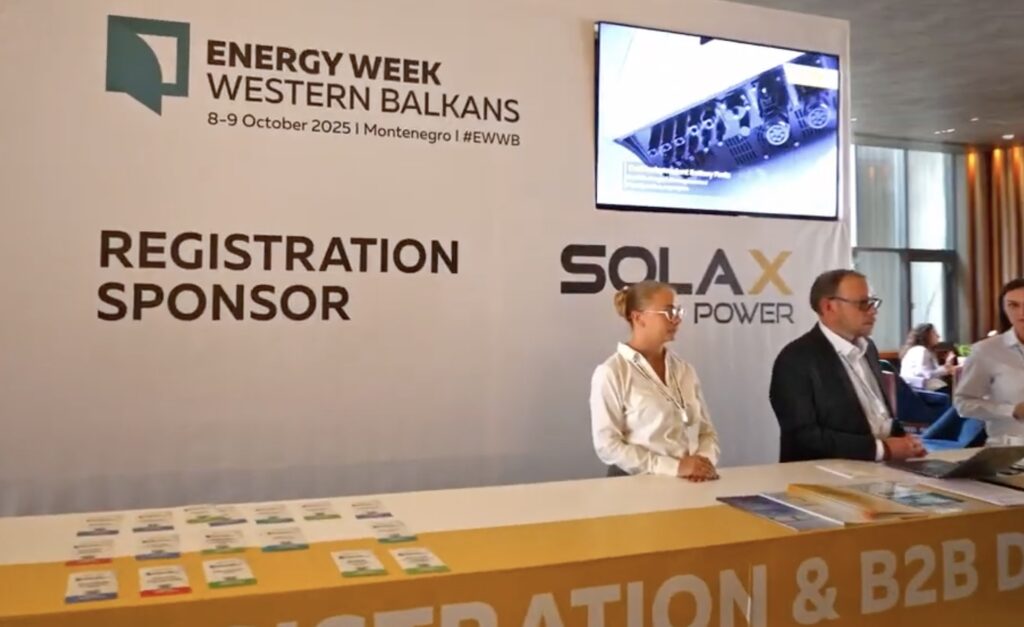
“Curated by experienced consultants, the platform connects participants through targeted meetings, casual interactions, and high-level receptions, ensuring that conversations translate into tangible collaborations,” according to organizers. “As Energy Week Western Balkans looks ahead to 2026, it will continue to build on this momentum, deepening regional cooperation and transforming shared ambition into sustainable energy progress.”
Sponsors include Montenegrin hydroelectric utility EPCG, Alcazar Energy, ProCredit Bank, Kelag International. Among institutional partners: FIPA Bosnia & Herzegovina, the Montenegrin Investment Agency; Macedonian Energy Forum; Energetski Portal (Serbia) and Argus Media.
The agenda offers an impressive lineup of speakers. These include Artur Lorkowski, secretariat of the Energy Community; Petar Đokić, energy and mining minister of the Republic of Srpska; EPCG Board Chairman Milutin Đukanović; Daniel Calderón, co-founder and managing partner of Alcazar Energy; Alastair Hammond, CEO of Rezolv Energy; Florina Sefaj, CEO of MCA Kosovo; Emre Erdoğan, CEO of Çalık Renewables; Besnik Leskaj, CEO of Blessed Investment Group, and Elton Radheshi, secretary-general of the Albanian Energy Regulatory Authority.
To that end, the Sustainable & Inclusive Energy for Green Agriculture (SIEGRA) Foundation hopes to help the region establish itself as a testing ground for innovation in public-private partnerships as well as European structural funds.
SIEGRA is led by its founder and CEO, Dr. Emanuela Dyrmishi, an expert in European economic policy, national security, global affairs and the integration of new technologies with social issues. She is supported by board chair Dr. Enida Shena, who is also director of the Albanian Agribusiness Council (KASH) and by a high-profile multidisciplinary technical and scientific committee led by Dr. Sergio Olivero, honorary co-chair of the European Commission’s ETIPSNET (European Technology and Innovation Platform for Smart Networks for Energy Transition).
Among other things, the foundation has begun to establish World Energy Council Albania, which cooperates with the Atlantic Council on transatlantic initiatives, policy dialogues and high-level forums on global energy security and the transition to renewables.
SIEGRA addresses a basic structural need in the Adriatic-Balkan region: to move away from dependence on fossil fuels while protecting agricultural yields and ensuring food security. This approach aims to integrate renewable energy in the agro-industrial supply chain. Among its priorities:
- Integration of photovoltaic and agrivoltaic systems (with pilot projects in olive groves and intensive crops), aimed at reducing soil impact optimizing water use.
- Utilizing biomass from agricultural waste, mini-hydroelectric power (including pumped hydro), mini and micro wind power, and experiments with green hydrogen.
- Cross-border renewable energy communities along Corridor VIII: cooperative models designed to reduce energy procurement costs for rural small- and medium-sized businesses, and encourage local energy resilience.
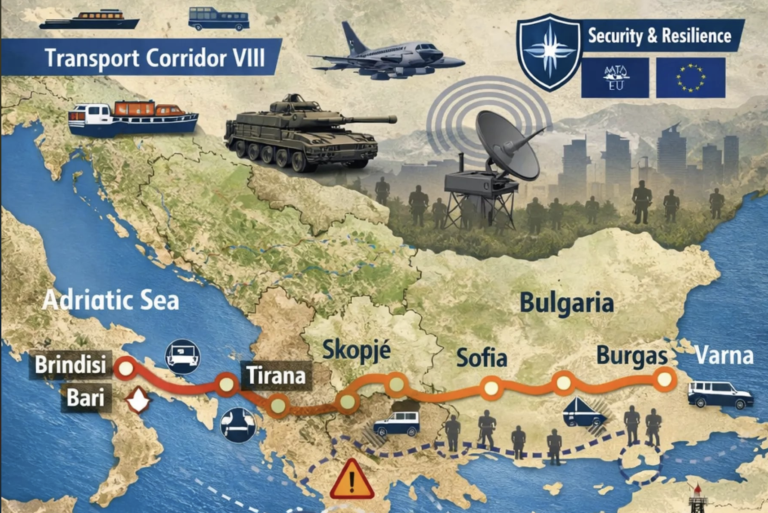
As stated by the recent Tirana Joint Declaration on Corridor VIII, the 1,500-km-long route connecting Albania’s port of Durres to Bulgarian ports on the Black Sea via North Macedonia isn’t just a transportation corridor, but also a channel for dialogue and resilience.
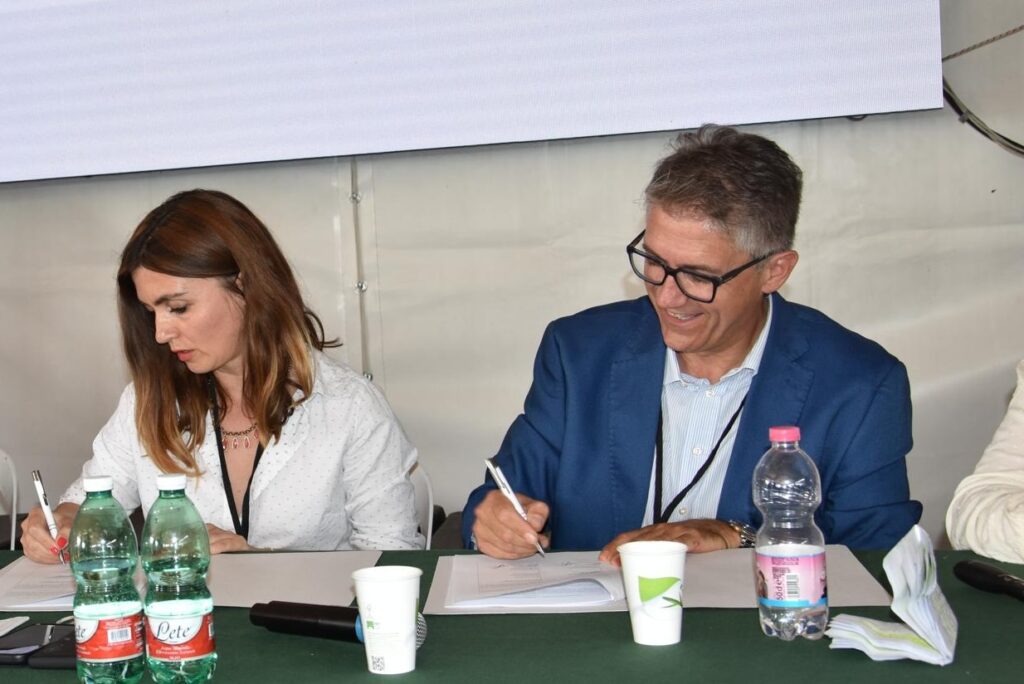
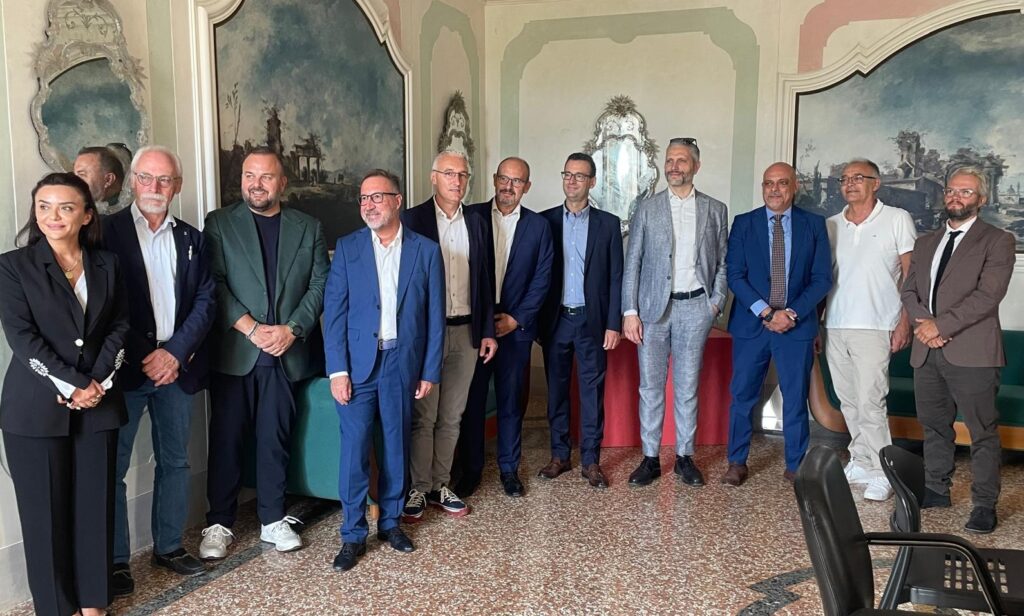
At a signing ceremony held Sept. 19 in Italy’s Piedmont region, the SIEGRA Foundation and the Agrion Foundation launched its official collaboration. SIEGRA has begun work on establishing cross-border renewable energy communities in Italy, Albania and Montenegro. Later on, it will add Greece, North Macedonia and Bulgaria.
Tea Sinamati, representing SIEGRA, was among the speakers at the first meeting of the working group on such cross-border energy communities.
In short, within the new European geopolitical order, the security of physical and digital infrastructure can no longer be separated from food and energy sovereignty. The Western Balkans—historically a bridge between East and West—now represent the decisive arena in which the strategic resilience of both the EU and NATO is at stake.
