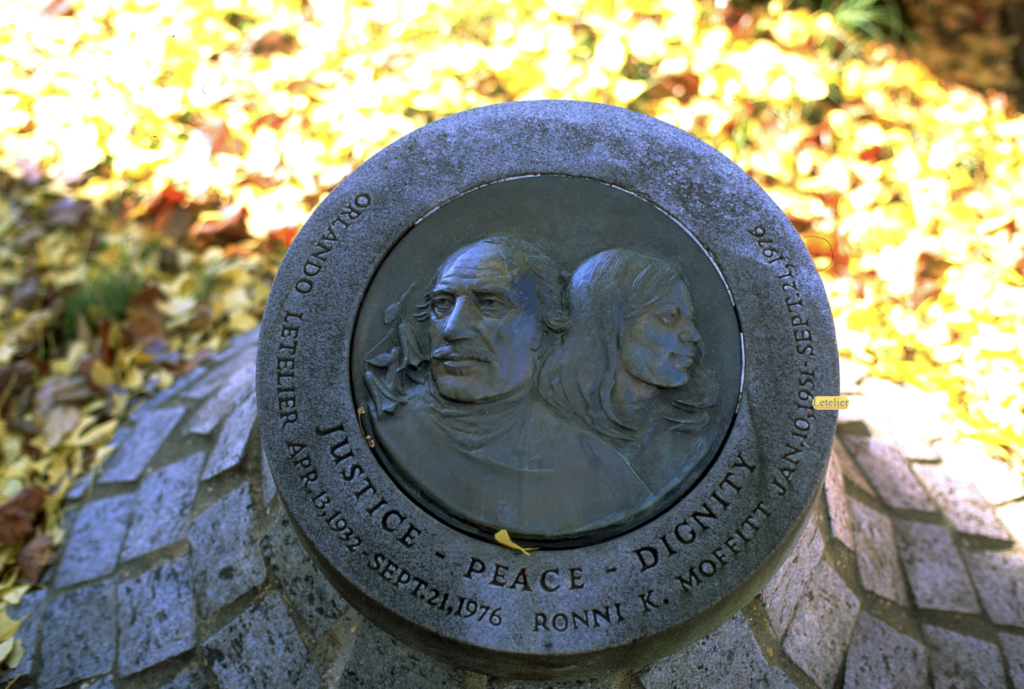
Exactly 50 years ago this week, agents of Chile’s secret police—acting on orders from dictator Gen. Augusto Pinochet—detonated a car bomb in Washington’s Sheridan Circle, instantly killing Chile’s exiled former ambassador to the United States, Orlando Letelier, as well as Ronni Moffitt, Letelier’s colleague at the Institute for Policy Studies.
Half a century after the 1976 attack—commemorated by a small granite and bronze monument near the spot where it happened—Chile is led by a far-right politician who idolizes Pinochet.
President José Antonio Kast, inaugurated half a year ago, is the most right-wing head of state since Pinochet himself quit in 1990. Kast, a devout Catholic father of nine whose own father was a member of the Nazi Party during World War II, opposes abortion and has taken a hard line on crime and immigration—earning praise from Argentina’s Javier Milei as well as Donald Trump.
Kast, elected in a December 2025 runoff with 58% of the vote, is one of more than half a dozen conservatives to win power throughout Latin America in less than a year. In fact, right or center-right candidates have now won 12 of the region’s last 15 presidential elections.
The latest was Keiko Fujimori, whose father, Alberto Fujimori, was jailed for corruption and human rights abuses following his presidency in the 1990s. His 51-year-old daughter was sworn into office in late July as Peru’s first female elected head of state—thereby becoming the 10th president in a decade.
“For those who argue it’s merely an ‘anti-incumbent’ trend, well, this list includes governing party victories in Costa Rica, Ecuador, the Dominican Republic and El Salvador,” wrote Brian Winter, editor-in-chief of Americas Quarterly and a prominent regional expert. “Every election is different because countries are different. Candidates matter. So does an incumbent party’s willingness to break the bank in order to boost its electoral chances.”
Winter added: “I think of this as a prevailing wind—and the wind is blowing right, mainly because of concern over crime, which shows up throughout Latin America as the No. 1 concern of voters. If the wave continues or not, that depends on whether this group of right-wing leaders can deliver actual results.”
In fact, only in Uruguay, Mexico and Guatemala have leftist or left-leaning candidates been elected. Brazil, by far the largest country in Latin America, has been led since 2023 by 80-year-old Luiz Inácio Lula da Silva, an avowed leftist who’s up for election next month. Lula will likely face off against Sen. Flavio Bolsonaro, son of former right-wing firebrand President Jair Bolsonaro. According to the latest polls, Lula and Bolsonaro are in a statistical dead heat.
The region’s rightward shift is reflected in the men and women Latin America’s new leaders have chosen to represent their countries as ambassadors in Washington.
“There is a trend towards the right in general in Latin America, mainly due to the terrible governments that have held power under the poorly termed ‘socialism of the 21st century,’” Eduardo Gamarra, a professor at Florida International University, recently told CNN.
Ecuador, which downgraded relations with the United States during the presidency of leftist Rafael Correa, is today one of the Pentagon’s strongest partners in its so-called war on drugs. Under President Daniel Noboa, intelligence sharing with Washington has expanded dramatically.
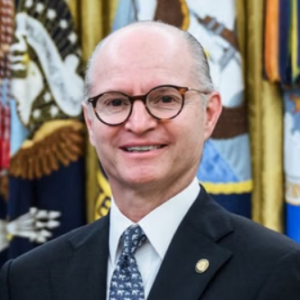
Noboa’s new ambassador here is Luís Bakker Villacreses, an agribusiness executive with no prior diplomatic or political experience. Bakker is the brother-in-law of Inés Manzano, Ecuador’s former minister of energy.
Until 2020, he was executive chairman of Pronaca, Ecuador’s top conglomerate in animal protein production and distribution, with a sizeable share of the country’s chicken, pork, turkey and processed meat sectors. After leaving that position, he became president of the board of La Estancia, a holding company that includes Pronaca along with Panamanian food giant Toledano.
Bakker has an MBA from Spain’s IESE Business School and a bachelor’s degree in business administration from Texas A&M University.
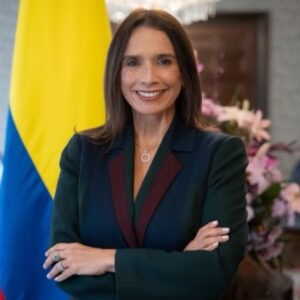
Neighboring Colombia has also witnessed a political upheaval, following the victory of far-right presidential candidate Abelardo de la Espriella over leftist Iván Cepeda in the June runoff. Immediately following the election—widely interpreted as a rejection of the policies of former president and guerrilla fighter Gustavo Petro—the new president selected María Consuelo “Conchi” Araújo Castro as his new envoy in Washington.
The 54-year-old ambassador, nicknamed Conchi, was born into a family linked to politics. Her father, Álvaro Araújo Noguera, was part of the government of Alfonso López Michelsen; her aunt, Consuelo Araújo Noguera, was minister of culture under Andrés Pastrana; and her brother, Álvaro Araújo Castro, was a senator and leader of the ALAS-Team Colombia political party.
From 1998 to 2000, Araújo was director of the José Celestino Mutis Botanical Garden when Enrique Peñalosa was mayor of Bogotá. She also supervised the city’s Institute of Recreation and Sports under then-Mayor Antanas Mockus (2001-03).
Araújo herself was Colombia’s culture minister (2002-06) and foreign minister (2006-07) in the government of Álvaro Uribe Vélez. Most recently, she was CEO of Gran Colombia Gold Corp.
According to El País, Araújo resigned as culture minister in early 2006, days after her brother was arrested for ties to the United Self-Defense Forces of Colombia, a paramilitary group.
Fabián Cárdenas, a law professor at Bogotá’s Pontificia Universidad Javeriana, told the newspaper that Araújo’s priority should be consolidating relations with Washington, which Petro deeply fragmented.
“The diplomatic clashes that ended with his visa being revoked and his inclusion on the OFAC list severely impoverished a historic relationship,” said Cárdenas. “So Araújo’s primary task is to restore relations, at least, to what they were before Petro’s government.”
Aráujo has a degree in finance and international relations, as well as postgraduate qualification in government, management and public affairs from Bogotá’s Universidad Externado de Colombia. She and her husband, Argentine photographer Ricardo Mazalán, have a daughter, Susana.
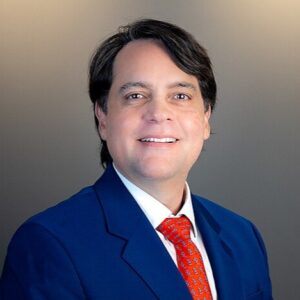
Fellow female diplomat Estefania Laterza de los Ríos is the new ambassador from landlocked Paraguay—traditionally one of the most right-wing countries in the Western Hemisphere. She replaced Gustavo Leite, who was in the post for less than a year.
With over 30 years of experience, Laterza most recently headed the Foreign Ministry’s Carlos Antonio López Diplomatic and Consular Academy, which trains Paraguay’s diplomatic service.
Her resumé also includes roles as Paraguay’s vice-minister of investments and exports, and as the Brazil representative for the CAF-Development Bank of Latin America and the Caribbean, managing a $3.5 billion portfolio.
Laterza has also held senior Foreign Ministry posts and served in Paraguayan missions in Brazil, Colombia, Costa Rica and Switzerland. She has a master’s degree from Italy’s Università degli Studi di Perugia, as well as a master’s in political science and government from the Universidad de Costa Rica.
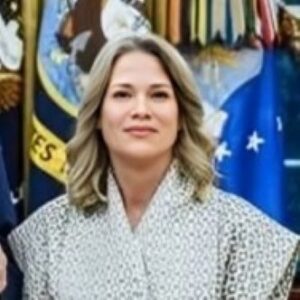
Meanwhile, Douglas Soto Campos, Costa Rica’s new envoy in Washington, has made history as the first diplomat to hold that post while simultaneously serving as the Central American nation’s second vice-president.
Soto, who presented his credentials Sept. 15, was born in 1975 and is a lawyer and businessman. He’s spent over 30 years in corporate, banking and finance law, specializing in joint ventures, mergers and acquisitions, private equity, finance structuring, real estate and foreign investment.
In July 2025, he joined the ticket of Costa Rica’s conservative Sovereign People’s Party (PPSO) led by conservative Laura Fernández alongside first VP candidate Francisco Gamboa in the Feb. 1, 2026, election which Fernández won.
In his speech, Soto said “our mission is a sacred duty: to carry on this work through [Fernández]. This is a project that will bring well-being to millions of Costa Ricans, a project that is not beholden to elites or political parties.”
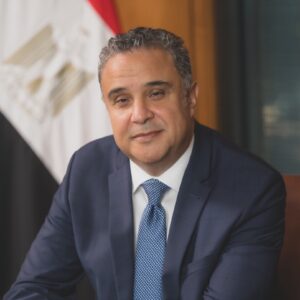
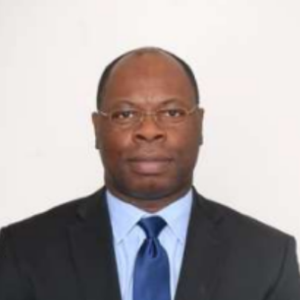
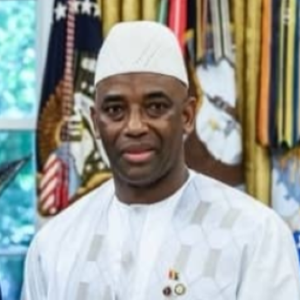
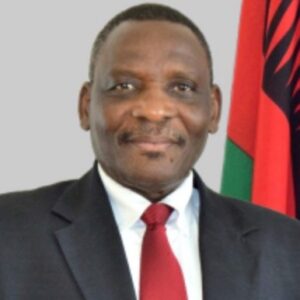
Other newly accredited foreign ambassadors to the United States include Mohamed Hamdy El-Molla of Egypt; Baudelaire Ndong Ella of Gabon; Ibrahima N’Daïry Diallo of Guinea; Krikor Der Hagopian of Iraq; Patrick Hemmer of Luxembourg; Edward Yakobe Sawerengera of Malawi; and Nicola Clase of Sweden. See the updates in the latest edition of The Washington Diplomat’s Embassy Directory.