
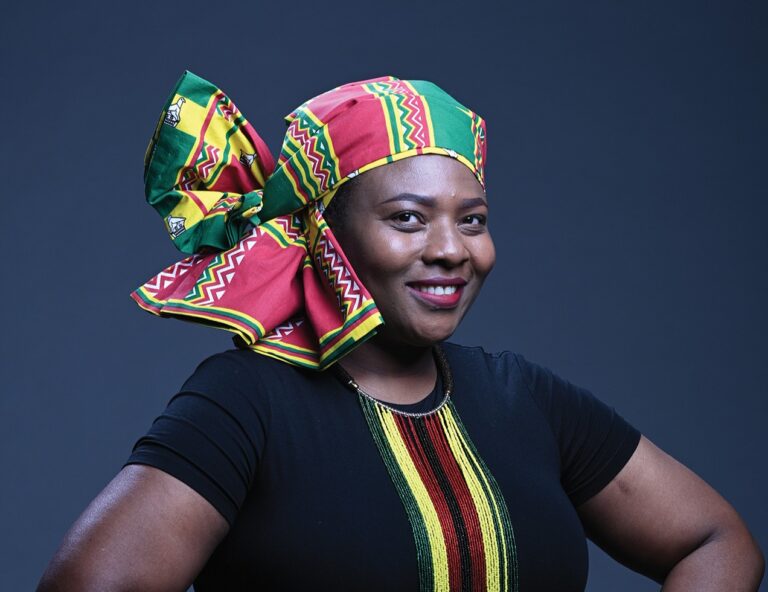
Every headdress tells a story of history and heritage
For most of human history, headdresses—hats, scarves, crowns, caps and other head coverings—have served both utilitarian and expressive purposes. They are both a tool and a visual business card, offering protection from the elements while also letting the world know who the wearer is.
The history of headdresses runs as deep as civilization itself. Royal tombs in ancient Mesopotamia have yielded elaborate gold-and-lapis lazuli crowns buried with queens as symbols of divine authority. Across sub-Saharan Africa, the tradition of the headwrap, like the Dhuku in Zimbabwe and the Gele in Nigeria, developed into a nuanced visual language that communicated status and identity at a glance.
In Central Asia, a bride’s Saukele headdress could cost the equivalent of an entire herd of horses and remained, by custom, the one piece of her dowry that could never be taken from her—not by a husband, not by a divorce, not by anything.
Some headdresses exist only for pure joy, like the towering, feathered, colorful Junkanoo hat of the Bahamas, which was born from the creativity of enslaved Africans who turned their few days of holiday freedom each year into something no one could ignore. Ghana’s Kente cloth, meanwhile, manages to be both ceremonially serious and irrepressibly vibrant, as appropriate at a state funeral as at a wedding, while being, frankly, spectacular to look at.
A single piece of cloth or woven fiber can announce status, carry grief, celebrate a marriage, protect a herder from the Sahel sun or transform a holiday parade into an act of cultural defiance. The headdress is one of the most efficient forms of human communication ever devised.
So, what might it look like to see them all at once, all in one room, in a celebration of culture, history and creativity? We brought diplomatic representatives and models from around the world—each wearing a headdress from their homeland—to The Line Hotel DC in Adams Morgan for a photo shoot.
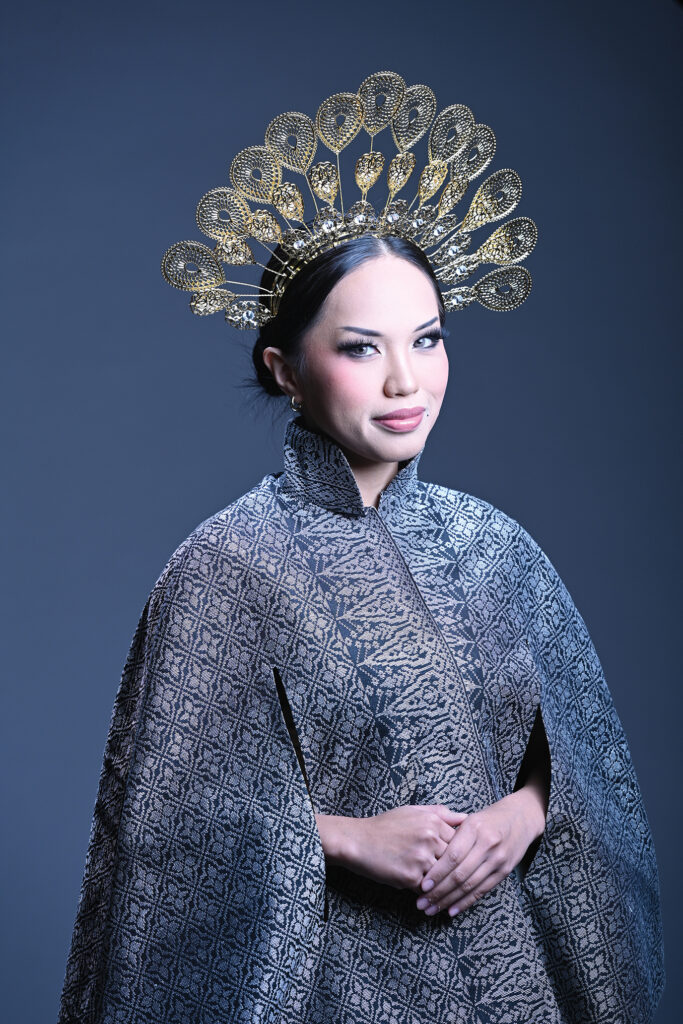
Congressional liaison officer, Embassy of Malaysia
Headdress name: Sanggul Lintang
The Sanggul Lintang is a majestic multi-tier traditional Malay headpiece. Originally intended as bridal wear and for cultural dances in the state of Melaka and historically worn by aristocrats in the sultanate, today it is most commonly worn as a bridal headpiece.
According to Melakan tradition, each layer of the Sanggul Lintang represents the heavy responsibilities a bride takes on when becoming a wife and, with more than 70 decorative hairpins, some Sanggul Lintangs can take over two hours to assemble. It is still common for grandmothers to pass their treasured hairpins down to their granddaughters.
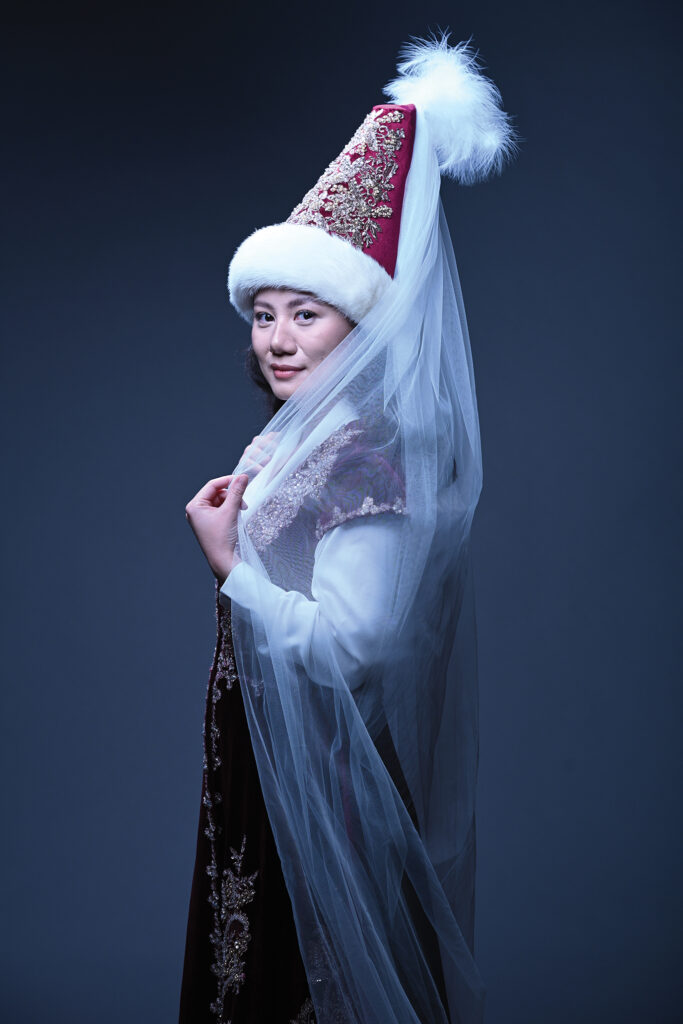
Second secretary, Embassy of Kazakhstan
Headdress name: Saukele
The Saukele is a traditional Kazakh bridal headdress with a history that dates back over a thousand years. It symbolized purity and was often the most expensive element of a bride’s dowry. In the 19th century, a richly decorated Saukele could cost the equivalent of an entire herd of horses and was sometimes adorned with precious stones, pearls, coral, silver pendants and owl feathers at the very top, which were believed to ward off evil. Each Saukele was custom-made and could take months or even years to complete.
First secretary/tourism, Embassy of Zambia
Headdress name: Chitenge
The Chitenge is a boldly patterned, versatile cloth beloved by all 73 ethnic groups in Zambia. Traditionally given to a woman when she comes of age, it is worn as a sign of respect and carries deep cultural significance throughout a Zambian woman’s entire life. Newborn babies are wrapped in a Chitenge upon delivery, it is used to carry children on the back, and the deceased may be wrapped in their favorite Chitenge for burial. Its distinctive patterns carry meaning related to tribal affiliation, marital status, and cultural identity. Today the Chitenge is worn to weddings, ceremonies and what Zambians call a “kitchen party”—a celebration honoring a bride-to-be.
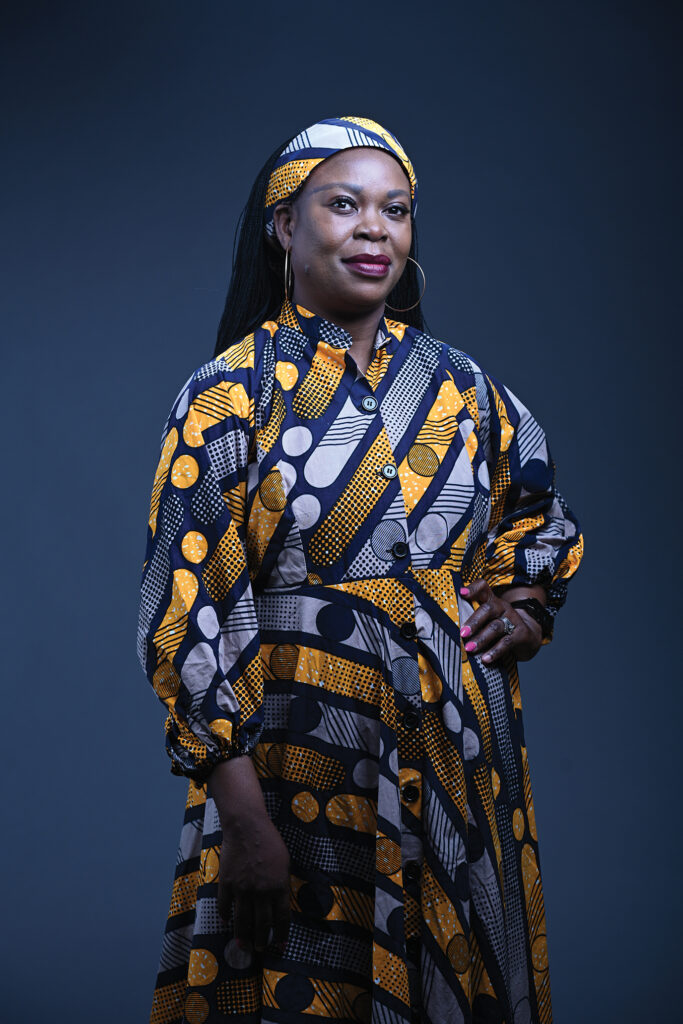
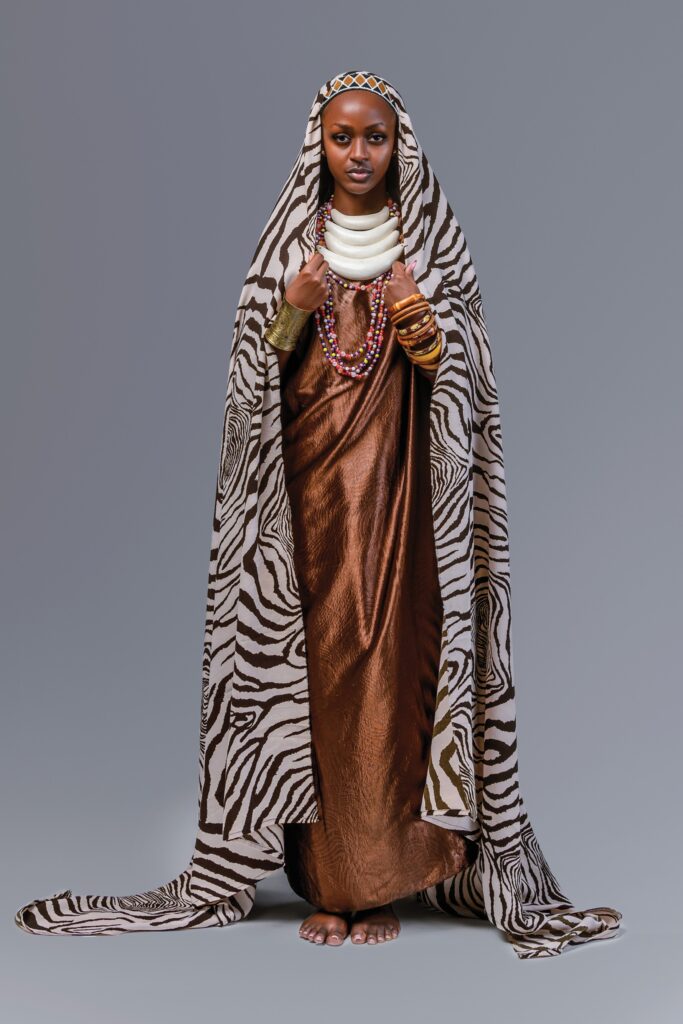
Miss Burundi 2025
Headdress name: Imvutano
In Burundian culture, elegance has never been merely a matter of appearance. A well-known Kirundi saying captures the philosophy perfectly: “Agashambara karafuba—When a person is elegant, they are respected.” The ensemble shown here is the Imvutano, the traditional dress of Burundian women, worn for weddings, ceremonies, and occasions of cultural significance.
Flowing, elegant and richly colored, the Imvutano is a symbol of dignity, beauty and pride, deeply rooted in Burundi’s royal and ancestral heritage.
In ancient times, Burundians crafted garments from the bark of the Umumanda tree, transformed by skilled artisans into clothing that reflected both creativity and cultural identity. Every detail signified beauty, status and cultural sophistication.
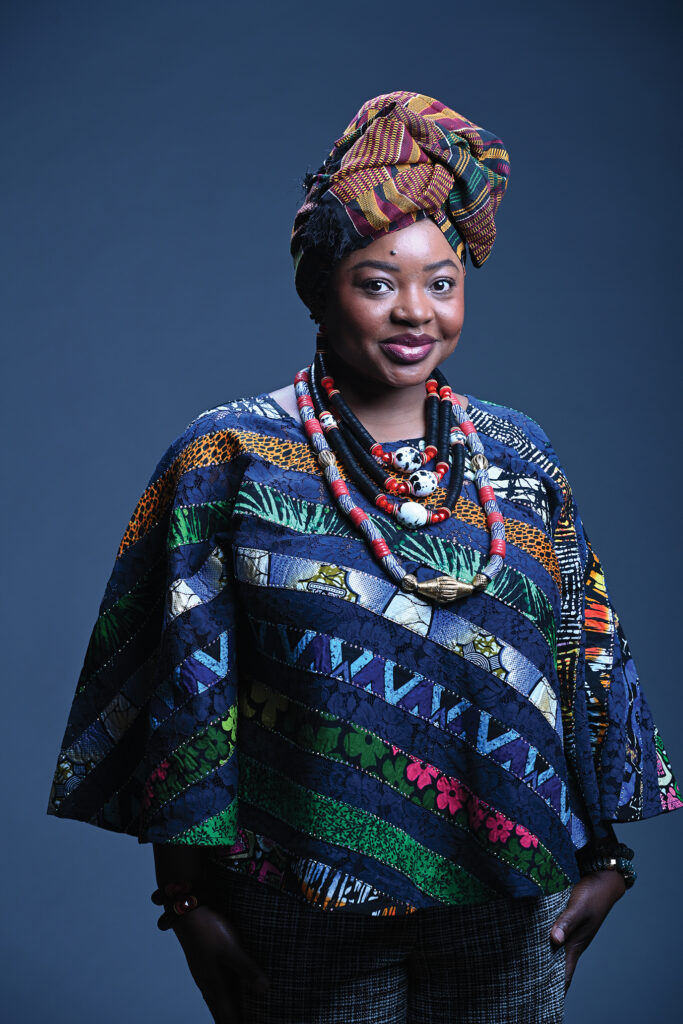
Tourism and investment officer, Embassy of Ghana
Headdress name: Kente wrap
The Kente wrap is a vibrant hand-woven fabric that is primarily associated with the Ashanti and Ewe peoples, as well as people throughout northern Ghana. It is worn to different occasions including funerals, weddings and parties.
Originally developed in the 17th century by the Ashanti people, Kente’s roots in West African weaving traditions may go back as far as 1000 BCE. Each color and pattern in Kente carries specific meaning: gold represents royalty, red represents sacrifice, blue represents peace, green represents growth, and yellow represents wealth.
First secretary, Embassy of the Gambia
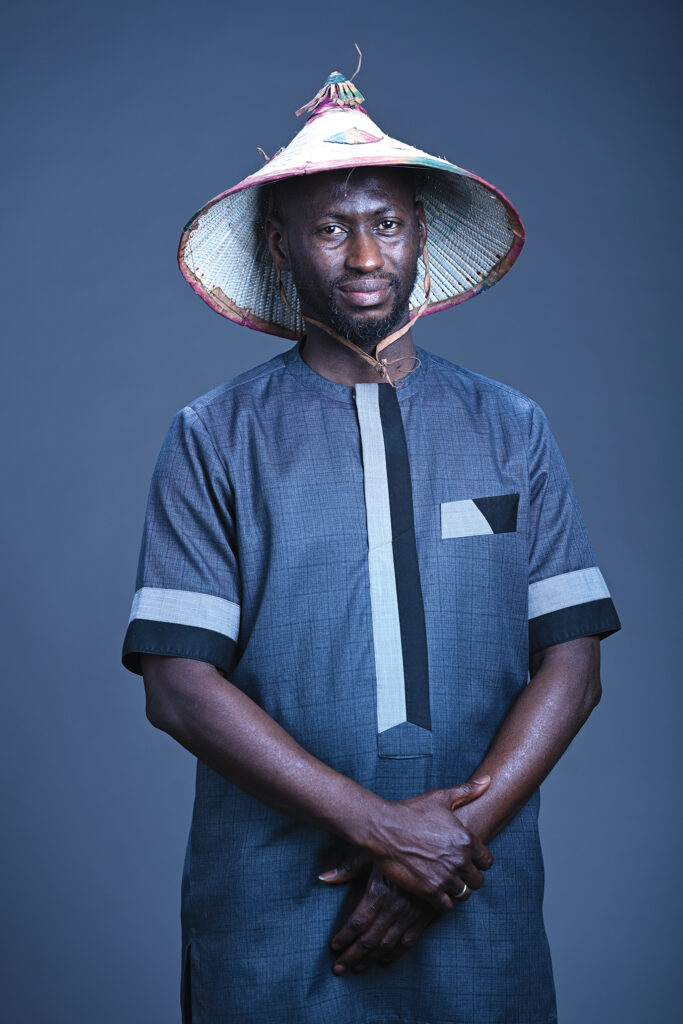
Headdress name: Tenghal
The Tenghal is a traditional conical hat worn by the Fulani people of The Gambia, one of West Africa’s most prominent nomadic cattle-herding communities. Woven from plant fibers and finished with leather at the brim, its lightweight, wide-brimmed design is perfectly suited to the demands of long days in the bush—shielding herders from the fierce Sahelian sun on the way out and the rains of the wet season on the way home. Simple in construction but deeply practical, the Tenghal is as much a working tool as it is a cultural emblem of the Fulani pastoral way of life.
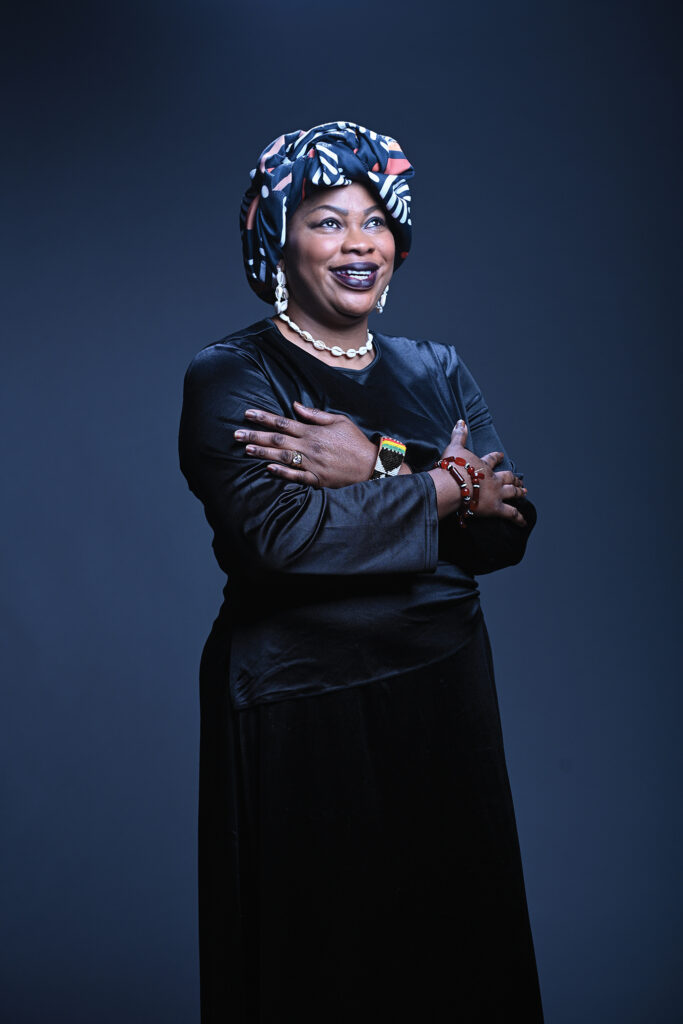
Consular assistance officer, Embassy of Mali
Headdress name: Bògòlanfini (“Bogolan”)
The Bògòlanfini, better known simply as the Bogolan, is a traditional head wrap worn by women in the West African nation of Mali. The name, rooted in the Bambara language, means “made with the earth,” a fitting description for a fabric hand-dyed using mud.
Characterized by bold geometric patterns in natural earth tones of black, brown, and ochre, the Bogolan is considered a vibrant symbol of Malian culture and national identity. It is worn across a wide range of occasions—by married women in everyday life, at traditional ceremonies, and at weddings. The fabric gained international recognition in the 1980s when celebrated Malian fashion designer Chris Seydou began incorporating it into his haute couture collections, introducing Western audiences to one of Africa’s most distinctive textile traditions.
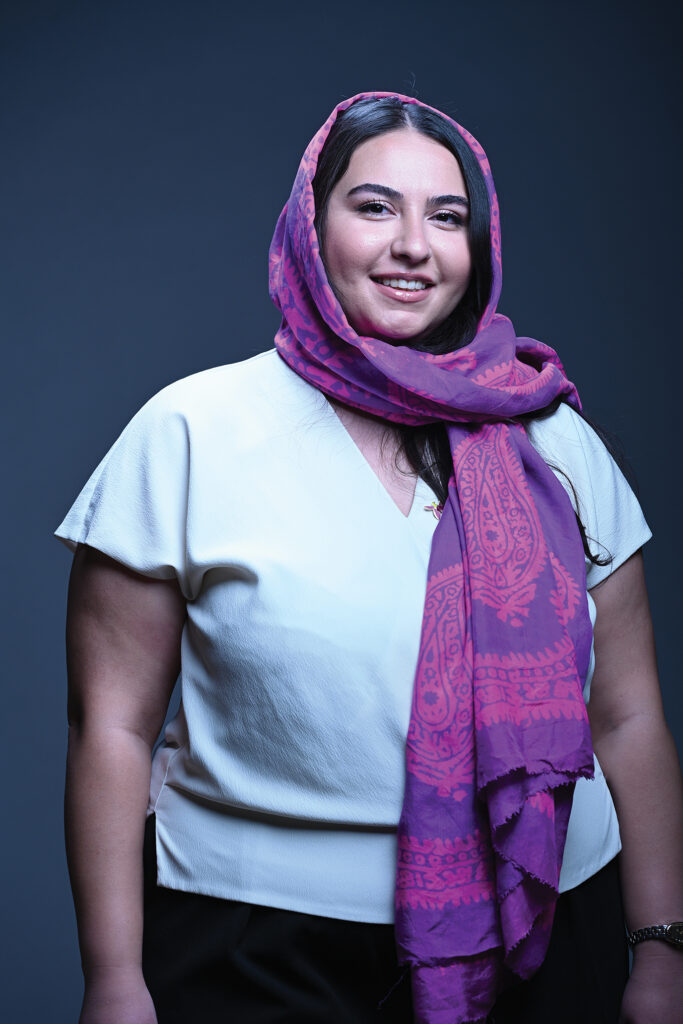
Press secretary & public affairs officer, Embassy of Azerbaijan
Headdress name: Kelaghayi
The Kelaghayi is a square-shaped silk headscarf rooted in Azerbaijan’s centuries-long silk-weaving tradition along the Great Silk Road. Versatile enough to be worn on the head or draped across the shoulders, it has historically been given by men to their brides when they marry.
The art of making a Kelaghayi involves fabric weaving, vegetable dyeing,and woodblock decoration. The colors are a social language of their own: bright hues for young women, darker tones for older women, and red traditionally reserved for brides. In 2014, the Kelaghayi was inscribed on the UNESCO Representative List of the Intangible Cultural Heritage of Humanity.
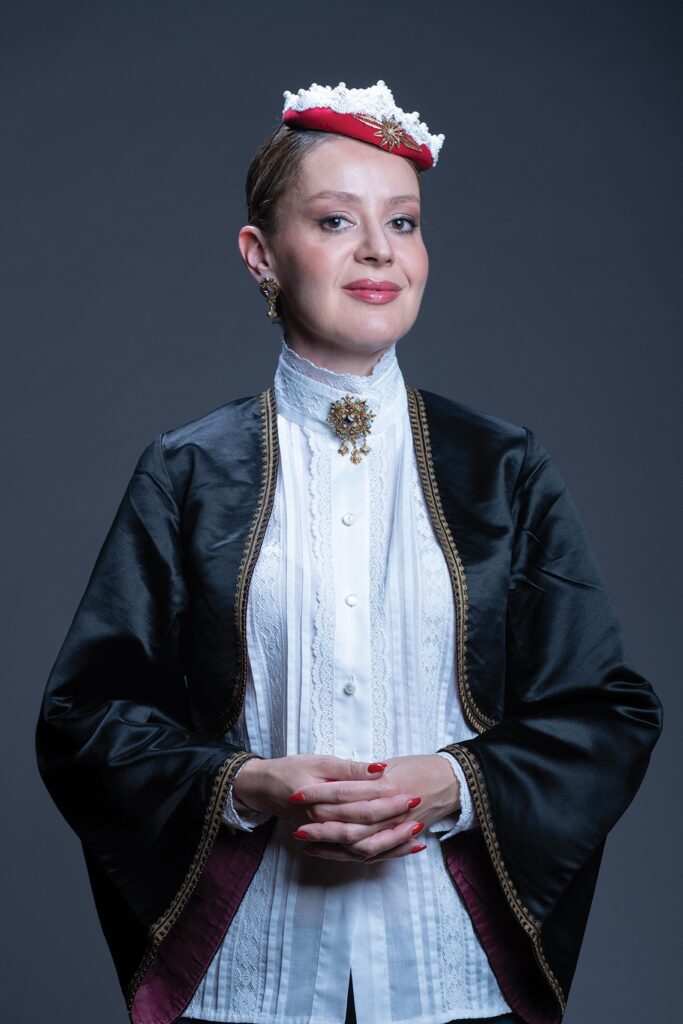
Counsellor, Embassy of Serbia
Headdress name: Tepeluk
The Tepeluk is a small, dome-shaped cap adorned with beads and delicate filigree work, worn by distinguished urban women in Serbia during the second half of the 19th century. Characteristic of Belgrade and other major towns, it was part of a fascinating cultural moment. As Serbia emerged from Ottoman rule and its rising bourgeoisie began embracing European fashion, the Tepeluk and its accompanying ensemble became symbols of refinement, education and civic status. A woman who wore one was making a quiet but unmistakable statement about who she was and where she stood in society.
The Tepeluk occupies a unique place in Serbian dress history: it was one of the last elements of traditional urban costume to survive the transition to Western-style clothing, worn on formal occasions alongside European-influenced dresses long after other traditional garments had disappeared. The headdress shown here is a handcrafted piece by artisan Regan Biljana, inspired by original museum pieces held in Serbian collections.
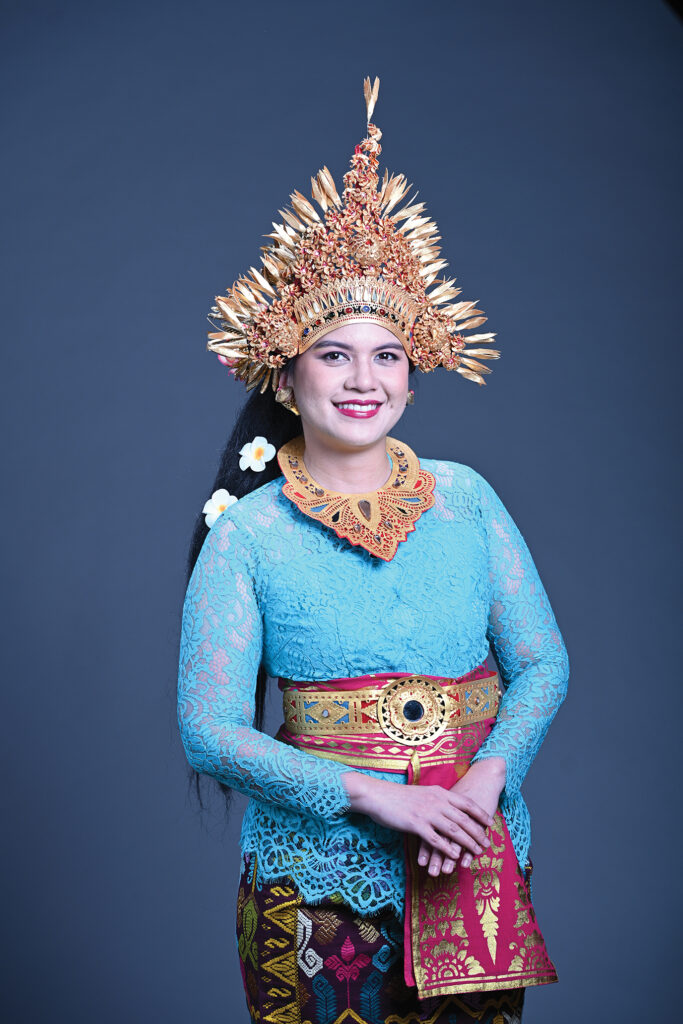
First secretary, Embassy of Indonesia
Headdress name: Gelungan
The elaborate Gelungan headdress is worn by Balinese royalty, brides and dancers performing the Sekar Jagat, a traditional welcome dance. Performed by groups of young women and girls carrying bowls of flowers, the dance represents harmony, gratitude and the Balinese philosophy of balance between people, nature and the spiritual world. It is one of many Balinese dance traditions recognized by UNESCO as Intangible Cultural Heritage in 2015.
Minister/chargè d’affaires, Embassy of Ecuador
Headdress name: Toquilla straw hat
The Toquilla straw hat, known to much of the world as the “Panama hat,” is one of history’s great cases of mistaken identity. Handwoven from the fine fibers of the toquilla palm, the hat has been crafted in Ecuador for centuries by indigenous communities along the country’s coastal and Andean regions.
The misnomer stuck after President Theodore Roosevelt was photographed wearing one during his 1906 visit to the Panama Canal. The hats had been shipped from Ecuador through Panama for export, and the name Panama stuck with them, though Ecuador has been trying to correct the record ever since.
A single fine-grade hat can take a master weaver months to complete, with the tightest weaves capable of holding water. In 2012, UNESCO recognized the traditional weaving of Ecuador’s toquilla straw hat as Intangible Cultural Heritage. The hat shown here is courtesy of Homero Ortega, a celebrated craftsman based in Cuenca, one of Ecuador’s great hatmaking centers.

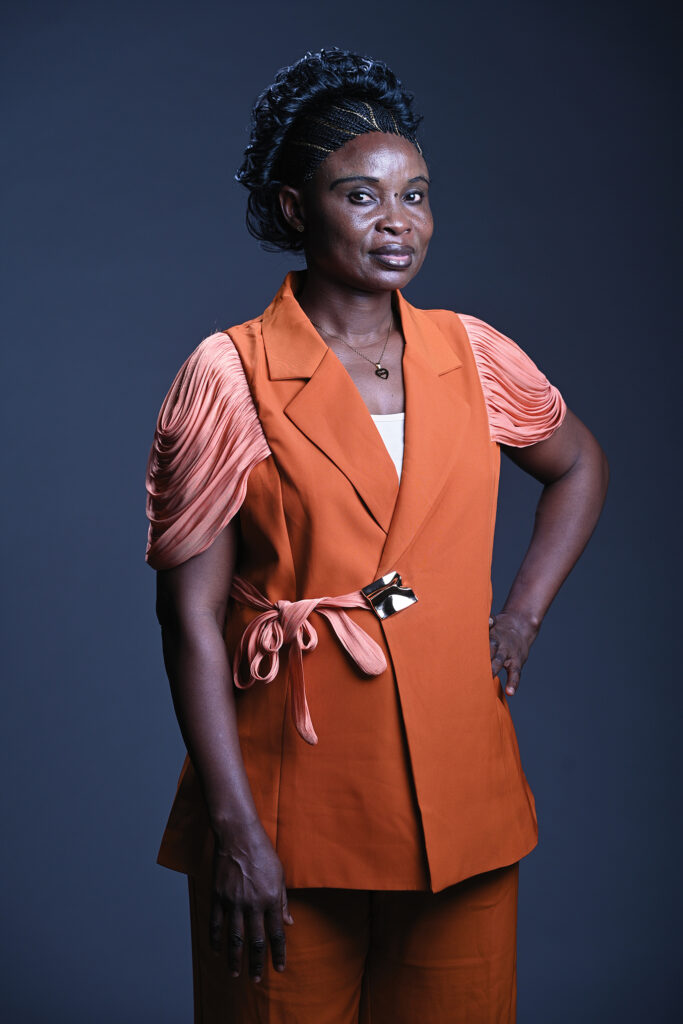
Secretary, Embassy of the Central African Republic
Headdress name: Congo wig
In the Central African Republic, elaborate wigs and hair adornments have long been a central part of women’s cultural expression, with styles communicating regional identity, social status, and the nature of the occasion. The style worn here is a wig that is popular among Central African women and known colloquially as a “Congo wig.” Women wear it for special occasions when elegant presentation matters and there isn’t time for elaborate styling. For Central African Republic women in particular, choosing this style is a deliberate act of cultural pride and identity.
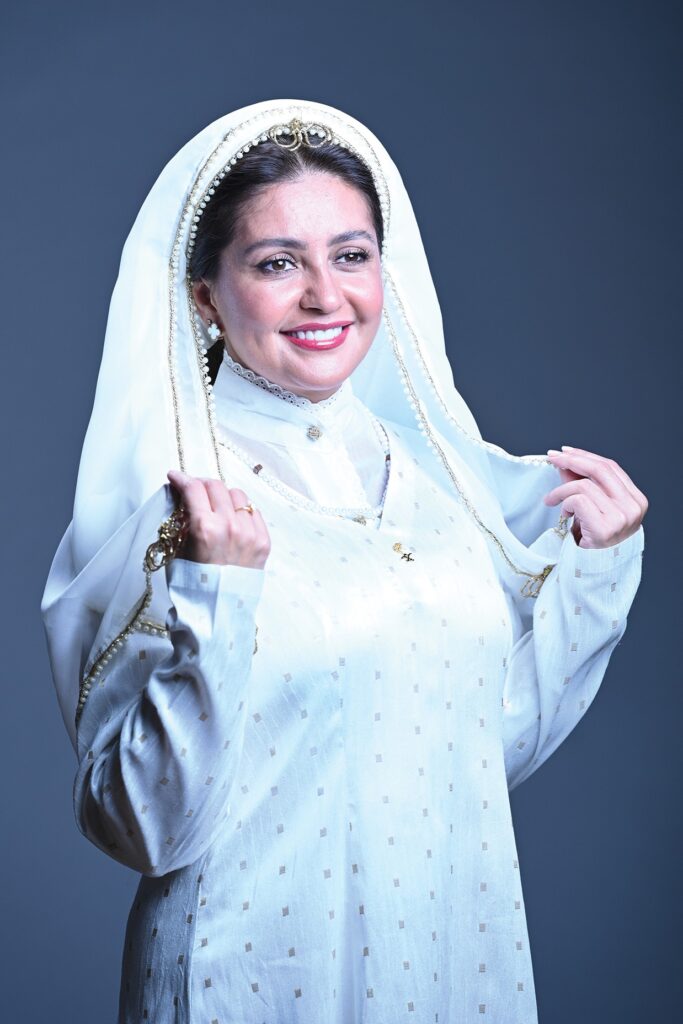
Head of public diplomacy affairs, Embassy of Saudi Arabia
Headdress name: Zaboun
The Zaboun is a traditional ensemble of the Hijaz region, the western province of Saudi Arabia that encompasses the holy cities of Mecca and Medina, as well as Jeddah. It is worn before a wedding by a bride, the mother of the bride or the grandmother of the bride, with the style and ornamentation of the headdress varying by the wearer’s role in the family. Shown here is a headdress embroidered with pearls and gold that the grandmother of a bride might wear to social and traditional events associated with a Hijazi wedding celebration.
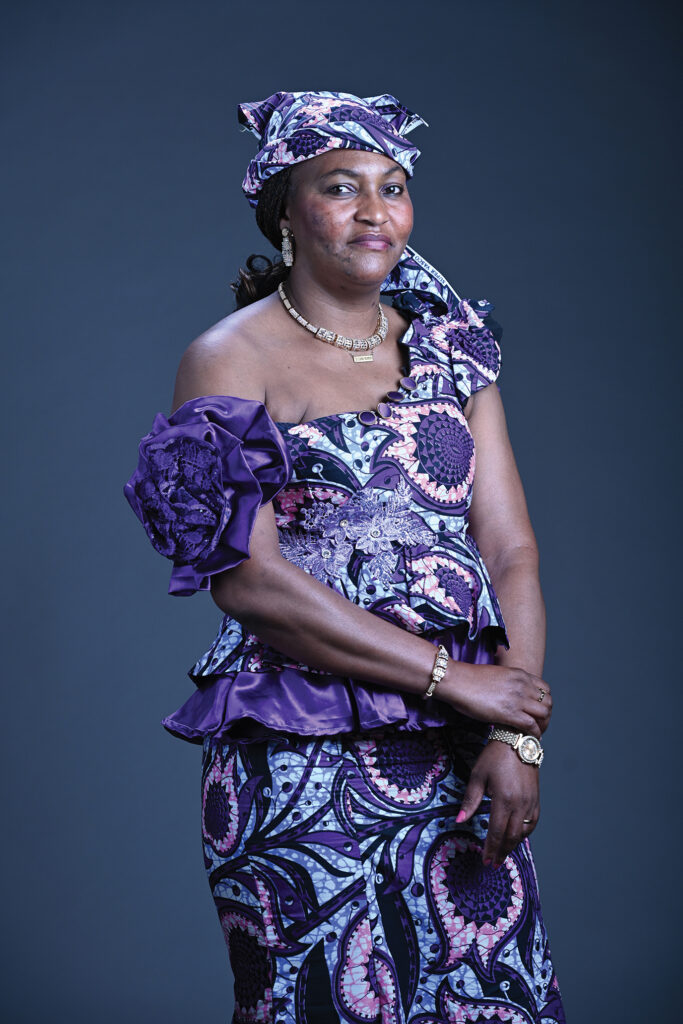
Secretary of defense, Embassy of Central African Republic
Headdress name: Foulard
The Foulard is a colorful headscarf worn by women across the Central African Republic’s many ethnic communities. The word comes from the French, reflecting the deep influence of the French language in CAR, but the tradition of the headscarf itself is far older, rooted in Central African customs of modesty, respect, and cultural pride. It is worn to important ceremonies including weddings and traditional family gatherings, and it plays a particular role in presentation ceremonies — rituals in which a woman is formally introduced or welcomed into a new family or community. Simple in its construction but rich in meaning, the Foulard is, like so many of the headdresses in this collection, proof that a single piece of cloth can carry the weight of an entire culture.
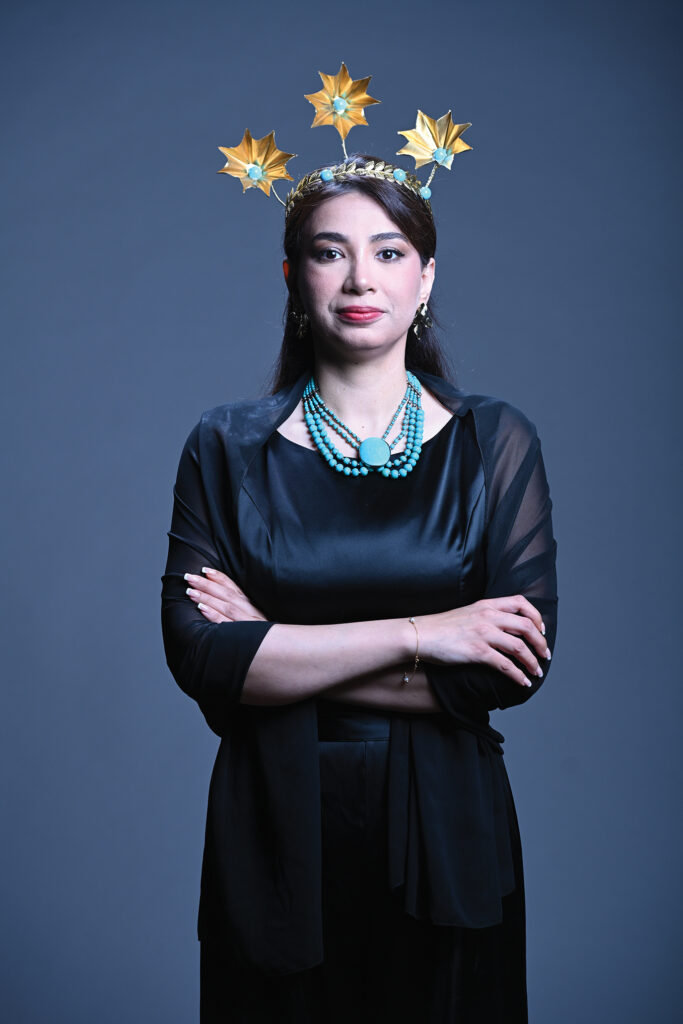
Embassy of Iraq
Headdress name: The Crown of Queen Shubad
The headdress worn here is a replica of the crown of Queen Shubad, also known as Queen Puabi, a Sumerian royal who lived in the ancient city of Ur in present-day Iraq around 2600 BCE. Her tomb was one of the most spectacular archaeological finds in history, yielding an extraordinary headdress of gold leaves, lapis lazuli, carnelian beads and a large gold comb that weighed over six pounds.
The original headdress is housed today at the Penn Museum in Philadelphia. Shubad is believed to have been a queen or high priestess associated with love, beauty, and divine feminine power.
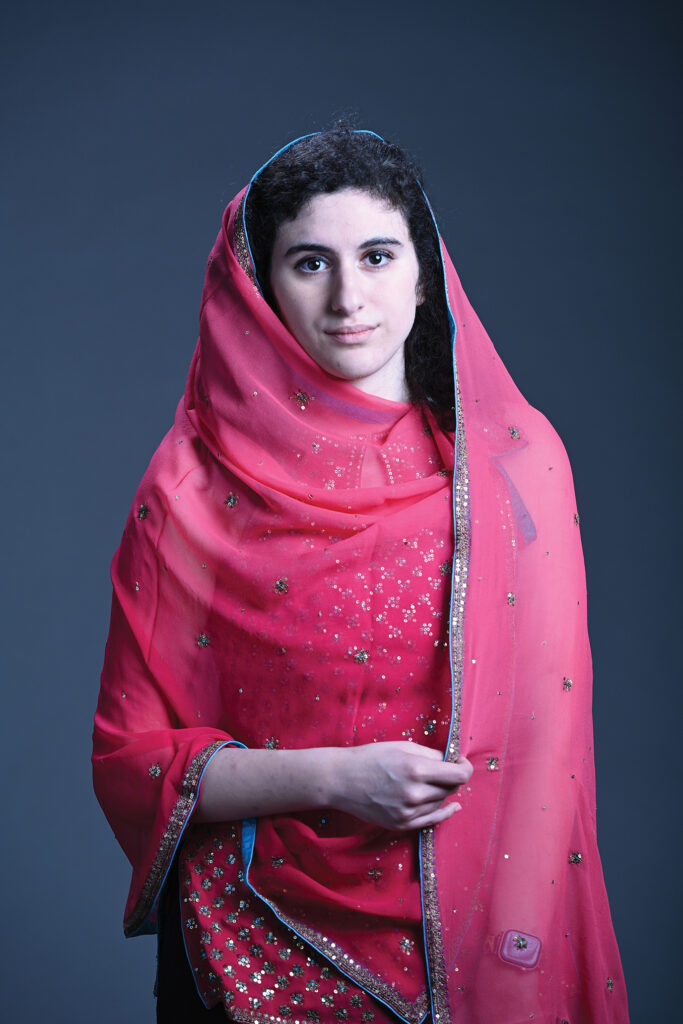
Editorial Intern, The Washington Diplomat
Headdress name: Chunni (India)
The Chunni, modeled here by the daughter of The Washington Diplomat’s publisher, is also known as the Dupatta or Chunari depending on the region. It’s a long, scarf-like shawl that has been part of South Asian women’s dress for nearly five thousand years. Its roots can be traced back to the ancient Indus Valley Civilization, where sculptures depict figures wearing similar long scarves.
Worn draped over the head or shoulders, the Chunni has long served as a symbol of modesty, grace, and respect and was traditionally used to cover the head in places of worship or in the presence of elders. It is an essential component of the salwar kameez and lehenga, two of the most iconic ensembles in Indian dress.
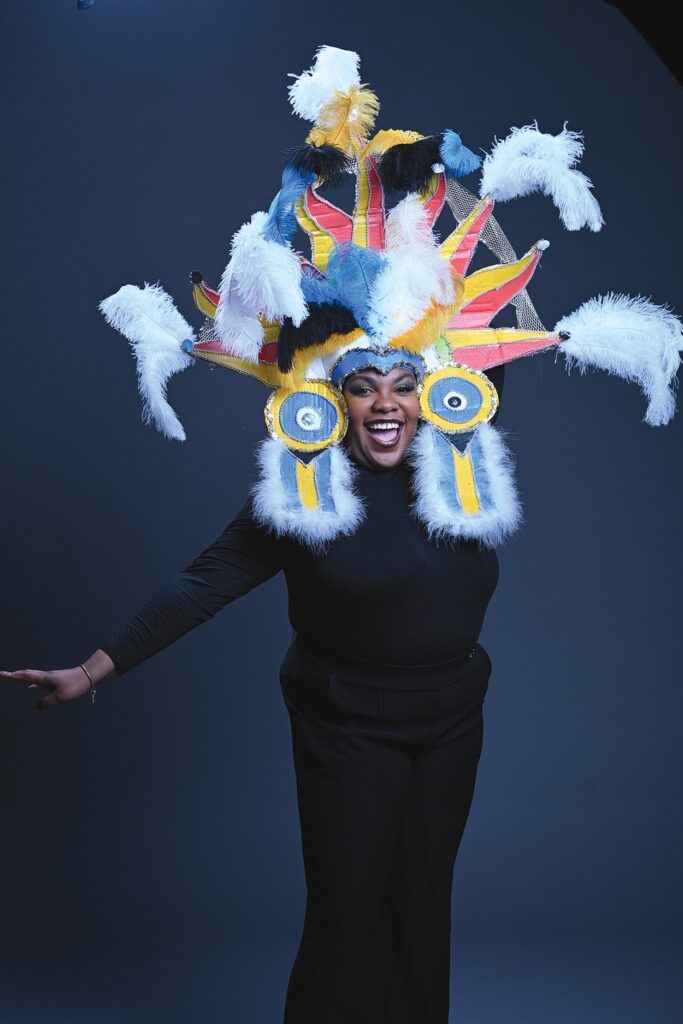
Cultural attaché, Embassy of the Bahamas
Headdress name: Junkanoo hat
A Junkanoo hat is a vibrant handcrafted headpiece worn during Junkanoo, the Bahamas’ most iconic cultural festival, celebrated on Boxing Day and New Year’s Day. It is rooted in the traditions of enslaved Africans who were given limited time off during the holidays. Over time, Junkanoo evolved into a powerful expression of freedom, creativity and identity.
The hats are often large and intricately designed and made from materials like cardboard, crepe paper, feathers, and beads, and are constructed to match elaborate costumes depicting themes ranging from history to folklore.
Beyond their striking visual appearance, Junkanoo hats symbolize pride, storytelling and the communal spirit that defines Bahamian culture.
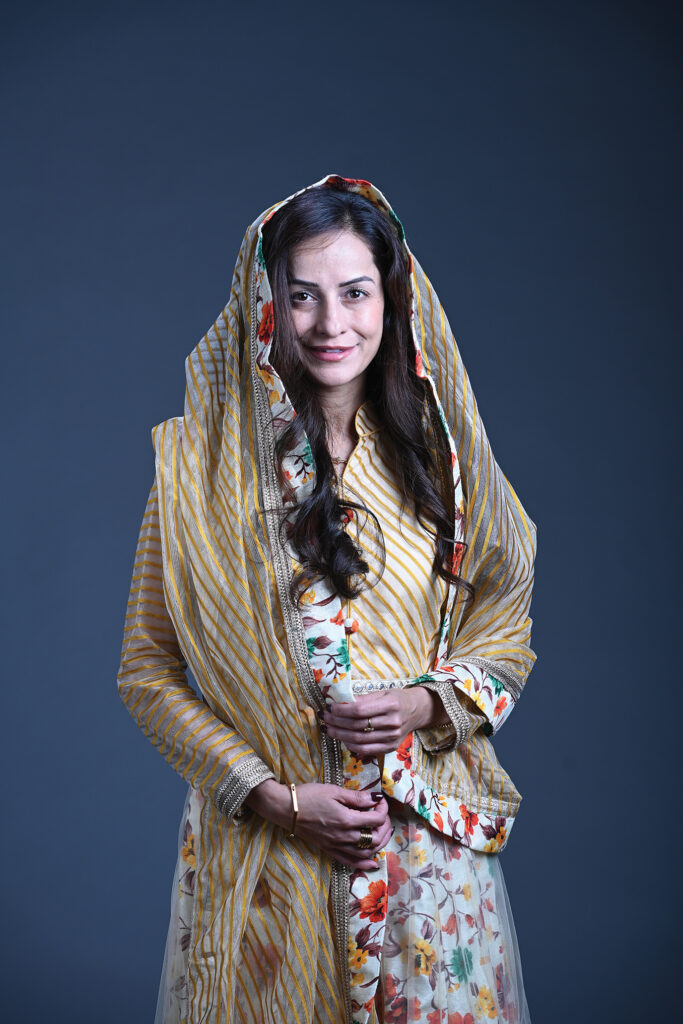
Entrepreneur
Headdress name: Chunni (India)
The Chunni is one of the most versatile garments in the world, and no two are quite alike. The Phulkari Chunni of Punjab is celebrated for its rich thread embroidery and mirror work, the Banarasi for its silk weaving tradition, and the Bandhani of Rajasthan and Gujarat for its intricate tie-dye patterns.
Typically about 2.5 meters long and made from cotton, silk, georgette or chiffon, it can be draped over one shoulder, wrapped around the torso or worn loosely over both arms. While traditionally it was worn to cover the head, modern fashion has transformed it into a versatile accessory often draped over a shoulder, across the arms or styled as a statement piece in its own right.
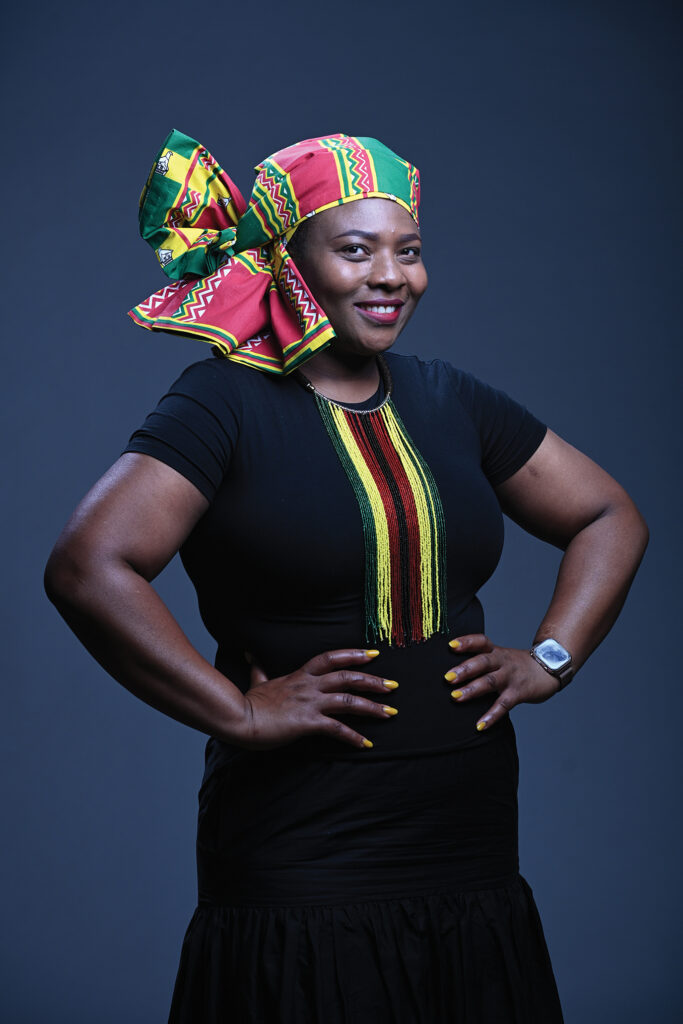
Minister counsellor of tourism, Embassy of Zimbabwe
Headdress name: Dhuku
Dhuku is a Shona word for the headwrap worn primarily by married women as a visible signal of her status and a sign of her respect for her husband and in-laws. In Zimbabwe and across southern Africa, a married woman’s Dhuku is worn at social gatherings, church services and during daily activities, such as doing chores. The Dhuku is part of a rich and ancient African visual language in which what a woman places on her head speaks before she ever says a word.
This story was originally published in our 2026 Embassy Directory. Photographs by Michael Ventura. Shot on location at the Line DC hotel in Washington’s Adams Morgan neighborhood. Production support by Alka Aery, Nadia Shiblie and Camden Ventura. Photograph of Miss Burundi by Bwood Sudo.
